"Forcing Low Prices Shifts the Burden onto Americans"
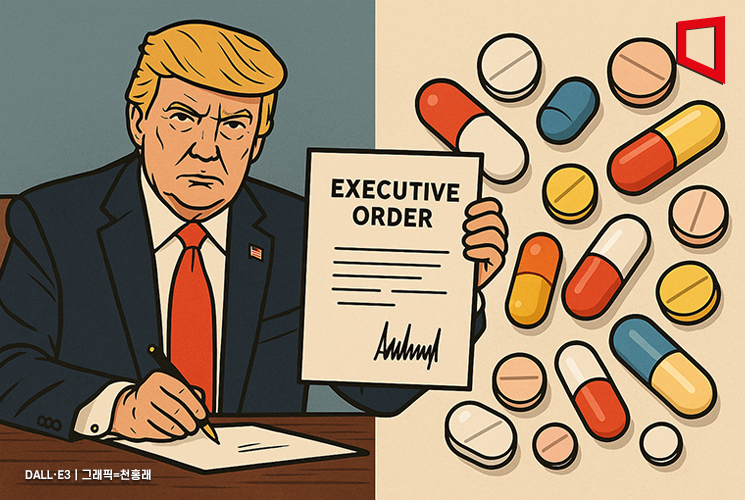
On May 12 (local time), President Donald Trump of the United States signed an executive order on drug price standardization, requiring pharmaceutical companies to provide medicines in the U.S. at lower prices. The goal is to lower the high cost of drugs in the U.S. to the level of other advanced countries, thereby reducing the financial burden on Americans while encouraging pharmaceutical companies to sell drugs at higher prices in other countries.
President Trump stated, "Basically, what we are doing is making things equal," and added, "We will pay the lowest prices in the world." He also claimed through his social networking service (SNS) that drug prices would be reduced by more than 59%.
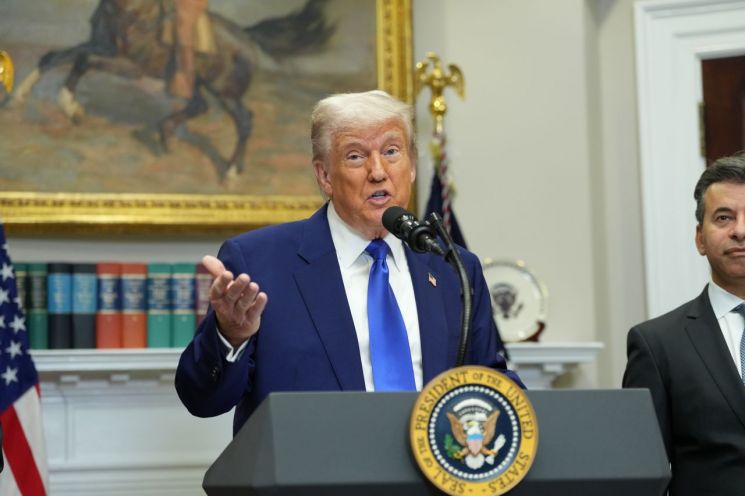
President Trump instructed the United States Trade Representative (USTR) and the Secretary of Commerce to take action to prevent other countries from deliberately and unfairly lowering their domestic drug prices below market value and engaging in practices that cause drug prices in the U.S. to surge.
He emphasized that, while Americans currently pay several times more for drugs than people in other countries, going forward, the U.S. will pay the lowest price among advanced countries, referring to this as the "Most Favored Nation (MFN)" price.
In particular, regarding the issue of high drug prices in the U.S., President Trump targeted European Union (EU) countries rather than pharmaceutical companies. He argued that these countries negotiate drug prices too low, forcing the U.S. to shoulder the global burden of pharmaceutical research and development (R&D) costs. President Trump claimed that these countries "threaten to block the sale of products unless pharmaceutical companies unconditionally lower their prices, forcing extremely low prices and unfairly shifting the cost burden onto American patients."
In most other countries, the government operates a national health insurance system and negotiates drug prices directly with pharmaceutical companies to lower costs. In contrast, in the U.S., pharmaceutical companies generally set their own prices, resulting in significant price differences. President Trump expressed his intention to help pharmaceutical companies negotiate prices with other countries and indicated that additional tariffs could be imposed if other countries do not cooperate.
Although President Trump criticized Europe, there is a possibility that drug prices could become an issue in future trade negotiations with South Korea. U.S. pharmaceutical companies have long argued that South Korea does not properly value innovative new drugs.
This year, the USTR's National Trade Estimate Report (NTE) noted that, in the pharmaceutical and medical device industries, there are industry concerns about a lack of transparency in South Korea’s pricing and reimbursement policies and insufficient opportunities for stakeholders to provide input on government policy changes. The report also raised transparency concerns regarding South Korea's Innovative Pharmaceutical Company (IPC) certification policy.
Meanwhile, it has not been disclosed which medicines will be affected by this executive order. According to Reuters, a White House official stated, "We will focus especially on drugs where there is significant disparity and the highest spending," and added, "It is reasonable to expect that GLP-1 drugs, which meet both criteria, will receive attention." This comment appears to target weight-loss drugs such as Wegovy, Ozempic, and Zepbound. While President Trump did not specify any drug names, he mentioned during the signing ceremony that a friend of his paid $88 for the same drug in London and $1,300 in New York.
© The Asia Business Daily(www.asiae.co.kr). All rights reserved.
![Clutching a Stolen Dior Bag, Saying "I Hate Being Poor but Real"... The Grotesque Con of a "Human Knockoff" [Slate]](https://cwcontent.asiae.co.kr/asiaresize/183/2026021902243444107_1771435474.jpg)
















