A total of 93 Asiatic black bears inhabit Korea
Mating season begins in late May
Home range expands 5.3 times in summer
"Do not turn your back or avert your gaze"
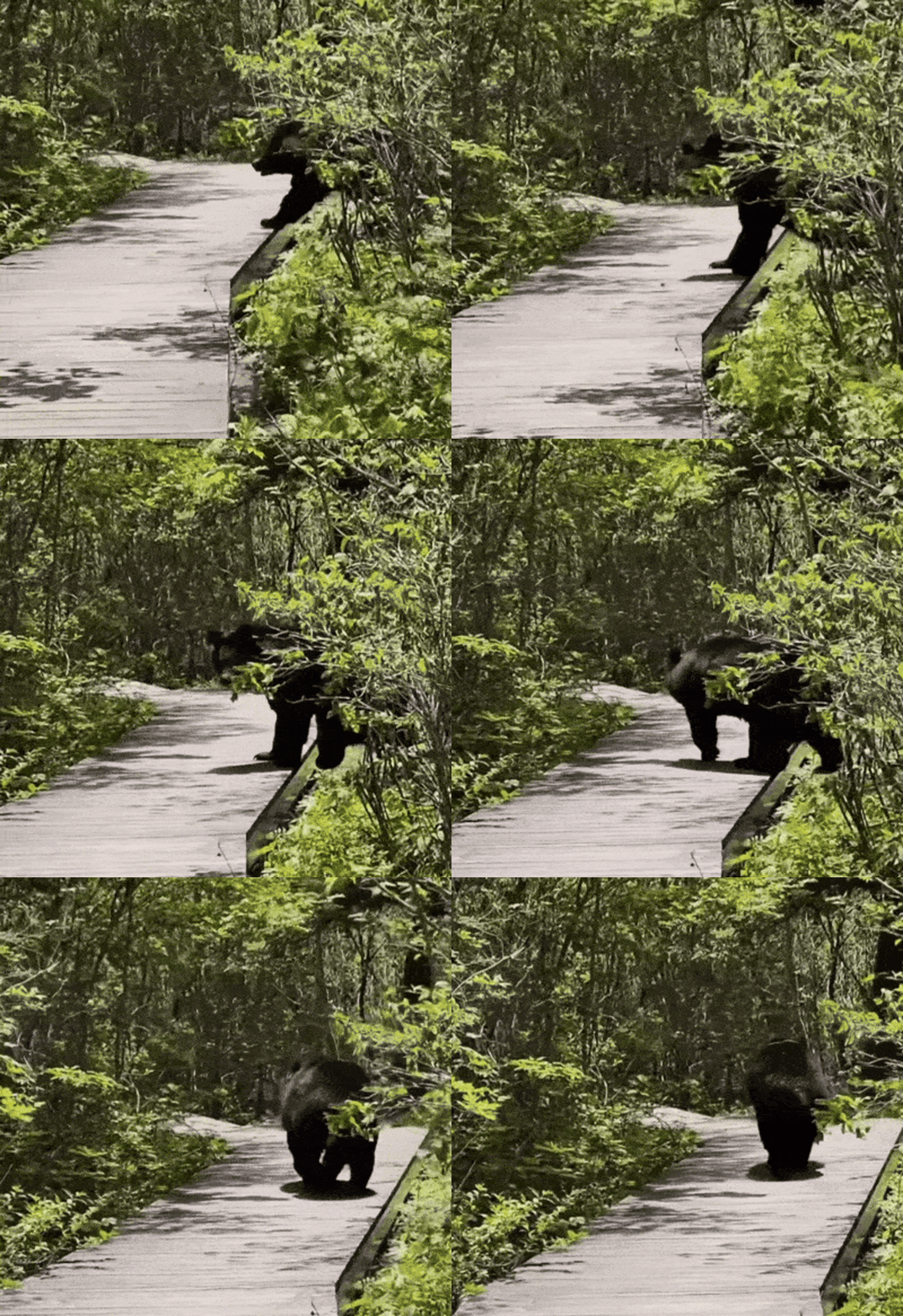 A hiker captured a video of an Asiatic black bear near the Yeonhacheon Shelter in Jirisan on May 23 last year. /Video=Instagram @aanna0207
The Asiatic black bear has begun its active season, including mating activities. On May 13, the Ministry of Environment announced that it would strengthen guidance on park visitation rules to ensure the safety of visitors to national parks.
According to the Korea National Park Service, the home range of Asiatic black bears increases by 5.3 times in the summer (June to August) compared to the spring (March to May), when they awaken from hibernation. The mating season, when the bears are most active, begins in late May and continues through July. In Korea, 93 Asiatic black bears currently inhabit Jirisan and Deogyusan.
The Ministry of Environment advised that during this period, visitors to Jirisan National Park should use only designated trails. It also recommended hiking in groups of two or more rather than alone, and suggested carrying noise-making items such as bear bells for backpacks.
The Korea National Park Service has installed promotional flags and unmanned information devices at around 600 locations, including entrances to closed trails, to indicate Asiatic black bear habitats. In the fall (September to November), the park service plans to distribute backpack bells and whistles at the entrances to Jirisan National Park trails. In the second half of this year, noise-making items will be sold at visitor centers and shelters in Jirisan and Deogyusan National Parks. Fixed bells will also be installed on a trial basis at ten locations along the main ridge trail of Jirisan.
It was explained that Asiatic black bears usually avoid humans when encountered. If this does not happen, visitors should not turn their backs or avert their gaze. When leaving the area, they should move away quietly while facing the bear and stepping backward. Visitors should never engage in behaviors that might provoke the bear, such as offering food or approaching for photographs.
Meanwhile, due to their strong wariness of and tendency to avoid people, there have been only ten sightings of Asiatic black bears on park trails in the past ten years.
Ju Daeyoung, president of the Korea National Park Service, stated, "Since stable conditions for Asiatic black bears have been established in the Jirisan area, we will do our utmost to create an environment where both bears and people can safely coexist in the future."
© The Asia Business Daily(www.asiae.co.kr). All rights reserved.
![Clutching a Stolen Dior Bag, Saying "I Hate Being Poor but Real"... The Grotesque Con of a "Human Knockoff" [Slate]](https://cwcontent.asiae.co.kr/asiaresize/183/2026021902243444107_1771435474.jpg)















