More Than 60 Days Since Aid Deliveries Were Blocked
Residents Survive by Boiling Weeds and Hunting Wild Animals
Due to food shortages, it is predicted that by September, 2.1 million people in the Gaza Strip, Palestine, may face a "crisis" or even worse situation. On May 12 (local time), Yonhap News quoted a report from the United Nations Integrated Food Security Phase Classification (IPC), stating that more than 60 days have passed since all humanitarian aid and commercial goods have been blocked from entering the Gaza Strip, and that the area is highly likely to face a food crisis in the near future.
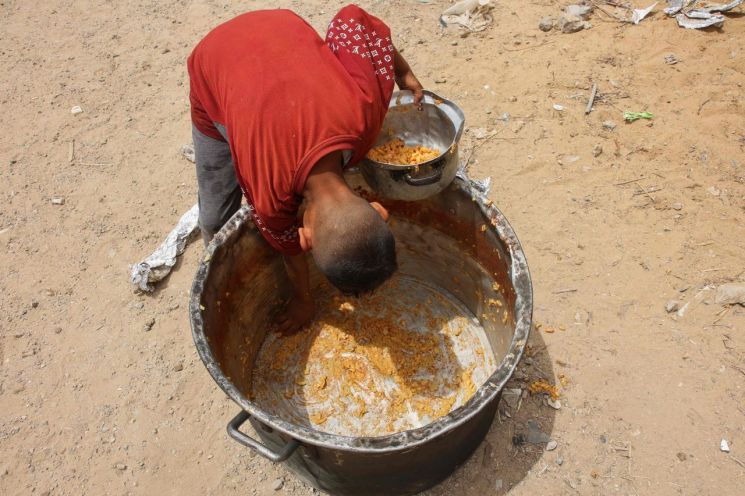 Due to food shortages, it is predicted that by September, 2.1 million people in the Gaza Strip, Palestine, may face a "crisis" or worse situation. On the 12th (local time), Yonhap News quoted a report from the United Nations Integrated Food Security Phase Classification (IPC), stating that more than 60 days have passed since all humanitarian aid and commercial goods have been blocked from entering the Gaza Strip, and the area is highly likely to face a food crisis in the near future. AFP/Yonhap News
The IPC classifies the severity of food crises into five stages: None/Minimal, Stressed, Crisis, Emergency, and Catastrophe/Famine. According to the IPC, among the entire population of the Gaza Strip, 470,000 people (22% of the population) are expected to be at the Catastrophe level, more than 1 million (54%) at the Emergency level, and the remaining 500,000 (24%) at the Crisis level.
While the IPC uses the term "famine" with caution, it classifies an area as being in a state of famine if at least 20% of the population faces extreme food shortages, the rate of acute malnutrition among children under five exceeds 30%, and at least two people per 10,000 die each day from outright starvation, malnutrition, or disease. According to this classification, the IPC stated, "Currently, the entire population of the Gaza Strip is experiencing severe food shortages, and about 500,000 people (one in five) are at risk of starvation," adding, "With humanitarian access blocked, the risk of famine in the Gaza Strip is no longer just a possibility, but is increasingly becoming a reality."
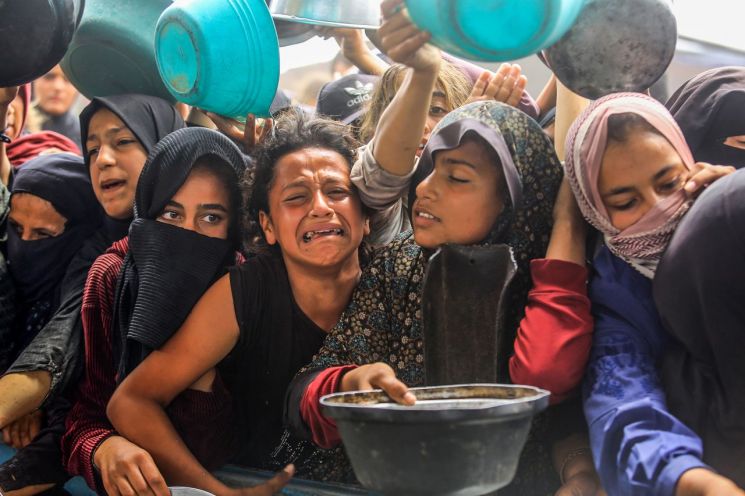 Meanwhile, in the Gaza Strip, as the war has continued for over one year and seven months, farmland and pastures have been destroyed, and fishing is prohibited. Above all, the Israeli military has blocked the entry of relief supplies into the area for about two months, leaving food supplies depleted. Because of this, residents have been forced to boil weeds and catch wild animals to eat. UPI·Yonhap News
In the Gaza Strip, as the war has continued for over one year and seven months, farmland and pastures have been destroyed, and fishing is prohibited. In particular, after the first phase of the ceasefire agreement with Hamas ended on March 2, Israel has completely blocked the entry of all relief food, medicine, and fuel into the Gaza Strip. As a result, distribution centers and free meal stations operated by UN agencies and private relief organizations have run out of supplies and have been forced to close. Because of this, residents have been forced to boil weeds and catch wild animals to eat.
Previously, Israel claimed that the blockade of relief supplies was intended to prevent Hamas from seizing or diverting aid, and announced together with the United States that it would establish a new aid management system free from Hamas influence. However, no concrete measures have been announced yet. According to figures cited by the UN Office for the Coordination of Humanitarian Affairs (UNOCHA) and reported by the BBC, the price of a 25kg sack of flour in Gaza City has reached $415 (580,000 won), which is 30 times higher than at the end of February.
© The Asia Business Daily(www.asiae.co.kr). All rights reserved.


















