"Excessive Consumption Can Trigger Blood Sugar Spikes"
Following the global popularity of tteokbokki, honey rice cakes, and gimbap, another Korean food has recently captured the hearts of people overseas: fruit cheong, a syrup made by marinating fruit in sugar and letting it mature. The influence of the fruit cheong phenomenon is evident from the sheer number of posts on various social networking services (SNS) using keywords like "Korean syrup" or "cheong."
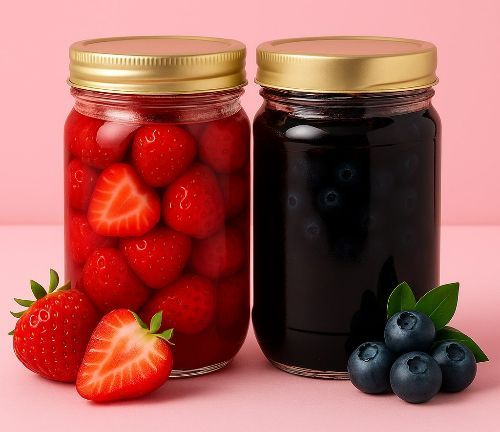
In particular, a 29-second video posted by Nick DiGiovanni, a famous American chef and YouTuber, showing how to make "Korean strawberry syrup (strawberry cheong)" has surpassed 99 million views. Inspired by this video, many foreigners are now sharing recipes and reviews for various types of fruit cheong, including blueberry cheong, cherry cheong, and lemon cheong.
◆Simple and easy to make... Highly versatile= One reason for the popularity of fruit cheong is its simple preparation method. All you need to do is cut the fruit into bite-sized pieces, place them in a glass jar, pour in sugar or honey, seal the jar, and store it in the refrigerator. For optimal maturation and deeper flavor, the fruit-to-sugar ratio should be 1:1. After about a week, strain out the fruit, and you are left with a thick liquid where the fruit juice and sugar have blended together.
This syrup can be mixed with warm water to make tea, or combined with cold sparkling water to create a refreshing ade. Its versatility has made it a popular ingredient worldwide, as it can also be used as salad dressing, yogurt topping, meat marinade, or pancake syrup.
◆Aids digestion and promotes circulation= Fruit cheong also offers benefits from both traditional Korean medicine and nutritional perspectives. It helps ease digestive burden and warms the stomach. Especially when consumed as a warm tea, fruit cheong can support the spleen and stomach functions and enhance digestion. It is also known for its anti-aging and blood circulation benefits, leading traditional Korean medicine to consider fruit cheong a health food that harmonizes yin-yang and qi-blood balance.
The specific health benefits of fruit cheong depend on the fruit used. Strawberry cheong helps cool the body and stimulates the appetite. Blueberry cheong is said to improve eye health, strengthen the liver and kidneys, and aid in anti-aging. Cherry cheong replenishes liver blood, promotes blood circulation, and can help address menstrual irregularities in women.
◆Caution against overconsumption, as noted in Donguibogam= The Donguibogam, a classic text of Korean medicine, also states that fruit and honey (or sugar) help replenish bodily fluids and dissipate heat. It also notes that an appropriate amount of sweetness supports the spleen and stomach, promotes digestion, increases appetite, and facilitates nutrient absorption.
However, it warns that excessive intake of sweet foods can burden the spleen and stomach and cause digestive problems. It also explains that too much sweetness generates damp-heat in the body, which can lead to various conditions such as impaired liver function, bloodshot eyes, diarrhea, constipation, cystitis, vaginitis, and dermatitis.
◆Can cause 'blood sugar spikes' and lead to diabetes= From a medical perspective, consuming large amounts of high-sugar foods like fruit cheong in a short period can cause the pancreas to secrete large amounts of insulin, resulting in a rapid rise in blood sugar. This is because both the natural fructose and added sugar in fruit cheong make it a high-sugar food. After consuming such foods, blood sugar can quickly drop, leading to hypoglycemic symptoms. This cycle of rapid blood sugar increases and decreases is known as a "blood sugar spike."
Blood sugar spikes can lead to diabetes and, in severe cases, may cause musculoskeletal disorders such as knee osteoarthritis. According to a study by the Spine and Joint Research Institute at Jasaeng Oriental Medicine Hospital, published in the SCI(E)-level international journal PLOS One, the prevalence of knee osteoarthritis in diabetic patients was found to be 1.26 times higher than in the control group. The researchers at Jasaeng Oriental Medicine Hospital analyzed that diabetes can impair blood circulation, making it difficult to supply sufficient oxygen and nutrients to cartilage tissue, thereby accelerating joint degeneration.
Park Kyungsoo, director of Pyeongchon Jasaeng Oriental Medicine Clinic, said, "Fruit cheong is known as a health food that aids digestion and promotes qi-blood circulation, but excessive consumption can disrupt the body's balance." He added, "Consuming too much sweet and sticky food can block the flow of qi and increase heat in the pericardium system, potentially causing headaches, insomnia, and hwa-byung. Therefore, it is best to consume it in moderation."
© The Asia Business Daily(www.asiae.co.kr). All rights reserved.
![Clutching a Stolen Dior Bag, Saying "I Hate Being Poor but Real"... The Grotesque Con of a "Human Knockoff" [Slate]](https://cwcontent.asiae.co.kr/asiaresize/183/2026021902243444107_1771435474.jpg)















