Living Within 1.6 to 4.8 km of Golf Courses Increases Disease Risk
"Insecticides Used on Golf Courses Are a Contributing Factor"
A recent study has found that people living near golf courses have an increased risk of developing Parkinson's disease.
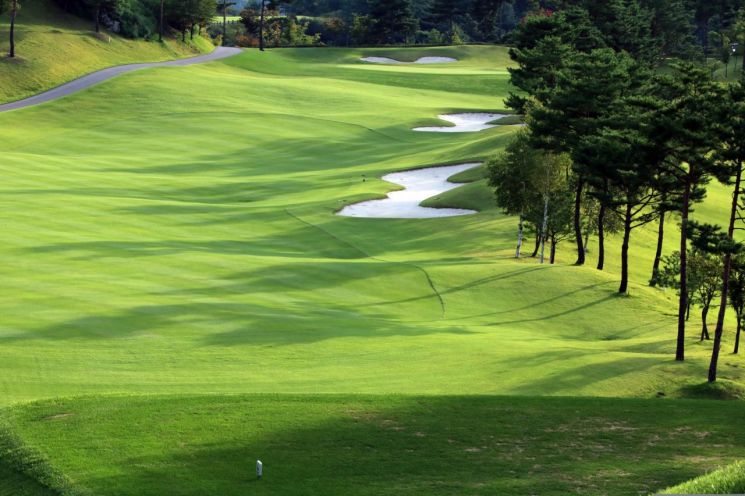
According to a study titled "Proximity to Golf Courses and Risk of Parkinson's Disease," published in JAMA Network Open, a journal of the American Medical Association, researchers from the Mayo Clinic and the University of Kansas Medical Center reported that people living within 1.6 kilometers of a golf course are 126% more likely to develop Parkinson's disease compared to those living about 10 kilometers away.
Parkinson's disease is a chronic, progressive neurodegenerative disorder caused by the loss of dopamine-producing neurons. It is characterized by symptoms such as bradykinesia (slowness of movement), resting tremor, and muscle rigidity. There are more than 10 million people with Parkinson's disease worldwide, and the number of patients in South Korea is estimated to exceed 150,000 this year.
The research team investigated the impact of residential proximity to golf courses on the development of Parkinson's disease by analyzing data from 419 patients with Parkinson's disease and a control group of 5,113 individuals living in southern Minnesota and western Wisconsin between 1991 and 2015.
The results showed that people living between 1.6 and 4.8 kilometers from a golf course had the highest risk of developing Parkinson's disease. Additionally, households supplied with water from municipal systems in areas with golf courses had twice the risk of developing Parkinson's disease compared to households not supplied by such systems.
The researchers analyzed that various pesticides used on golf courses are associated with Parkinson's disease. They stated, "For years, organophosphates, chlorpyrifos, methylchlorophenoxypropionic acid, 2,4-dichlorophenoxyacetic acid, maneb, and organochlorine insecticides have been used on golf courses," and explained, "These insecticides are known to be associated with the development of Parkinson's disease."
They added, "Health policies aimed at reducing groundwater contamination and airborne pesticide exposure from golf courses may help lower the risk of Parkinson's disease in nearby areas."
However, some Parkinson's disease experts have pointed out limitations of the study, such as its restricted geographic scope and its focus solely on environmental factors. David Dexter, a researcher at Parkinson's UK, noted, "A significant limitation of this study is that it did not focus exclusively on people who had lived near golf courses for a long period of time," and emphasized, "Because the study was not carefully controlled, the validity of the claims regarding pesticide exposure is reduced."
© The Asia Business Daily(www.asiae.co.kr). All rights reserved.
![Clutching a Stolen Dior Bag, Saying "I Hate Being Poor but Real"... The Grotesque Con of a "Human Knockoff" [Slate]](https://cwcontent.asiae.co.kr/asiaresize/183/2026021902243444107_1771435474.jpg)
















