Volatility in April Has Subsided, But Concerns Remain
Preference for U.S. Assets Supports Job Creation
Assessment of Trump’s Economic Policies to Be Released in the Second Half of the Year
Phillip Swagel, Director of the Congressional Budget Office (CBO), a fiscal watchdog under the U.S. Congress, stated that he is currently assessing whether the market turmoil that followed President Donald Trump's announcement of reciprocal tariffs last month will have a lasting impact on how foreign investors evaluate U.S. assets.
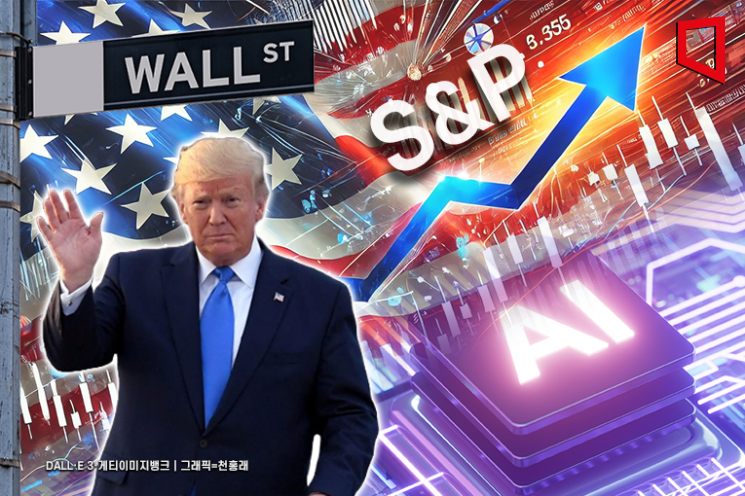
In an interview with the Financial Times (FT) published on the 10th (local time), Swagel said, "We have moved past the volatility of April, but the memory of it will linger," adding, "We are trying to determine whether global investors will be permanently hesitant when they look at the United States."
The CBO is scheduled to release its outlook on the U.S. growth rate and fiscal situation for the next ten years this summer, which will mark the agency's first assessment of economic policy since the start of the Trump administration.
Swagel explained that, due to a lack of hard data at this point, he is not making any definitive statements about whether there will be a permanent impact.
He further questioned, "Will we look back on this moment (with the passage of time) as a turning point that led to a major transformation in the global economy and a diminished role for the United States? Or will it be seen as an episode of volatility that was overcome by other growth-promoting measures such as tax cuts and deregulation?"
He also said, "Once the tariff issue stabilizes, the Trump administration may be able to make progress in other areas. That would be a positive outcome," but added, "Alternatively, we might look back and say this was the beginning of a period of slower growth."
Regarding the atmosphere among participants at the International Monetary Fund (IMF) and World Bank Spring Meetings held from April 21 to 26, Swagel said, "To my recollection, it was truly the most negative I have seen," but noted that sentiment has since shifted to a more wait-and-see approach, which he considers progress.
After President Trump announced reciprocal tariffs on April 2, the U.S. stock market, Treasury bonds, and the value of the dollar all declined simultaneously in what was described as a "triple weakness." Until last year, there had been expectations of American exceptionalism, with U.S. assets remaining strong despite concerns over a global economic slowdown, but those expectations faded, and concerns were raised about the dollar's status as the world's key currency.
Swagel explained that foreign investors' preference for U.S. assets supports U.S. economic growth and job creation, which in turn enables the U.S. government to run large fiscal deficits and issue Treasury bonds.
Regarding Treasury Secretary Scott Besant's plan to reduce the fiscal deficit as a percentage of GDP from 6.4% last year to 3% by the end of the term, Swagel said that while the details remain to be seen, "it is certainly possible" if the growth rate rises and fiscal spending is reduced.
© The Asia Business Daily(www.asiae.co.kr). All rights reserved.
![Clutching a Stolen Dior Bag, Saying "I Hate Being Poor but Real"... The Grotesque Con of a "Human Knockoff" [Slate]](https://cwcontent.asiae.co.kr/asiaresize/183/2026021902243444107_1771435474.jpg)















