Middle-Class "YOLO" Spending Fades,
Luxury Market Faces First Decline in 15 Years
Business Insider reported on the 11th (local time) that middle-class households, which had driven the growth of the luxury goods market through "YOLO (You Only Live Once·YOLO)" consumption?spending lavishly to live life to the fullest?are now closing their wallets, leading to a slowdown in the market.
According to consulting firm Bain & Company, the global personal luxury goods market in 2024 declined by 2% compared to the previous year. Excluding a temporary slump at the onset of the COVID-19 pandemic, this marks the first negative growth in fifteen years. In detail, the global luxury market lost about 50 million customers last year. Even in the U.S. luxury market alone, stagnation persisted throughout last year, beginning with a drop of more than 10% in the third quarter of 2023.
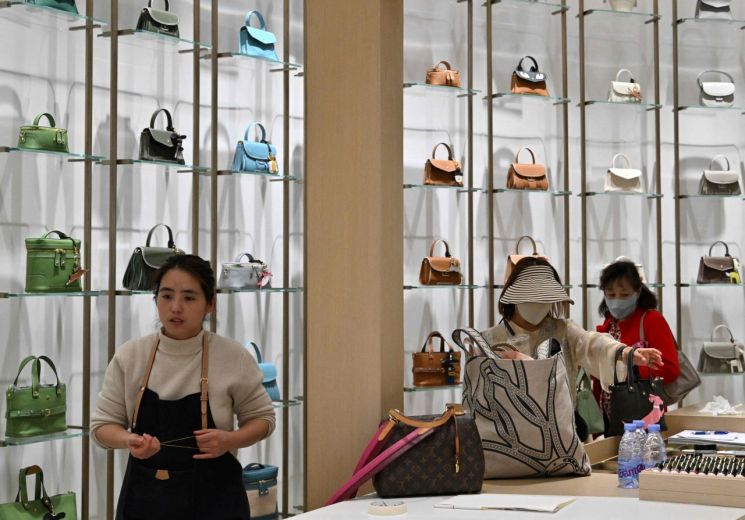
The luxury industry is expected to continue this trend this year as well. According to Bernstein, luxury industry sales are projected to decrease by 2% this year.
Bain & Company analyzed that the so-called "second-tier" luxury consumers?those who spend less than $22,000 (about 30.79 million KRW) annually at a single luxury brand?accounted for 65% of the global luxury market in 2021, but now make up only 55%.
Claudia D'Arpizio, a luxury expert and partner at Bain & Company, stated, "Most of the lost consumers are those who once aspired to luxury goods, but have been driven away by price increases and challenging macroeconomic conditions." She added, "For several years after the COVID-19 pandemic, the luxury market was in a 'small bubble,' and that bubble is now bursting."
Both the U.S. and China, the two largest luxury markets, are experiencing declining demand. In China, the economic downturn is prolonged, while in the U.S., inflation is causing the middle class to tighten their spending.
Ted Rossman, senior strategist at Bankrate, recently analyzed that the trend of high spending among middle- and lower-income Americans has disappeared. Business Insider pointed out that over the past five years, consumer prices in the U.S. have risen by 24%, while average hourly wages for private sector workers have increased by only 20%, resulting in Americans struggling under the burden of inflation. Middle-class consumers also have low expectations for future income. According to a survey conducted in the first quarter by financial services company Primerica, 69% of middle-class consumers believe their income is falling behind the cost of living. Additionally, 71% rated their ability to save for the future as "poor" or "not very good."
Rossman stated that the future trend in luxury consumption will depend on whether President Donald Trump pushes forward with a trade war and whether selective consumption contracts due to a worsening job market.
© The Asia Business Daily(www.asiae.co.kr). All rights reserved.
![Clutching a Stolen Dior Bag, Saying "I Hate Being Poor but Real"... The Grotesque Con of a "Human Knockoff" [Slate]](https://cwcontent.asiae.co.kr/asiaresize/183/2026021902243444107_1771435474.jpg)
















