Transitioning to a City Centered on People, Not Just Nature
"The way I look at flowers has changed. In the past, I just thought they were pretty, but now I find myself wondering why this flower has to bloom in this particular place."
This is what participant A from the Suncheon Eco College citizen education program said.
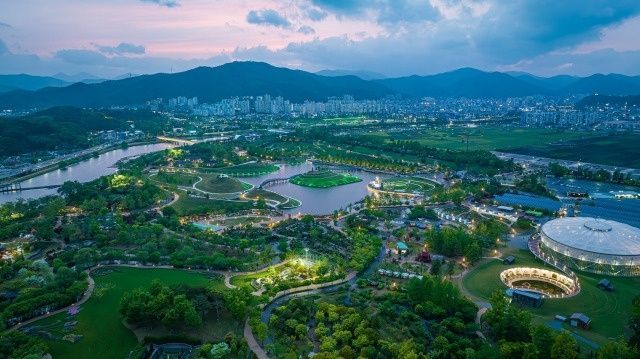
While many cities across the country claim to be ecological cities, few have adapted their urban environment to nature as much as Suncheon in South Jeolla Province. Suncheon is a city that postponed development, preserved nature, and accepted inconvenience. The cost was not great. In fact, the city became home to the nation's first national garden, and the Suncheonman Wetland, registered under the Ramsar Convention, is now a globally recognized model for ecological tourism.
Suncheon City places ecology at the center of its policies, but is also adjusting its policy direction to bring ecology into the daily lives of its citizens. A representative example is the "Suncheon Eco College." This program goes beyond simply visiting gardens and wetlands; it is a practical ecological sensitivity education course that teaches how to perceive nature and how humans and ecosystems can coexist.
After a pilot run last year, Eco College is scheduled to expand into a full-fledged education program this year. It targets everyone from teenagers to seniors, aiming to connect ecological understanding to a "way of life."
An official from the department in charge of ecological policy at Suncheon City emphasized, "This is not about policy, but about changing people's senses." Ecology is not just a concept limited to forests, gardens, and wetlands. How people form relationships and restore communities is also a crucial aspect of ecology.
To this end, Suncheon City is continuously working to bring ecological culture closer to citizens' daily lives. Examples include: ▲operating living garden programs linked with citizen art activities, ▲planning resident-led gardens distributed throughout neighborhoods, and ▲running art-ecology fusion projects through the Suncheon Cultural Foundation.
The reason Suncheon is called a unique ecological city in Korea is not simply because it has a national garden or a Ramsar wetland. This is a city that has put into practice the belief that "development is not everything," and is now moving beyond preservation to design a structure where people and nature live together.
It takes "the courage to leave some spaces untouched," "the determination to halt certain developments," and "the process of sharing these decisions with citizens." That is why Suncheon is now preparing for the next stage as an ecological city, transitioning from a "garden to be seen" to a "city to stay in."
© The Asia Business Daily(www.asiae.co.kr). All rights reserved.

















