As military clashes between India and Pakistan intensify, The Guardian, a British daily, reported on May 10 (local time) that the hardline response from the Pakistani side is being attributed to Chief of Army Staff Asim Munir, who holds significant power within the military.
According to the report, since taking office just over two years ago, Chief of Army Staff Munir has been exerting influence over the administration and judiciary from behind the scenes without overthrowing the civilian government.
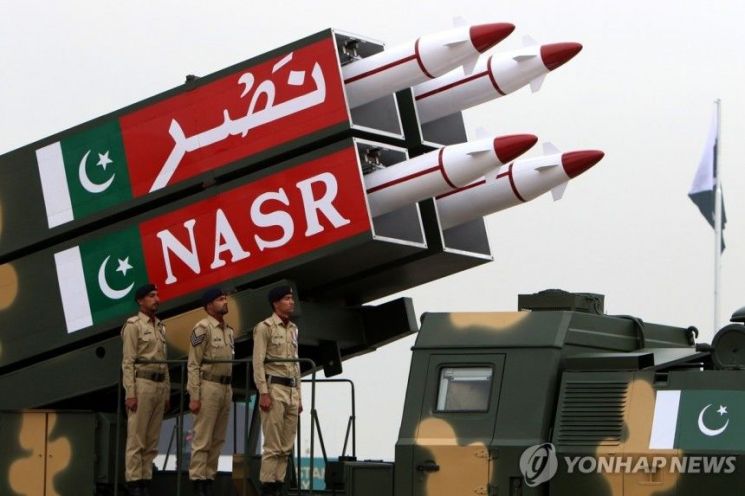
After India attacked nine locations in Pakistan-administered Kashmir on May 7, the Pakistani military was granted authority by the government to determine the appropriate response. The Guardian stated, "The decision on a retaliation plan will now be led by Chief of Army Staff Munir."
Chief of Army Staff Munir is known for his unusual background within the Pakistani military. He was born into a family of educators, not from an elite military lineage, and his family had migrated to India during the partition of Pakistan. Notably, he did not graduate from the elite military academy that produces most of Pakistan's top officers, but instead completed his training at an officer training school.
Munir rose rapidly through the ranks, becoming the director of the Inter-Services Intelligence (ISI) in 2018, a position considered highly influential. During his tenure as ISI chief, he clashed with former Prime Minister Imran Khan and was subsequently removed from the post.
After becoming Chief of Army Staff in 2022 and assuming leadership of the military, Munir has been accused of orchestrating the arrest of former Prime Minister Imran Khan and the disqualification of Khan's Pakistan Tehreek-e-Insaf (PTI) party from elections. He is also reported to have purged numerous senior officers who were loyal to Khan.
Meanwhile, analysts cited by The Guardian interpret the ongoing military conflict with India as providing another opportunity for Munir. As a surge of far-right nationalist sentiment demanding all-out war with India grows, favorable opinion towards Munir is reportedly forming within the military.
In particular, Munir is known to be a staunch supporter of the so-called "two-nation theory," which holds that Muslims in Pakistan and Hindus in India cannot live together in one country.
Aqil Shah, a South Asia expert and professor at Georgetown University, stated, "As the head of the military, Chief Munir has shown a brutal side by imprisoning former Prime Minister Khan, rigging elections, and subjecting civilians to military trials, leading to a poor reputation." He added, "However, if the military response to this crisis is deemed appropriate, Munir could shed the stigma related to political repression and be recognized as a military leader who stood up to his greatest adversary, India."
© The Asia Business Daily(www.asiae.co.kr). All rights reserved.

















