The Economist: Emergence of New Weapons and Tactics Raises Risk of Escalation
Foreign media reports have indicated that the military conflict between India and Pakistan is entering a new and dangerous phase, distinct from previous confrontations.
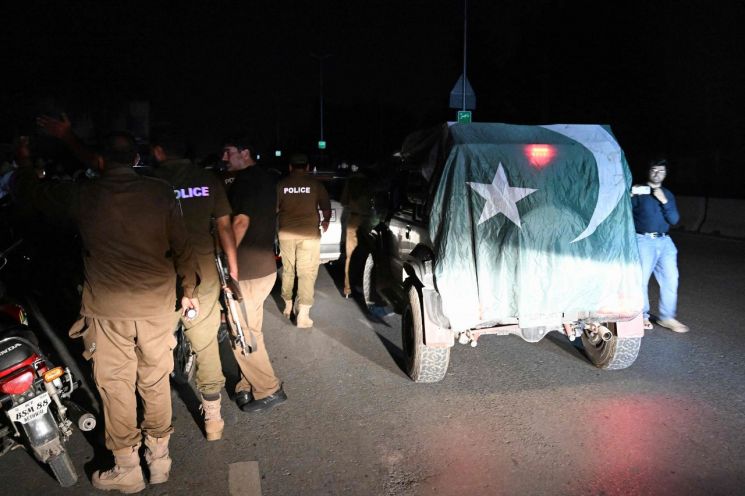
The Economist reported on May 9 (local time) that India and Pakistan are caught in a dangerous cycle of escalation due to the import of sophisticated weaponry and the expansion of the battlefield. The magazine warned that, although the international community does not officially recognize them as such, both countries are de facto nuclear powers, and their ongoing conflict carries the risk of escalating into an irreversible nuclear disaster.
The relationship between the two countries reached an extreme after an armed group killed 26 tourists in a shooting attack in Indian-administered Kashmir on April 22. India blamed Pakistan for orchestrating the attack and, on May 7, launched "Operation Sindhur," firing missiles at nine locations in Pakistan-administered Kashmir and Punjab province. On May 10, Pakistan responded with a large-scale military retaliation.
One notable aspect of the clashes was the use of advanced weaponry not previously seen in such conflicts. India deployed the latest French-made Rafale fighter jets, Israeli-made Harop drones, and Russian S-400 air defense missiles. Pakistan, in turn, has armed itself with new Chinese-made J-10C fighter jets equipped with PL-15 long-range air-to-air missiles.
The Economist analyzed that the use of unmanned combat drones, which have a greater impact than traditional artillery, is creating a new dynamic in the conflict. This makes it difficult to assess when an enemy attack will begin or end, and who holds the upper hand. Although India and Pakistan have been in conflict over the Kashmir region for more than 50 years, they have never engaged in clashes with such advanced weaponry and heightened confidence.
The Economist also identified the widening scope of military clashes as another risk factor. In 2019, India and Pakistan came to the brink of all-out war, but at that time, India targeted only certain areas within Kashmir and parts of Pakistan for airstrikes. This time, however, India carried out airstrikes deep inside Punjab province, Pakistan's most populous and politically and economically significant region.
The Economist further analyzed that India appears to have resolved to demonstrate "escalation dominance." As a result, Pakistan now faces greater difficulty in finding a way to appease domestic public opinion while avoiding further Indian attacks. In the worst-case scenario, there are concerns that Pakistan could signal the potential use of nuclear weapons, as it did during the Kargil War in 1999.
Srinath Raghavan, a professor at Ashoka University in India, stated, "This appears to be a classic escalation scenario, with both sides demonstrating resolve and raising the stakes," adding, "If both sides decide to deny each other an exit and insist on demonstrating escalation dominance, the situation could quickly spiral out of control."
© The Asia Business Daily(www.asiae.co.kr). All rights reserved.
![Clutching a Stolen Dior Bag, Saying "I Hate Being Poor but Real"... The Grotesque Con of a "Human Knockoff" [Slate]](https://cwcontent.asiae.co.kr/asiaresize/183/2026021902243444107_1771435474.jpg)
















