'Automobile Factory vs. DNA Factory'...
The Innovation Engine Transforming All Sectors Beyond Heavy Industries
Early-Stage Korean Biofoundries:
Need for Expanded Investment to Bridge the Gap with Leading Countries
Market Expected to Grow to 100 Trillion Won by 2031...
Attention Needed on Ecosystem Changes
Public Biofoundry Construction Needed
to Expand the Industrial Ecosystem
Potential for Ethical and Social Controversies...
Countermeasures Must Be Prepared
"There are still many challenges to address, such as the scale of the budget compared to major countries, localization of core equipment, and the development of applied technologies. Therefore, continuous and strategic investment is urgently needed going forward."
Dahee Lee, Director of the Synthetic Biology Center at the Korea Research Institute of Bioscience and Biotechnology (KRIBB), evaluated that "with the establishment of the Biofoundry infrastructure project and the world's first Synthetic Biology Promotion Act, Korea has laid the foundation for securing global competitiveness by initiating the construction of a public biofoundry center, national-level promotion plans, standardization, workforce training, and international cooperation." However, she emphasized the necessity of ongoing and strategic investment.
 Synthetic Biology is a technology that designs and synthesizes logical circuits by utilizing DNA, which contains all the information of living organisms, like standardized bio-parts, to implement biological functions not found in nature or to redesign existing organisms. Photo by Pixabay
'Synthetic Biology' is a technology that designs and synthesizes logical circuits by utilizing DNA, which contains all the information of living organisms, like standardized bio-parts, to implement biological functions not found in nature or to redesign existing organisms. This approach actively applies engineering methodologies to life sciences, fundamentally differing from traditional, passive methods of biological research. A Biofoundry is a platform, or manufacturing facility, that applies synthetic biology technologies to design and construct living organisms.
'Automobile Factory vs. DNA Factory'... Beyond Heavy Industries, the Innovation Engine for All Sectors
Synthetic biology and biofoundry technologies are often introduced as simply 'fast and efficient production methods,' but the core lies not in production efficiency, but in the structural transformation of the industrial ecosystem.
This technology involves designing biological components such as DNA, proteins, and artificial cells like digital parts, and manufacturing them through automated processes. By rapidly repeating the so-called DBTL (Design-Build-Test-Learn) cycle, it achieves a speed and precision in experimentation that is incomparable to the conventional manual approach in biology.
 Dahee Lee, Director of the Synthetic Biology Center at the Korea Research Institute of Bioscience and Biotechnology (KRIBB). Provided by the Korea Research Institute of Bioscience and Biotechnology
What is even more noteworthy is that this production structure is replacing the value chains of traditional heavy industries such as automotive and chemical sectors. Conventional heavy industries require large-scale facilities, massive initial capital, and long periods to recoup investments, and are based on the premise of low-skilled, large-scale employment. In contrast, biofoundries, leveraging robots, artificial intelligence (AI), and automation systems, enable flexible, small-batch, multi-product manufacturing and are structured around highly skilled personnel.
This shift in production methods is not just a process innovation; it fundamentally rewrites employment structures and the composition of the industrial ecosystem. It provides a foundation for diverse players?such as startups and small and medium-sized enterprises?to enter fields previously monopolized by a few large corporations, and it promotes the creation of new, technology-driven value chains.
Such innovation is already being reflected in the industrial field. Global pharmaceutical company Moderna utilized a digital mRNA design and synthesis platform?a core element of biofoundry technology?when designing and producing messenger RNA (mRNA)-based vaccines. The driving force behind Moderna's rapid and flexible response during the COVID-19 pandemic was also its digital-based manufacturing process.
 Entrance of Biofoundry Beta at Korea Research Institute of Bioscience and Biotechnology. Photo by Korea Research Institute of Bioscience and Biotechnology
Ginkgo Bioworks, a U.S. biotechnology company, is demonstrating a new manufacturing model of 'custom-made living organisms' by designing and producing industry-specific microorganisms in its own foundry for sectors such as food, cosmetics, and agriculture. Amyris, a U.S. synthetic biology DNA programming company, is leading the sustainable materials market by replacing petroleum-derived chemicals with eco-friendly bio-based materials through fermentation technology.
The reason major companies and countries are focusing on securing synthetic biology technologies and building biofoundries is not just to enhance R&D capabilities, but also to strategically seize structural leadership in the next-generation chemical industry.
Changes brought about by synthetic biology?such as increased flexibility in production processes, diversification of value chains, and the formation of employment structures centered on highly skilled personnel?are highly likely to lead to a mid- to long-term restructuring across the entire industrial sector.
Early-Stage Korean Biofoundries: Need for Expanded Investment to Bridge the Gap with Leading Countries
How is Korea responding to these changes? Currently, domestic biofoundries remain in the early stages, led mainly by the private sector and a few research institutions, with public infrastructure still lacking. Korea needs to respond with a long-term industrial strategy rather than a short-term technology acquisition race.
CJ CheilJedang is conducting research on high-performance microbial strain development and fermentation process automation at its 'CJ Blossom Park,' while the Synthetic Biology Center at KRIBB operates a small-scale biofoundry beta system. However, these efforts are still limited compared to the large-scale public and private infrastructures and global networks established by leading countries.

In the United States, the Biden administration has designated synthetic biology and bio-manufacturing as core future technologies and is accelerating technology development and commercialization, with private companies such as Ginkgo Bioworks at the center. The U.S. Congress is protecting and supporting bio-technologies as a matter of national security through the National Defense Authorization Act (NDAA) and Intelligence Authorization Act (IAA), while also expanding public-private cooperation frameworks with companies like Codexis, an enzyme engineering firm, and BioMADE, which is supported by the Department of Defense.
Such strategic responses are spreading beyond the United States to other major countries. The United Kingdom established the Synthetic Biology Leadership Council (SBLC) in 2012 and is implementing a long-term roadmap to create a synthetic biology market worth 10 billion pounds (about 18.7 trillion won) by 2030.
Since 2017, China has been promoting the establishment of biofoundries in the Shenzhen area, led by the Chinese Academy of Sciences, and built a large-scale cluster in 2023. The plan is to further narrow the gap with the U.S. in both technology and infrastructure by building a public biofoundry network in 10 regions, including Shanghai and Tianjin.
Japan, too, is investing 120 trillion yen (about 1,174 trillion won) over the next five years through public-private partnerships to build an advanced bio-technology ecosystem, including synthetic biology and biofoundries. Singapore has also established a national-level system for technology acquisition early on, building public biofoundry infrastructure since 2016 and establishing the National Centre for Engineering Biology (NCEB).
Director Lee stated, "Major countries, including the United States, have been fostering biofoundries as a national strategy for more than a decade, building automated facilities, standardized processes, and AI-based design platforms, while also actively operating inter-country technology networks and leading the formation of global standards."
Market Expected to Grow to 100 Trillion Won by 2031... Attention Needed on Ecosystem Changes

The market is already changing. According to the KRIBB Synthetic Biology Center, the global synthetic biology market is projected to grow from about $10.1 billion (14.56 trillion won) in 2021 to about $71.7 billion (99.79 trillion won) in 2031, representing a sevenfold increase.
The domestic market is also expected to expand from about $120 million (166.9 billion won) to about $1.7 billion (2.365 trillion won) over the same period. In particular, as demand for synthetic biology-based bio-manufacturing increases significantly across various industries such as energy, pharmaceuticals, agriculture, and environment, the necessity of biofoundries is becoming even more pronounced.
Although it is difficult to predict accurately as the field is just emerging, the Synthetic Biology Center estimates the global biofoundry market to be around $5 billion to $7 billion (7 trillion to 10 trillion won) as of 2023, and expects it to achieve a high annual growth rate of over 20%. In Korea, investments by major corporations and startups?such as CJ, Daesang, LG Chem, Bioneer, and CutisBio?are also gradually increasing.
'CJ Blossom Park' of CJ CheilJedang and the Synthetic Biology Center at KRIBB are laying important foundations for the growth of Korea's biofoundry industry. 'CJ Blossom Park' is focusing on the development of high-performance microorganisms and the automation of large-scale fermentation processes, expanding its role as an R&D hub for the domestic bio-industry. By supporting experiments and verification processes that are difficult for startups or academia to conduct?thanks to the capital strength and automation facilities of large corporations?it is having a ripple effect throughout the industrial ecosystem.
Public Biofoundry Construction Needed to Expand the Industrial Ecosystem

However, a private sector-centered structure has its limitations, as it restricts the range of users. Building public biofoundries that can provide open experimental platforms to startups, small and medium-sized enterprises, and researchers is essential.
Fortunately, the public research sector has anticipated this trend and has been preparing responses. The KRIBB Synthetic Biology Center has taken the lead in establishing a national foundation by developing and operating Korea's first biofoundry system, commercializing core technologies, linking with industry, and building global networks.
Additionally, it serves as a public hub by establishing a part bank for bio-components such as DNA, proteins, and cell modules, revitalizing the research community, standardizing data, and nurturing talent.
However, since synthetic biology and biofoundries represent a structural transformation that affects the entire industrial ecosystem, it is pointed out that responses from the public sector alone are not sufficient. Experts commonly agree that it is necessary to increase the reproducibility and efficiency of experiments and foster a healthy industrial ecosystem by automating and standardizing DBTL processes and expanding public-private linkage platforms.
Director Lee emphasized, "Biofoundries should be approached not just as technical infrastructure, but as a central pillar of industrial strategy."
Potential for Ethical and Social Controversies... Countermeasures Must Be Prepared
There are also voices calling for countermeasures to be prepared, as the advancement of synthetic biology could lead to ethical and social controversies.
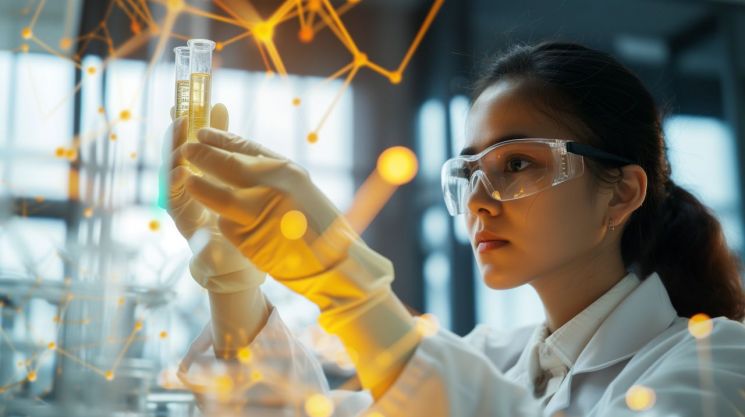 The advancement of synthetic biology may lead to ethical and social controversies, so there are calls for corresponding countermeasures to be prepared as well. In 2018, Dr. He Jiankui from China was criticized for creating gene-edited babies with HIV immunity. The knock-off phenomenon and other issues must also be guarded against. Provided by Pixabay
Gene-editing technology has advanced to the fourth generation, known as 'Prime Editing.' This technology enables the insertion, deletion, and alteration of specific bases. While its use for treating genetic diseases is positive, if it is used to create 'designer babies' with physical or intellectual superiority, it could cause serious ethical issues.
In fact, in 2018, Dr. He Jiankui from China was strongly criticized for creating gene-edited babies with HIV immunity using the third-generation gene-editing technology 'CRISPR.' This case demonstrated that editing human embryo genes is realistically possible, but it is also cited as an example where the potential social impact of indiscriminate use was not sufficiently considered.
Unintended mutations or unpredictable side effects, known as the 'knock-off' phenomenon, can also occur. For example, microorganisms designed to break down plastic have sometimes caused side effects by breaking down other organic matter in the environment. In the case of genetically modified organisms (GMOs), while productivity and disease resistance can be enhanced, they can also cause various risks such as ecosystem disruption, allergies, and the creation of toxic substances.
Director Lee advised, "From the early stages of technology development, it is necessary to analyze ethical and social impacts and derive social consensus through multi-layered discussions involving experts and citizens. Especially in sensitive areas such as human gene editing, it is important to revise laws and systems in connection with international guidelines and strictly manage the purpose and scope of research."
© The Asia Business Daily(www.asiae.co.kr). All rights reserved.



















