Religious and Academic Circles Criticize:
"Controlling Births Cannot Solve Poverty"
An Indonesian provincial governor has sparked controversy by proposing vasectomies as a condition for welfare support for men from low-income backgrounds.
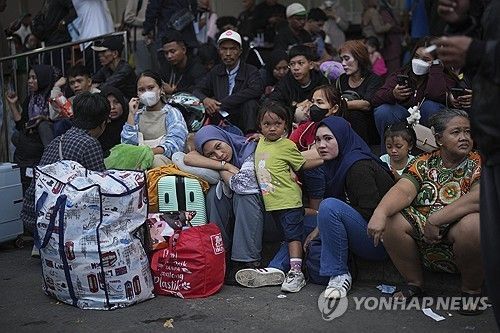
According to the South China Morning Post (SCMP) on May 8 (local time), Dedi Mulyadi, governor of West Java Province in Indonesia, recently stated in a speech that he was considering making vasectomies a prerequisite for impoverished men to receive government social welfare assistance.
Governor Mulyadi mentioned that he had met a couple with 11 children, claiming that some of their children had been forced onto the streets to sell bread. He said, "If you cannot raise a child properly, do not have one," and suggested that childbirth subsidies for marginalized women should instead be used for the construction of 'simple housing' projects.
Governor Mulyadi also commented, "Poor families tend to have many children, while wealthy people pay 2 billion rupiah (about 16 million won) for in vitro fertilization but still struggle to have children."
SCMP reported that vasectomies could be included as a condition for other forms of government support in the future, such as food aid, scholarships, and public housing. The report also noted that men who undergo vasectomies would receive 500,000 rupiah (about 42,000 won).
Governor Mulyadi's remarks have drawn criticism from both religious leaders and experts. Cholil Nafis, a senior cleric from Nahdlatul Ulama, Indonesia's largest Islamic organization, wrote on social media, "Islam prohibits permanent sterilization," and added, "Poverty should be addressed by increasing employment opportunities, not by preventing the poor from having children."
Sulfikar Amir, an associate professor at the School of Social Sciences at Nanyang Technological University in Singapore, also criticized the idea, calling it "truly absurd" and pointing out that poverty cannot be solved by controlling the reproductive rights of poor families.
This is not the first time Indonesian politicians have sparked controversy with remarks about poverty. In 2020, then Coordinating Minister for Human Development and Culture, Muhadjir Effendy, was criticized for suggesting that marriages between poor families contributed to Indonesia's poverty rate.
Meanwhile, this is not the only controversial policy from Governor Mulyadi. Recently, as youth crime surged in satellite cities near Jakarta, he proposed a Chinese-style military rehabilitation program, stating that he would personally take delinquent youths to military facilities for six months of training, which has also become a subject of debate.
© The Asia Business Daily(www.asiae.co.kr). All rights reserved.
![Clutching a Stolen Dior Bag, Saying "I Hate Being Poor but Real"... The Grotesque Con of a "Human Knockoff" [Slate]](https://cwcontent.asiae.co.kr/asiaresize/183/2026021902243444107_1771435474.jpg)















