Transition to Coeducation Fails to Attract Male Students at Nagano Junior Colleges
Local Junior Colleges Face Crisis as Enrollment Falls Short
Even Coeducation Cannot Solve Student Shortages
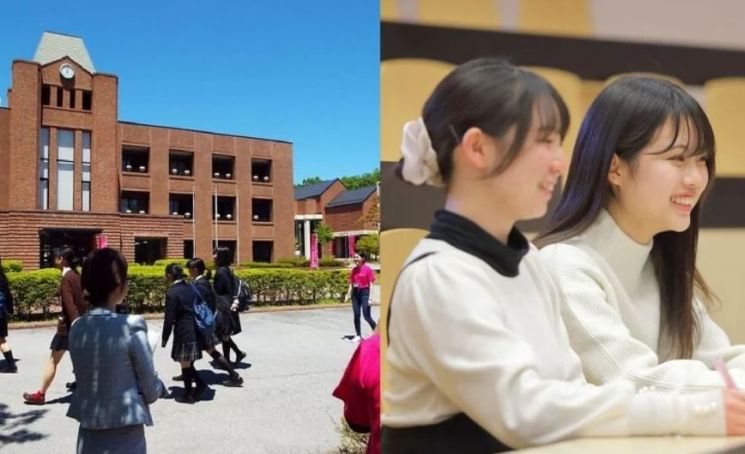 Ueda Women's Junior College has transitioned to Ueda Junior College of Engineering. University promotional photo
In April, Ueda Junior College (formerly Ueda Women's Junior College) in Ueda City, Nagano Prefecture, and the Junior College Division of Seisen University in Nagano City (formerly Seisen Women's Academy Junior College) transitioned to coeducational systems. As a result, all women's junior colleges in Nagano Prefecture have now disappeared. Junior colleges in Japan are similar to vocational colleges in South Korea. The decision to become coeducational was a desperate measure to survive amid a declining birthrate and a growing preference for four-year universities. However, in the spring of this year, only 15 male students were admitted to Ueda Junior College, and none to the Seisen University Junior College Division. Both schools failed to fill their enrollment quotas.
On May 7, the Shinano Mainichi Shimbun, a local daily in Nagano Prefecture, reported, "Both colleges announced their transition to coeducation for the 2023 academic year and made efforts to secure students, but they are facing the reality that simply becoming coeducational does not make it easy to fill their quotas."
According to the report, Ueda Junior College transitioned to coeducation for the first time in 50 years since its founding in 1973. The college has two departments: the Department of Early Childhood Education (quota of 100 students), which operates an affiliated kindergarten, and the Department of Comprehensive Culture (quota of 80 students), where students can choose from eight specialized fields such as library science and Japanese language studies. At the entrance ceremony on April 2, a total of 114 new students attended, including 15 male students admitted in the first year of coeducation. The admissions office commented, "We expected male students to make up about 10% of the quota, so this result is within our expectations." However, they also noted, "Simply becoming coeducational is not enough to fill the quota. We need to further refine and promote the unique appeal of junior colleges."
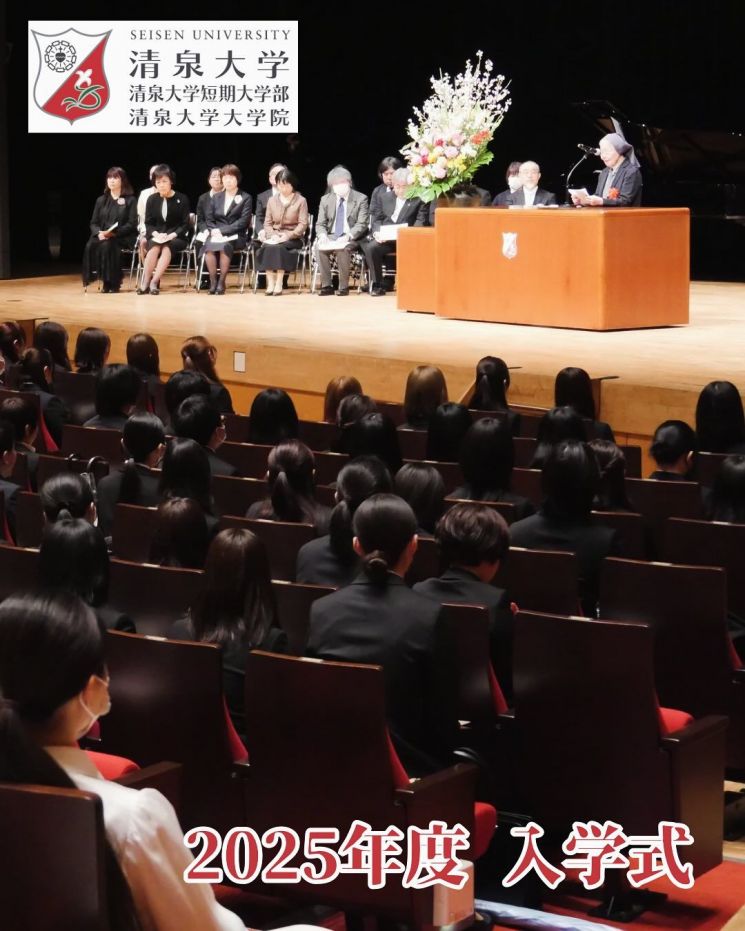 Seisen Women's Academy Junior College, which changed to a coeducational system as Seisen University Junior College, had 65 admissions out of a quota of 100 students, with no male students enrolled. University promotional photo
The Junior College Division of Seisen University, which became coeducational after transitioning from Seisen Women's Academy Junior College, admitted 65 students out of a quota of 100, with no male students. The fact that it was previously a Catholic women's junior college and that it only offers a single department?Child Studies, which trains childcare workers?also had an impact. The Seisen University admissions and publicity office told the media, "We wanted to recruit male students, but due to our history and insufficient publicity, we were unable to do so." Meanwhile, the university announced plans to establish a new Faculty of Humanities and Social Sciences in its four-year program, and to open a Department of Agri-Design (tentative name, quota of 85 students) at the former city hall site in Chikuma City in April 2027. As a result of these promotional efforts, 44 male students have enrolled as the first cohort. Most are residents of the Hokushin region, and many still commute from home.
Within Nagano Prefecture, the Shinshu Junior College Division affiliated with Saku University in Saku City announced that it will stop recruiting new students from the 2026 academic year. The decision was made after a decade of failing to meet enrollment quotas, making it difficult to secure students in the long term.
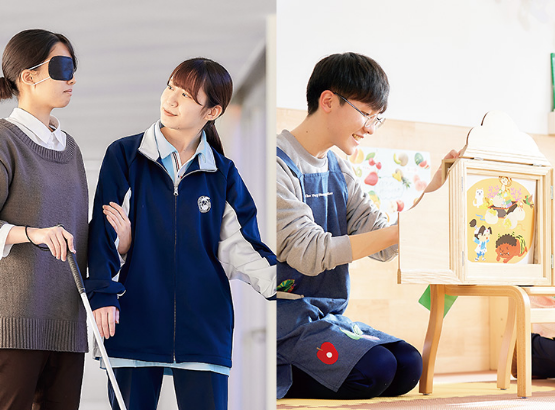 Promotional photo of the Department of Welfare at Shinshu Junior College affiliated with Saku University in Nagano City, which decided not to recruit new students from the 2026 academic year due to difficulties in student recruitment.
According to the Japan Private School Promotion and Mutual Aid Corporation, 249 private junior colleges nationwide?91.5% of the total?failed to meet their enrollment quotas for the 2024 academic year. At least 44 private junior colleges across the country, including the Shinshu Junior College Division of Saku University, will stop recruiting students for the 2025?2026 academic years. The Japanese government has excluded universities and junior colleges that have failed to meet their quotas for three consecutive years, starting from the 2024 academic year, from eligibility for the tuition reduction and exemption support system (financial aid program) for low-income students.
The media reported, "Junior colleges across the country are frequently failing to meet their quotas, and the difficulties continue." The Central Council for Education, an advisory body to the Ministry of Education, Culture, Sports, Science and Technology, recommended in February that the government should strengthen guidance and support to encourage the closure or downsizing of financially struggling institutions. Ueda Junior College stated, "The government's response is cold. We want to fulfill our role as a higher education institution rooted in the local community by cooperating with Ueda City and other local governments." The Seisen University admissions and publicity office commented, "It is no longer possible for the university alone to secure enough students. We need to form working groups with local governments and career guidance teachers to consider ways to secure talent within the prefecture."
© The Asia Business Daily(www.asiae.co.kr). All rights reserved.
![Clutching a Stolen Dior Bag, Saying "I Hate Being Poor but Real"... The Grotesque Con of a "Human Knockoff" [Slate]](https://cwcontent.asiae.co.kr/asiaresize/183/2026021902243444107_1771435474.jpg)

















