Selected as a Specialized Graduate School in "AI Circular Economy"
GIST to Receive 4.75 Billion KRW in Support Over Five Years
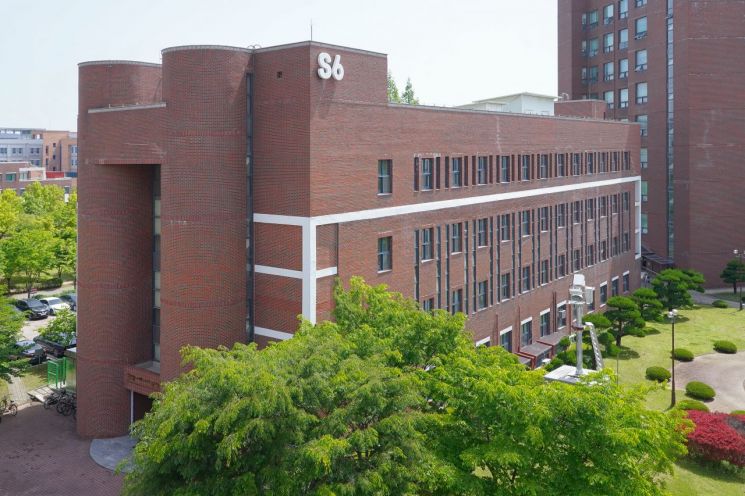
Gwangju Institute of Science and Technology (GIST) announced on May 8 that its Department of Environmental Energy Engineering has been selected as a specialized graduate school in the field of "AI Circular Economy" under the "Specialized Graduate School Development Project in the Environmental Sector" organized by the Ministry of Environment.
As a result, GIST will receive up to 4.75 billion KRW in research funding over five years (approximately 950 million KRW per year) and will begin full-scale efforts to foster talent for innovation in the AI- and big data-based circular economy.
With this selection, GIST has further strengthened its status as a leading university in education and research in the convergence of environment and energy using AI technologies. In addition, it is expected to establish itself as a key hub for training professionals essential to achieving a carbon-neutral society.
Through this project, GIST plans to implement various initiatives, including: developing curricula tailored to industry needs; conducting research on AI- and data-driven circular economy technologies; and expanding industry-academia collaboration projects and internships.
The Department of Environmental Energy Engineering will offer a problem-solving-oriented curriculum that covers the five core areas of the circular economy: carbon circulation, resource circulation, water circulation, ecological circulation, and energy circulation. In addition, the department plans to introduce practice-oriented collaboration projects with companies and research institutes; expand domestic and international academic exchanges; and pursue field-oriented implementation strategies, including policy proposals based on international standards.
The GIST Department of Environmental Energy Engineering has produced outstanding research results in various environmental and energy fields, including climate change response, carbon-neutral technologies, water treatment and air quality improvement, and resource circulation. The department is leading convergence research in areas such as AI- and big data-based environmental technologies, high-efficiency energy conversion systems, and sustainable circular economy models, and is conducting numerous national research projects and international joint studies.
Park Youngjun, head of the Department of Environmental Energy Engineering and the principal investigator of the project, stated, "AI and big data are not only decisive solutions to complex environmental problems but also essential tools driving innovation in the circular economy. With the selection of this specialized graduate school, we will accelerate our efforts to nurture convergence-oriented and practice-oriented talent who can understand challenges in the industrial field and propose policy alternatives."
Meanwhile, the "Specialized Graduate School Development Project in the Environmental Sector," organized by the Ministry of Environment and operated by the Korea Environmental Industry and Technology Institute, is a national R&D-based talent development program that systematically fosters environmental professionals with the goal of sustainable green industry growth and the realization of a carbon-neutral society.
© The Asia Business Daily(www.asiae.co.kr). All rights reserved.
![Clutching a Stolen Dior Bag, Saying "I Hate Being Poor but Real"... The Grotesque Con of a "Human Knockoff" [Slate]](https://cwcontent.asiae.co.kr/asiaresize/183/2026021902243444107_1771435474.jpg)















