Residents Take the Initiative to Clean Up Neighborhoods and Commercial Areas
Twenty Outstanding Centers to Be Selected... Total Prize Money of 20 Million KRW
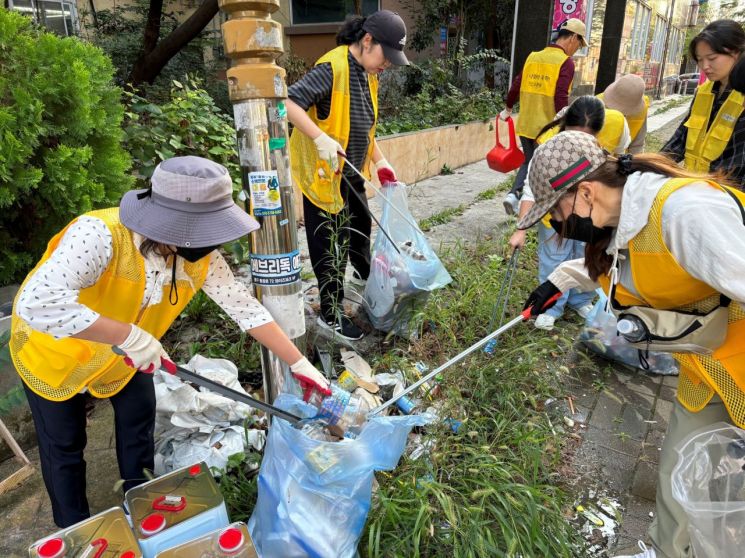
On May 7, Gwangju City announced that it will officially launch the '2025 Gwangju Resource Circulation Challenge' starting in May, aiming to address waste issues in densely populated areas such as single-family homes and studio apartments and to promote a resource circulation culture centered on administrative welfare centers that are closely connected to local residents.
This challenge is designed for administrative welfare centers to take the lead in fostering a resource circulation culture together with residents. It began in 2023 as the 'Our Neighborhood Waste Separation Class' project, and by last year, a total of 31 administrative welfare centers had participated. As a result, the centers, which had previously focused mainly on resident autonomy and welfare services, expanded their interest to include cleaning and resource circulation.
This year, the project was renamed the 'Gwangju Resource Circulation Challenge' to make it easier to understand and to encompass the entire scope of resource circulation. To encourage greater participation from administrative welfare centers, the prize pool was increased from 10 million KRW to 20 million KRW.
The city plans to select and reward centers that achieve outstanding results at the end of the year. The evaluation criteria for the 'Gwangju Resource Circulation Challenge' consist of ten categories, including: discovering special initiatives for resource circulation, improving waste separation infrastructure, activities to reduce single-use items, collaboration with autonomous organizations such as residents’ councils, and reflecting residents’ policy proposals. The city will assess the achievements through the end of the year and announce the final results in December.
In particular, the evaluation criteria are structured based on the 'PDCA Cycle' to ensure that administrative welfare centers continue to enhance their interest in resource circulation even after the challenge concludes.
To improve the effectiveness of the initiative, the city will operate a consulting team composed of experts in administration and environmental fields, in collaboration with the Gwangju Climate and Energy Agency, to provide tailored support to administrative welfare centers.
The city will recruit participating centers from all 96 administrative welfare centers through a voluntary participation system to avoid adding to their workload, with the full-scale launch beginning in May. A total of 20 centers will receive awards, including a grand prize of 5 million KRW for the top center.
Jung Mikyung, head of the Resource Circulation Division, stated, "This challenge aims for administrative welfare centers, which are closely connected to the local community, to take the lead in discovering resource circulation initiatives tailored to local characteristics in collaboration with autonomous organizations such as residents’ councils, and to contribute to creating cleaner neighborhoods. We hope that many administrative welfare centers will participate so that the resource circulation culture can spread throughout Gwangju."
© The Asia Business Daily(www.asiae.co.kr). All rights reserved.
![Clutching a Stolen Dior Bag, Saying "I Hate Being Poor but Real"... The Grotesque Con of a "Human Knockoff" [Slate]](https://cwcontent.asiae.co.kr/asiaresize/183/2026021902243444107_1771435474.jpg)















