Reminder of the Six Major Prevention Rules:
Proper Handwashing, Cooking Food Thoroughly, and More
The Jeonju City Public Health Center (Director Kim Sinsun) will operate an emergency summer quarantine system from this month until October 12 to prevent and manage waterborne and foodborne infectious diseases during the summer season.
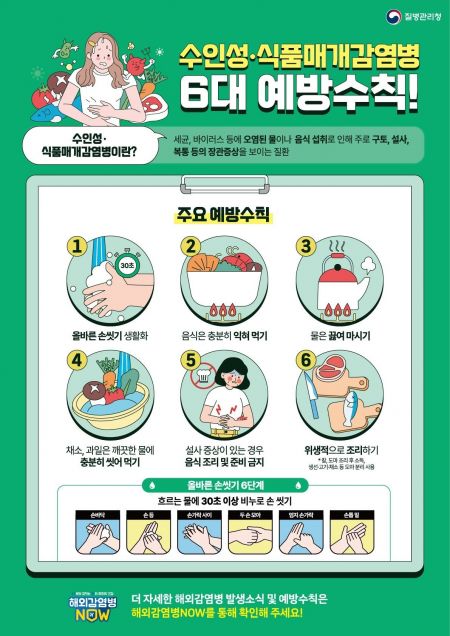 Poster of the Six Major Prevention Rules for Waterborne and Foodborne Infectious Diseases. Provided by Jeonju City
According to the health center on May 7, waterborne and foodborne infectious diseases (such as typhoid fever and bacterial dysentery) are illnesses that cause gastrointestinal symptoms like diarrhea, abdominal pain, and vomiting. These are caused by the consumption of water or food contaminated with pathogenic microorganisms, and they surge during the summer when higher temperatures and monsoon conditions make it easier for pathogens to proliferate.
In fact, last year there were 529 reported outbreaks of waterborne and foodborne infectious diseases nationwide, which is a 10.4% increase compared to the five-year average (479 cases) from 2019 to 2023. Of these, 232 cases, or 44%, occurred during the summer months from May to September.
The health center will maintain a 24-hour emergency contact system to share information with related departments and plans to conduct emergency response drills in May to check its ability to respond to urgent situations.
Additionally, to enable the prompt recognition and response to outbreaks of infectious diseases and diarrhea patients, the health center will promote timely reporting by local medical institutions. Upon receiving a report, the center will conduct epidemiological investigations and diagnostic testing to determine the cause, ensuring swift and proactive response.
To prevent waterborne and foodborne infectious diseases, it is important to follow the six major prevention rules: practice proper handwashing; thoroughly cook food before eating; boil water before drinking; wash vegetables and fruits thoroughly with clean water; refrain from preparing or handling food if experiencing diarrhea; and cook food in a hygienic manner.
Kim Sinsun, Director of the Jeonju City Public Health Center, stated, "As the incidence of waterborne and foodborne infectious diseases transmitted through water or food is increasing due to rising temperatures and more outdoor activities, we ask everyone to actively participate in preventing infectious diseases by practicing small daily habits."
© The Asia Business Daily(www.asiae.co.kr). All rights reserved.
![Clutching a Stolen Dior Bag, Saying "I Hate Being Poor but Real"... The Grotesque Con of a "Human Knockoff" [Slate]](https://cwcontent.asiae.co.kr/asiaresize/183/2026021902243444107_1771435474.jpg)















