Francis Fukuyama Warns:
"Trump Strongly Prefers Deals with North Korea"
Concerns Over South Korea-Japan Relations Reverting After Presidential Election
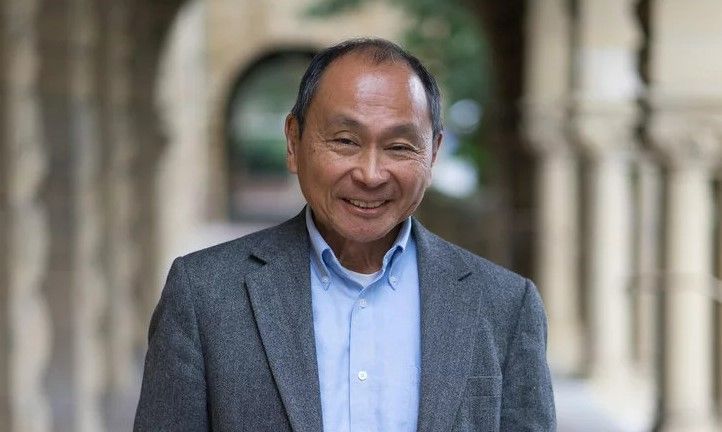
Francis Fukuyama, the renowned American scholar in international relations and author of "The End of History," who is a professor at Stanford University, warned that if trust in the United States' extended deterrence policy collapses, South Korea and Japan will have no choice but to consider pursuing their own nuclear armament.
According to NK News, a U.S. media outlet specializing in North Korea, on May 6 (local time), Professor Fukuyama made these remarks during a recent virtual symposium hosted by the Institute for Corean-American Studies (ICAS). He stated that there is a high likelihood that President Donald Trump will take an "especially unpredictable" approach regarding North Korea.
Professor Fukuyama said, "I think you might actually be a little surprised," pointing out that the only consistent aspect of Trump's foreign policy is his aversion to using American military force overseas. Accordingly, Professor Fukuyama predicted that President Trump may be unwilling to do anything that could "entangle the United States in Asian conflicts," including supporting East Asian allies who are facing common adversaries.
This stance is consistent with President Trump's actions during his first term, when he halted joint military exercises between South Korea and the United States and repeatedly raised the possibility of withdrawing U.S. troops from South Korea. In contrast, former President Joe Biden focused on strengthening bilateral and trilateral cooperation with South Korea and Japan, and took a collaborative approach to responding to North Korea's nuclear and missile threats. Professor Fukuyama analyzed that "he (President Trump) would much prefer to make deals (with North Korea) rather than strengthen alliances or deter (North Korea) militarily."
In this context, Professor Fukuyama predicted that South Korea and Japan could consider developing their own nuclear weapons in response to threats from North Korea and China. He stated, "If (U.S.) deterrence is no longer certain or reliable, it becomes very rational for them to consider nuclear weapons," adding, "Nuclear armament will become a topic of discussion, and as time goes on, more people will think about it."
Professor Fukuyama noted that, unlike Europe, which can deter Russia with conventional forces alone, Northeast Asian countries may feel a much stronger need for nuclear armament. He emphasized that South Korea and Japan should not be encouraged to take such a path. He said, "In Asia, because of friction between Japan and South Korea, not even the slightest equivalent of an Asian version of NATO exists. Every time such an idea has been raised, it has been immediately dismissed."
Professor Fukuyama also stated that, due to President Trump's indifference toward trilateral cooperation among South Korea, the United States, and Japan, decades of U.S. efforts to improve relations between South Korea and Japan could be undermined. He said, "It does not seem that the Trump administration is spending much time trying to promote Japan-Korea cooperation," adding, "I think they either do not care or simply are not interested in doing such things."
Professor Fukuyama praised the South Korean people for demonstrating "the power of democracy" by blocking former President Yoon Suk-yeol's attempt to declare emergency martial law. However, he also expressed concern that if the progressive, anti-Japan faction regains power in next month's presidential election, there is a possibility that South Korea-Japan relations could revert to the past. He said, "I am worried that the progress made in bilateral relations during the terms of President Yoon and the former Japanese prime minister could be undone."
© The Asia Business Daily(www.asiae.co.kr). All rights reserved.
![Clutching a Stolen Dior Bag, Saying "I Hate Being Poor but Real"... The Grotesque Con of a "Human Knockoff" [Slate]](https://cwcontent.asiae.co.kr/asiaresize/183/2026021902243444107_1771435474.jpg)















