Subway Air Conditioning Complaints in Seoul Surge by 68% in One Month
Seoul Metro Responds with Customized Information for Passengers
Due to the fluctuating weather, complaints related to subway air conditioning are already increasing explosively. In response, Seoul Metro has begun providing various information and usage tips to help minimize inconvenience for citizens and reduce the perceived temperature differences.
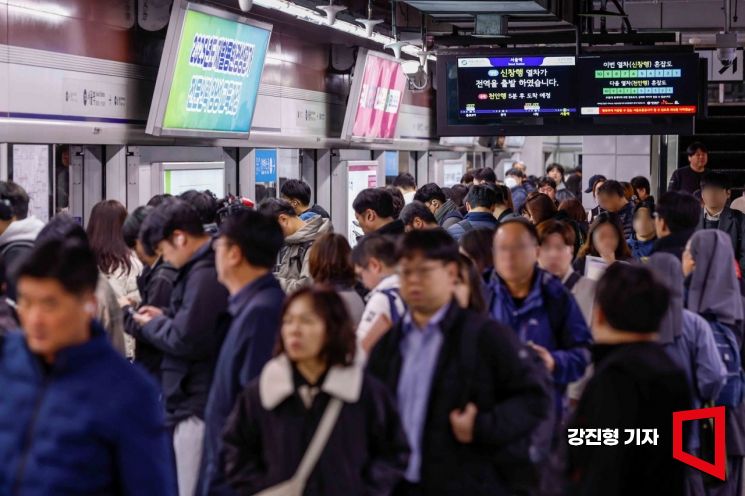 Due to the fluctuating weather, complaints related to subway air conditioning are increasing explosively.
According to Seoul Metro, the number of complaints related to air conditioning and heating in the Seoul subway system soared from 43,296 cases in March to 72,774 cases in April, marking an increase of approximately 68%. Among these, complaints about it being "too hot" were the most common. The number of "too hot" complaints rose from 40,090 in March to 67,464 in April.
The background behind this surge in complaints lies in the wide temperature fluctuations. On April 14, the daytime high in Seoul was only 6 degrees Celsius, but just a week later, on April 21, it soared to 27.1 degrees Celsius. This means the temperature jumped by more than 20 degrees in just one week. With such dramatic weather changes, passengers' attire on the subway varies widely. Some wear light jackets, while others are dressed in short sleeves and shorts. As a result of these large temperature differences, sensitivity to air conditioning settings has also increased.
Last summer, a record-breaking heat wave led to the highest-ever number of air conditioning complaints in the history of the Seoul subway, reaching about 300,000 cases. According to the Seoul Metropolitan Council, this figure represents a 4.1% increase compared to the previous year and a 66% increase compared to 2022. More than 99% of these complaints were related to air conditioning inside the trains, with Line 2 alone accounting for over 100,000 complaints, the highest among all lines. This was followed by Line 7 and Line 5.
Experts point out that the fundamental causes of this phenomenon include not only climate change due to global warming, but also the limitations of the air conditioning infrastructure caused by budget shortages and aging facilities. In fact, out of the total 275 stations on Lines 1 through 8, 50 stations?about 18.2%?still do not have air conditioning. Many of these stations are aboveground stations, such as those on Line 2, making them more susceptible to heat and, consequently, a higher number of complaints.
As this situation repeats every year, Seoul Metro is providing information to help reduce differences in perceived temperature caused by variations in temperature and congestion between train cars. The coolest spots inside the train are around the priority seats at both ends of each car, while the center tends to be relatively warmer. Depending on where you sit, the perceived temperature can differ by 2 to 4 degrees Celsius, and during peak hours, this difference can reach up to 6 degrees. Therefore, passengers can move to different seats or use "mild air conditioning cars" for a more comfortable subway experience. However, due to extreme congestion, mild air conditioning cars are not operated on Line 2.
Additionally, through Seoul Metro's mobile app "Ttota Subway," passengers can check real-time congestion levels for each train. The company advises that using less crowded cars can help reduce temperature increases caused by body heat, making for a more comfortable subway ride.
© The Asia Business Daily(www.asiae.co.kr). All rights reserved.

















