Food Consumption Declines Amid Economic Downturn and High Exchange Rates
Even the Middle Class Reduces Spending on Essential Goods
An unprecedented phenomenon, in which both food ingredient consumption at supermarkets and markets and dining-out consumption at restaurants are simultaneously declining, has continued for over two years. The main reasons cited are the ongoing high inflation and the continued downturn in major industries such as construction, which have reduced households' spending capacity.
According to Statistics Korea’s National Statistical Portal (KOSIS) on May 5, the retail sales index for food and beverages and the production index for the restaurant industry have shown a clear downward trend since 2023. This is an unusual occurrence that has not been seen since related statistics began to be compiled in 2006.
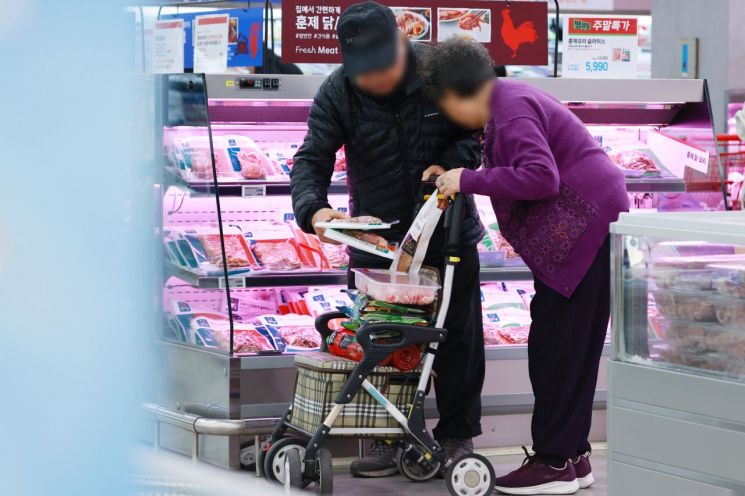 The distribution industry is facing its greatest crisis due to the prolonged economic recession. Yonhap News
Typically, when dining-out consumption decreases, household consumption of food ingredients increases, and vice versa, as a form of 'complementary consumption.' Especially since food is classified as a necessity among basic needs, the overall consumption level has generally been maintained above a certain threshold, even if the consumption pattern changes according to economic conditions. However, this time, both consumption areas have contracted simultaneously for two consecutive years.
In reality, retail sales of food and beverages had been on the rise until 2021, but began to decline by 2.5% from 2022, continuing a downward trend for three consecutive years. Initially, the increase in delivery demand had some impact, but recently, even overall restaurant industry production?including delivery?has been decreasing. Restaurant industry production, which plummeted during the pandemic, rebounded in 2021 and 2022, but fell again by 0.7% in 2023 and by 1.9% in 2024, marking a return to a downward trend.
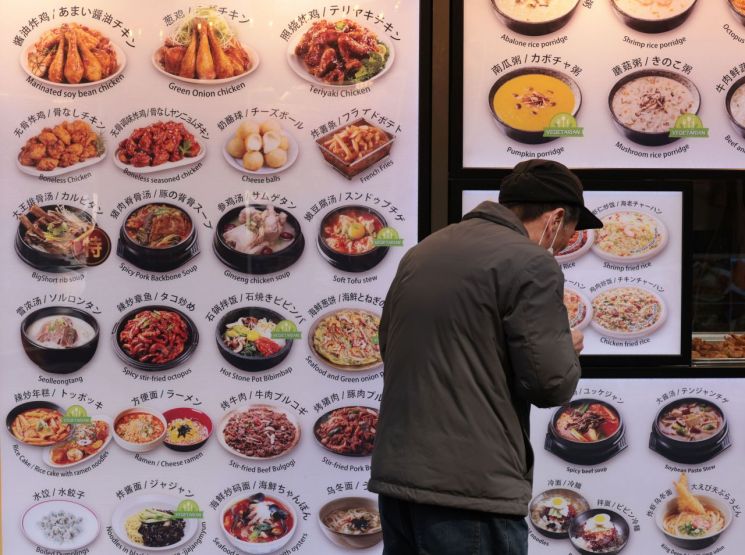 As domestic economic sluggishness and political instability such as the impeachment crisis continued, 'small consumption' items like clothing, shoes, and food and beverages decreased. Yonhap News
This trend continued in the first quarter of this year. Retail sales of food and beverages declined by 0.3% compared to the same period last year, and restaurant industry production dropped by 3.4%, recording the largest decrease since the fourth quarter of 2023 (-4.7%).
The persistently high food prices are also accelerating the contraction in consumption. Since 2023, abnormal weather conditions have caused sharp increases in the prices of agricultural products such as vegetables and fruits, which has driven up overall consumer prices. Although agricultural product prices have recently stabilized somewhat, the continued high exchange rate since the end of last year has raised the cost of imported raw materials, causing prices of processed foods and dining out to rise again. As of last month, processed food prices rose by 4.1% year-on-year, the largest increase since December 2023 (4.2%), while dining-out prices climbed by 3.2%, marking the biggest increase in 13 months.
A government official explained, "Due to high prices, changes in consumption patterns are also being observed, such as consumers choosing cheaper products among similar items."
In addition, the weakening of household purchasing power due to the economic downturn is also cited as an important background for the slowdown in consumption. Construction industry production, which accounts for about 15% of the country's GDP, has declined for four consecutive quarters, and in the first quarter of this year, it plunged by 20.7% year-on-year, the largest drop since the third quarter of 1998 during the foreign exchange crisis (-24.2%).
The financial capacity of the middle-income class is also deteriorating. As of the fourth quarter of last year, the disposable income of middle-class households?those in the top 40-60% income bracket?decreased for three consecutive quarters, falling below 700,000 won for the first time in five years.
Kim Kwangseok, head of economic research at the Korea Economic and Industrial Research Institute, analyzed, "As employment instability and income decline due to the economic downturn overlap, 'subsistence-level consumption reduction,' in which even essential goods consumption is cut back, is becoming a reality, especially among low-income groups."
© The Asia Business Daily(www.asiae.co.kr). All rights reserved.


















