Attention Also on Election of Pope from Growing Catholic Communities in Asia and Africa
With only three days left until the 'conclave' to elect the next pope, there is growing attention on whether the reformist moves of Pope Francis will continue.
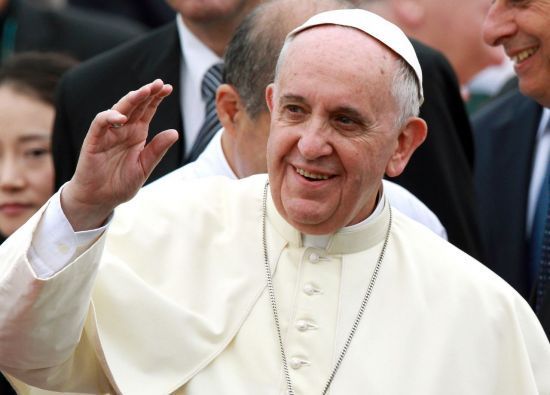
On May 3 (local time), the New York Times (NYT) reported that, since Pope Francis led reforms in the Catholic Church during his 12-year papacy, there is significant interest in whether his unfinished agenda will be carried on by his successors. The article emphasized that the cardinals' choice regarding whether to continue his legacy will determine the next pope.
The NYT explained that the Church's perspective on immigrants and the poor is not particularly controversial, since the gospel fundamentally teaches offering shelter and food to strangers. However, the real issue is whether the legacy of Pope Francis?his openness and inclusivity toward changes such as the ordination of women and acceptance of homosexuality?will be upheld.
During his lifetime, Pope Francis argued that not only clergy but also laypeople should be participants in discussions about the Church's direction. In practice, he enabled lay participation in the Synod of Bishops, the global assembly that discusses reforms in the Catholic Church. In this reformed Synod, issues such as allowing women to become deacons (a clergy rank just below priests) and the inclusion of sexual minorities were addressed. In 2023, women were granted voting rights in the Synod for the first time. During his papacy, the Synod also adopted a recommendation to allow the ordination of married men in the Amazon region, where the shortage of priests is particularly severe. He called for the inclusion of divorced and remarried believers, and his decision to allow blessings for same-sex couples became a global topic of discussion.
While Pope Francis judged it premature to allow women to become deacons?clergy who can deliver sermons and perform baptisms and marriages?thus agreeing with some traditional practices, he is still credited with steadily expanding the role of women within the Church.
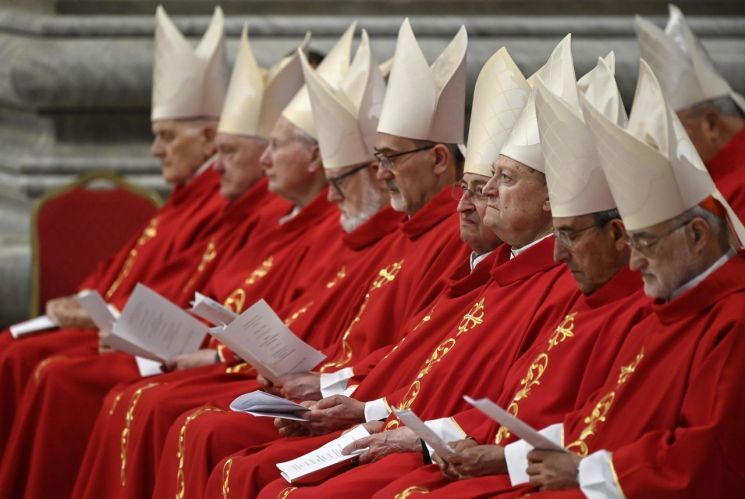 Cardinals attending the memorial mass for Pope Francis on the 29th of last month (local time). They will become both electors and eligible candidates in the conclave held three days later. Photo by EPA Yonhap News
However, these reformist steps have met resistance from conservative Church leaders. For this reason, foreign media have analyzed that questions such as who is qualified to have a say in determining the future of Catholicism may influence the selection of the next pope. The cardinals are expected to deliberate on whether to choose someone who will continue Pope Francis's reforms or someone who will take a more conservative approach to ensure the Church's stability.
Another variable in the conclave is the growth of the Catholic Church in Africa and Asia. As the number of believers in these regions increases, there is a possibility that the next pope could come from one of these areas. In particular, there are calls for the next pope to address issues related to the Global South (mainly emerging and developing countries in the Southern Hemisphere) and the Global North (developed countries in the Northern Hemisphere). A theologian at Kwame Nkrumah University in Ghana argued that, regardless of whether the new pope is from the Global South, "he must be someone prepared to speak about the inequalities between the Global South and Global North in international politics."
© The Asia Business Daily(www.asiae.co.kr). All rights reserved.
![Clutching a Stolen Dior Bag, Saying "I Hate Being Poor but Real"... The Grotesque Con of a "Human Knockoff" [Slate]](https://cwcontent.asiae.co.kr/asiaresize/183/2026021902243444107_1771435474.jpg)
















