Up 7.6% Year-on-Year, Only Sugar and Vegetable Oils Decline
Global food prices have continued to rise for four consecutive months. The prices of major items increased together as instability in the international grain market, seasonal demand, and changes in the situation of producing countries overlapped.
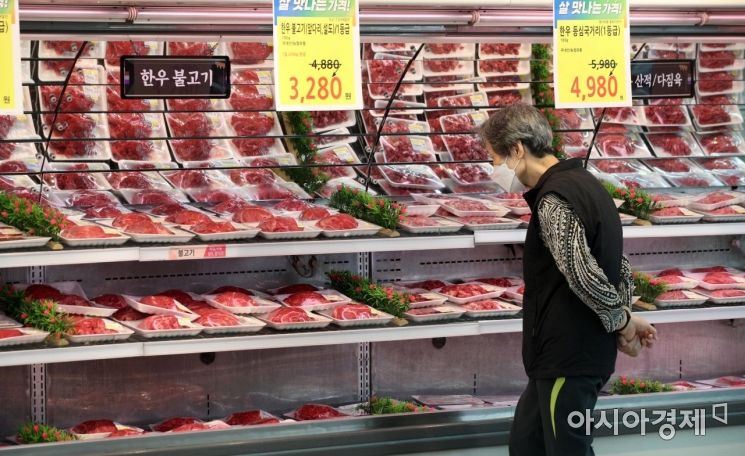 On the 5th, citizens were shopping at a large supermarket in Seoul. Amid the recent severe inflation situation, with last month's consumer price inflation rate exceeding 5%, the sharp rise in international grain prices due to the Ukraine crisis and export restrictions by major grain-producing countries is being transmitted domestically. Additionally, with recent drought damage added, the cost of living, especially for some agricultural and livestock products, is showing unstable patterns. Photo by Hyunmin Kim kimhyun81@
On May 3, the Ministry of Agriculture, Food and Rural Affairs announced that the Food and Agriculture Organization (FAO) World Food Price Index for April recorded 128.3, up 1.0% from the previous month. This figure is higher than the baseline (the 2014-2016 average = 100) and represents a 7.6% increase compared to the same month last year.
By item, the meat price index rose 3.2% from the previous month to 121.6. In the case of pork, prices rose as exports resumed with Germany's return to foot-and-mouth disease-free status and demand in the European Union increased. Beef prices increased in major producing countries such as Australia and Brazil due to supply constraints, and poultry prices also rose due to a decrease in exportable volumes.
Dairy prices also increased by 2.4% to 152.1. The FAO analyzed that the main factors were higher butter prices due to inventory reductions, higher cheese prices due to reduced supply from Oceania, and increased demand for milk powder from Oceania. In particular, the strong euro significantly weakened the price competitiveness of European products.
The grain price index rose 1.2% from the previous month to 111.0. Wheat prices increased due to signs of export restrictions in Russia, and corn prices also rose due to a shortage of domestic corn stocks in the United States and adjustments to import tariff policies. Rice prices increased due to higher demand for aromatic varieties and reduced harvests in Vietnam.
In contrast, sugar and vegetable oil prices showed a downward trend.
The sugar price index fell 3.5% from the previous month to 112.8. The main factors for this decline were increased production in Brazil, the weakening of the real, and concerns about slowing demand for processed foods.
The vegetable oil price index dropped 2.3% to 158.0. Palm oil prices fell due to increased harvests in major Southeast Asian producing countries, and while soybean oil and rapeseed oil prices rose in some cases, this was not enough to lift the overall index.
The FAO stated that the food price index has been steadily rising this year, and that supply and demand conditions for each item, as well as international developments, will be important variables for future trends.
© The Asia Business Daily(www.asiae.co.kr). All rights reserved.
![Clutching a Stolen Dior Bag, Saying "I Hate Being Poor but Real"... The Grotesque Con of a "Human Knockoff" [Slate]](https://cwcontent.asiae.co.kr/asiaresize/183/2026021902243444107_1771435474.jpg)















