Both the Public and Opposition Remain Cautious
About Explicitly Stating the Self-Defense Forces in the Constitution
On the occasion of Japan's Constitution Memorial Day (May 3), various public opinion polls have shown that 6 out of 10 Japanese citizens support constitutional revision. However, analysts note that the actual possibility of constitutional amendment remains uncertain, as the influence of pro-amendment forces within the political arena has diminished.
The conservative-leaning Yomiuri Shimbun announced on May 3 the results of a mail-in survey conducted among voters from March to April. Among the 2,012 respondents, 60% answered that "constitutional revision is desirable," while 36% said "the current constitution should be maintained." Compared to the previous year's survey, the proportion in favor of amendment decreased by 3 percentage points.
However, there is still a predominantly negative view regarding the revision of Article 9?which is regarded as a symbol of the Peace Constitution and stipulates the renunciation of war and the permanent abandonment of military force. Regarding Article 9, Paragraph 1, 80% of respondents said "no revision is necessary." For Paragraph 2, which includes the explicit mention of the Self-Defense Forces, 47% said it "should be revised," while 49% said "no revision is necessary," showing a nearly even split.
The Liberal Democratic Party (LDP) is pushing for the explicit mention of the Self-Defense Forces in the constitution, but public opinion remains divided between "reflecting security realities" and "protecting the Peace Constitution."
The progressive-leaning Asahi Shimbun also conducted a mail-in survey of 1,899 people from late February to April, with 53% in favor of constitutional revision and 35% opposed. However, regarding the revision of Article 9, opposition was higher at 56%, compared to 35% in favor.
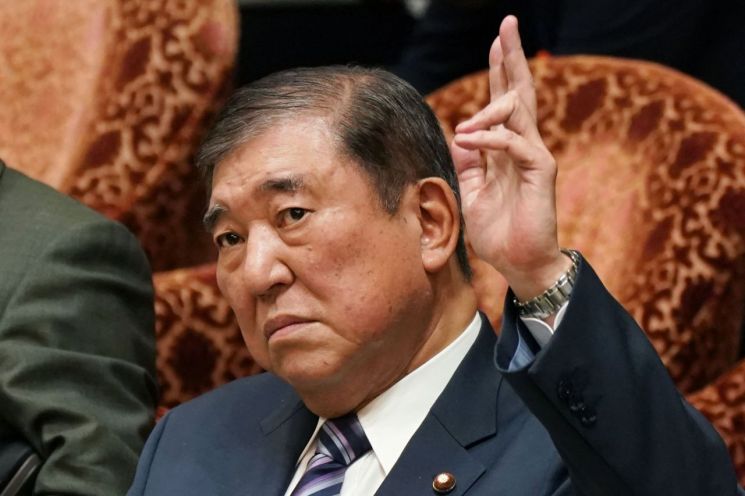
An online survey by the Mainichi Shimbun revealed a more cautious public sentiment. In the survey conducted on April 12-13 among 2,040 respondents, 39% opposed "pursuing constitutional revision during Prime Minister Shigeru Ishiba's tenure," 21% were in favor, and 39% answered "not sure."
There are also significant practical constraints politically. To propose a constitutional amendment in the Japanese National Diet, more than two-thirds of all lawmakers must agree. However, in last year's House of Representatives election, the LDP and Komeito failed to secure the threshold required to propose an amendment. As the LDP marks its 70th anniversary and puts constitutional revision at the forefront of its agenda, the lack of a sufficient seat base has become the biggest obstacle to constitutional debate.
The Yomiuri Shimbun commented, "With the ruling coalition in the minority, the initiative in the House of Representatives' constitutional review committee is shifting to the opposition parties," and explained, "Without cooperation from parties such as the Constitutional Democratic Party, which take a cautious stance on revision, it is virtually impossible to realize constitutional amendment."
© The Asia Business Daily(www.asiae.co.kr). All rights reserved.
![Clutching a Stolen Dior Bag, Saying "I Hate Being Poor but Real"... The Grotesque Con of a "Human Knockoff" [Slate]](https://cwcontent.asiae.co.kr/asiaresize/183/2026021902243444107_1771435474.jpg)















