All Pre-Trial Procedures Completed Just One Day After Supreme Court’s Guilty Ruling
Requests for Personal Delivery Sent to Seoul Southern and Incheon District Court Bailiffs
First Remand Trial Set for the 15th...Low Likelihood of Candidate Lee’s Appearance
Final Supreme Court Ruling Unlikely Before Election if Further Appeal Filed
Concerns Over Supreme Court’s Speed Raised on Court’s Internal Network
“Ultra-Fast Process Unseen in 30 Years as a Judge”
Following the unprecedentedly swift Supreme Court decision to overturn and remand the case involving Democratic Party presidential candidate Lee Jaemyung's violation of the Public Official Election Act on May 1, the Seoul High Court, which received the remanded case, has also accelerated the process by simultaneously setting the trial date and initiating the delivery of subpoenas and other documents within a single day. The Seoul High Court completed a series of procedures?including case registration, assignment to a panel, scheduling of the trial date, sending notifications of record receipt and defendant subpoenas, and submitting requests for personal delivery by court bailiffs?all within one day of the Supreme Court's ruling.
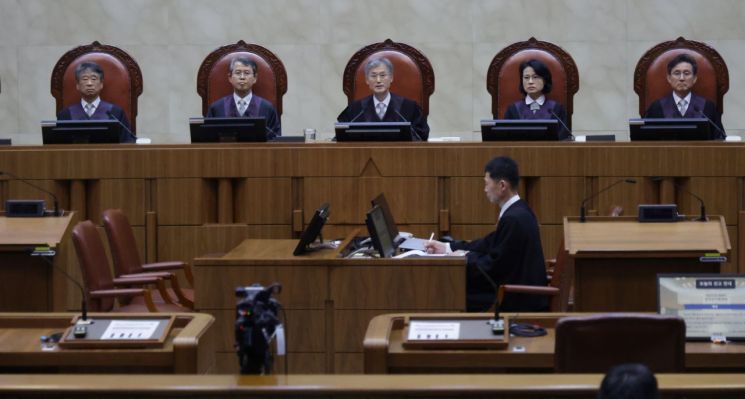
The Criminal Division 7 of the Seoul High Court (Presiding Judge Lee Jaegwon) was assigned the case on May 2 and scheduled the trial for May 15 at 2 p.m. This means the remand trial will open just two weeks after the Supreme Court's en banc ruling. The Supreme Court had assigned Lee's case to a small panel on April 22, but referred it to the full bench within two hours, held two deliberations on April 22 and 24, and delivered a lightning-fast verdict just nine days after the final meeting. The speed of the High Court's proceedings matches that of the Supreme Court.
The remand panel completed all possible pre-trial procedures in rapid succession. Notably, on May 2, the court not only set the trial date but also sent notifications of record receipt and subpoenas to Lee's side. The court prepared for all contingencies regarding document delivery. Requests for personal delivery by bailiffs were simultaneously sent to the Seoul Southern District Court and the Incheon District Court. This was to ensure personal delivery in case postal delivery was delayed due to absence or closed premises, meaning preparations for both postal and personal delivery were completed at the same time. The Incheon District Court has jurisdiction over Lee's home address, while the Seoul Southern District Court covers Yeouido, Yeongdeungpo-gu, where the Democratic Party and the National Assembly are located.
First Remand Trial on the 15th...Will Candidate Lee Appear?
The remand trial will be conducted by the Seoul High Court's Criminal Division 7, a panel consisting of Presiding Judge Lee Jaegwon (Judicial Research and Training Institute Class 23), and High Court Judges Park Jooyoung (Class 33) and Song Mikyung (Class 35). Presiding Judge Lee, who will lead the proceedings, is a native of Jeju, graduated from Jeju Jeil High School and Seoul National University's College of Law, and has served in key positions such as judge at the Seoul District Court, Judicial Policy Research Officer, secretary to the Chief Justice, and Chief Judge at the Jeju District Court. Judge Lee will preside, and Judge Song will serve as the rapporteur.
If Lee does not appear at the first remand trial on the 15th, the court will have to set another date. If Lee receives a subpoena for the rescheduled date but still does not appear, the trial can proceed in his absence, and in principle, the court can conclude arguments and deliver a verdict. Since May 15 is just 19 days before the June 3 presidential election, it is widely believed that Lee is unlikely to attend, citing the ongoing campaign period. The fact that the Criminal Division 7 panel could deliver an immediate guilty verdict at the first trial, due to the binding nature of the Supreme Court's decision, is another reason expectations are low for Lee's attendance. The second trial date is usually set five to seven days later, considering delivery procedures, making May 22 a likely date.
The key issue is the sentencing in the remand trial. Under the election law, the basic sentencing guideline for making false statements is imprisonment for up to 10 months or a fine between 2 million and 8 million won. The first trial imposed a harsher sentence?one year in prison, suspended for two years?taking into account Lee's previous conviction for making false statements. A lawyer who is a former judge commented, "Given the speed of the proceedings and the binding force of the Supreme Court's decision, it is likely that, as a legal strategy, Lee will judge it disadvantageous to appear at the first trial," adding, "The Supreme Court's decision is almost identical to the first trial, making a light sentence unlikely." If the remand trial results in a fine of 1 million won or more and the Supreme Court upholds this on appeal, Lee will lose his eligibility to run for office.
Unlikely to Finalize Sentence Before Election...Concerns Over Speed Within Judiciary
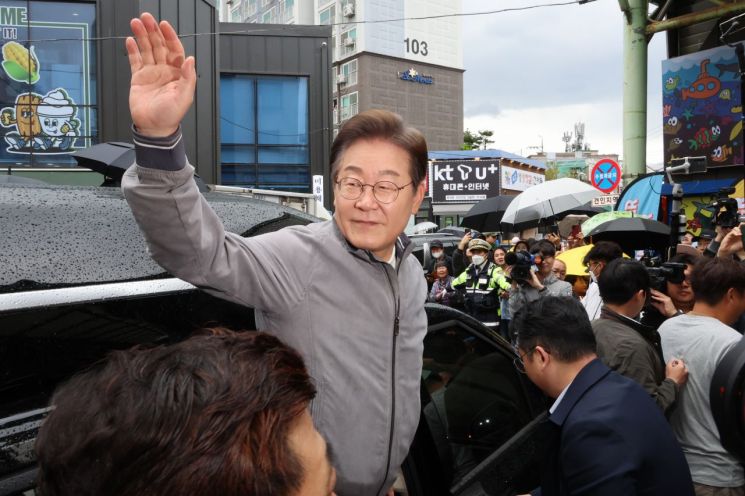
With just over a month left until the presidential election, there are mixed views on whether the remand trial's verdict will be delivered before the election. Remand trials typically proceed quickly, as the Supreme Court has already effectively determined the outcome (guilty). That is why some predict the remand trial may also reach a swift conclusion, especially since the Supreme Court delivered its verdict in just over 30 days. However, others note that Lee's right to defend himself could slow the process.
Even after the remand trial, Lee can file a further appeal. In that case, the appeal period (seven days) and the period for submitting opinions (20 days) mean that it would be physically difficult for a final verdict to be reached before the election. The maximum time available to Lee after a further appeal is 27 days, meaning that while the Supreme Court has effectively completed its legal judgment, the 'political judgment' regarding Lee has been left to the people, the sovereign.
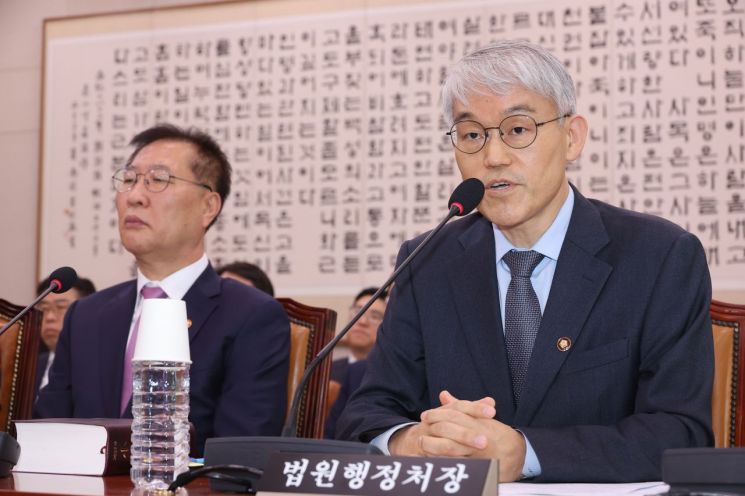
Meanwhile, the Supreme Court's unusually rapid handling of Lee's election law violation case has drawn criticism within the judiciary. On May 2, a chief judge at the Busan District Court posted under his real name on the court's internal network, 'CourtNet,' warning that such exceptional procedures could erode the court's credibility and authority. He wrote, "The Supreme Court delivered a verdict overturning the appellate court's acquittal through highly exceptional procedures," adding, "Such exceptional measures could ultimately invite criticism of political bias and undermine the court's credibility and authority."
A judge at the Cheongju District Court also posted under his real name, criticizing the Supreme Court's trial process. He wrote, "As soon as the defendant's written response was submitted, the case was immediately assigned to a small panel and then, the very next day, referred to the full bench on April 22," adding, "On the day of referral, the first deliberation was held, the second deliberation took place two days later on April 24, and the verdict was delivered just a week later on May 1. In my 30-plus years as a judge, I have never seen or heard of such an ultra-fast process." He continued, "In the past, even ongoing investigations or trials, such as the DJ political funds case, were suspended during election season to avoid misunderstandings," adding, "I am deeply concerned about who will take responsibility for this unprecedented, exceptional, and excessive procedure."
© The Asia Business Daily(www.asiae.co.kr). All rights reserved.
![Clutching a Stolen Dior Bag, Saying "I Hate Being Poor but Real"... The Grotesque Con of a "Human Knockoff" [Slate]](https://cwcontent.asiae.co.kr/asiaresize/183/2026021902243444107_1771435474.jpg)


















