"Pay More for the Environment"
Hotel Tax Increased and Cruise Tax Introduced
'Heaven on Earth' Accommodation Tax Up to 18.7%
The cost of staying at hotels in Hawaii, often called the "Paradise of the Pacific" and "Heaven on Earth," is expected to rise further.
According to a report from the Associated Press on May 2 (local time), the Hawaii State Legislature has passed a bill to increase the hotel accommodation tax in order to strengthen the state's ability to respond to natural disasters caused by climate change. Hawaii Governor Josh Green has also expressed his support for the bill and announced his intention to sign it. The bill adds a 0.75% "climate change response tax" to the existing tax imposed on hotel rooms and short-term rentals, and introduces a new 11% tax rate for cruise ships.
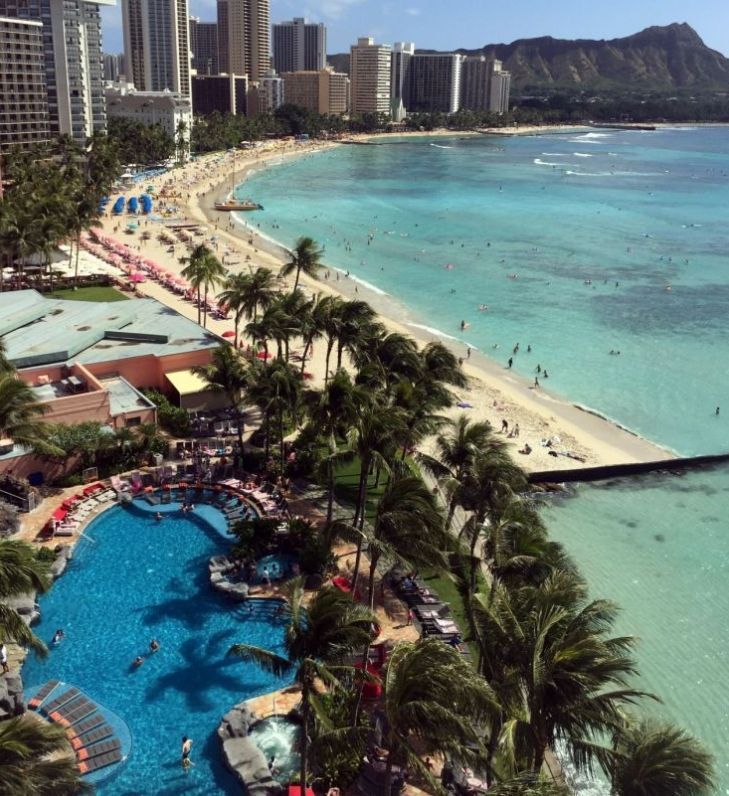 The Hawaii State Legislature has passed a bill to increase the hotel accommodation tax to strengthen the response capabilities to natural disasters caused by climate change. Pixabay
Currently, Hawaii already imposes a 10.25% tax on short-term accommodations. With the passage of this bill, the total tax rate imposed by the state government will rise to 11% when the new tax is added. The new rates will take effect on January 1 of next year.
In addition, when the 3% local accommodation tax imposed by each county in Hawaii and the 4.712% general excise tax on goods and services are included, the total tax rate that tourists will actually pay amounts to 18.712%.
The authorities expect the additional tax to generate about $100 million (approximately 140.3 billion won) in increased annual tax revenue. The funds raised will be used for projects such as reinforcing sand on Waikiki Beach, installing roof anchoring equipment for hurricane preparedness, and removing flammable vegetation to prevent wildfires.
This measure is considered the first case in the United States where a state government has introduced a new accommodation tax specifically under the justification of responding to climate change.
Hawaii has long struggled with overtourism. The annual number of tourists visiting Hawaii reaches between 9 million and 10 million, which is 67 times the state's population of 1.5 million. Tourism is a core part of Hawaii's economy, generating annual revenue of about $16 billion, but there have been ongoing concerns about environmental damage and the declining quality of life for local residents.
Governor Green stated, "The more we invest in sustainable environmental policies, the more likely we are to attract loyal tourists who stay longer in Hawaii." However, some have expressed concerns that the tax increase could negatively impact tourist inflows. Jane Edelman, a traveler from Chicago visiting Hawaii, said, "The tax increase could cause some tourists to turn their attention to other destinations, such as Florida."
© The Asia Business Daily(www.asiae.co.kr). All rights reserved.
![Clutching a Stolen Dior Bag, Saying "I Hate Being Poor but Real"... The Grotesque Con of a "Human Knockoff" [Slate]](https://cwcontent.asiae.co.kr/asiaresize/183/2026021902243444107_1771435474.jpg)















