Representative Proposal of the "Presidential Term Trial Suspension Act"
"Explicitly Stipulating Suspension of Criminal Proceedings Against Sitting President"
A bill has been proposed that would suspend all trial proceedings for a president who is indicted or on trial before taking office, once that individual becomes president.
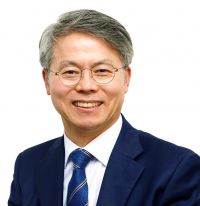
On May 2, Democratic Party lawmaker Min Hyungbae (Gwangju Gwangsan-eul) introduced a proposed amendment to the Criminal Procedure Act. The bill stipulates that, except in cases where the sitting president is charged with crimes of insurrection or treason, all trial proceedings should be suspended during the president's term of office.
Article 84 of the Constitution of Korea states, "The president shall not be subject to criminal prosecution during their term of office except for cases of insurrection or treason," thus granting the sitting president immunity from prosecution. However, there has been ongoing debate over whether this immunity should be limited only to the initiation of prosecution, or whether it can be extended to include the entire scope of criminal procedures, such as investigation and trial.
If a criminal trial against the president proceeds during their term, it could cause significant disruption to the administration of state affairs and negatively impact both political neutrality and public trust in the judiciary. Therefore, it is necessary to clearly define by law the suspension of trial proceedings during the president's term in order to substantively guarantee presidential immunity from prosecution.
The Office of Legal Counsel (OLC) of the U.S. Department of Justice has issued three opinions?in 1973, 2000, and 2019?stating that, under the U.S. Constitution, a sitting president is not subject to indictment or criminal proceedings. In addition, France, through a constitutional amendment in 2007, explicitly stated that the president cannot be required to appear, be prosecuted, questioned, investigated, or indicted during their term of office.
Min stated, "Given the importance of the constitutional role performed by the president, it is never desirable for legal uncertainty to exist regarding the president's status," adding, "Through this amendment, I hope to put an end to the interpretive controversy over presidential immunity from prosecution and to clarify its scope, thereby enhancing legal stability."
Meanwhile, on the same day, Min also introduced a proposed amendment to the Criminal Act to punish judges or prosecutors who intentionally distort the law or fabricate facts, as well as a proposed amendment to the Court Organization Act aimed at easing excessive concentration of legal professionals in the appointment of Supreme Court justices and expanding social diversity.
© The Asia Business Daily(www.asiae.co.kr). All rights reserved.
![Clutching a Stolen Dior Bag, Saying "I Hate Being Poor but Real"... The Grotesque Con of a "Human Knockoff" [Slate]](https://cwcontent.asiae.co.kr/asiaresize/183/2026021902243444107_1771435474.jpg)














