Pizza Hut Declines, Banolim Pizza Rises
Pizza Hut Enters Court Receivership After 40 Years in Korea
Banolim Pizza Acquires Ogu Ssal Pizza, Becomes No. 1 in Store Count
Rise of Single-Person Households... Value-for-Money Options Like Frozen Pizza Gain Popularity
Pizza Hut, which introduced pizza to Korea by opening its first store in Itaewon-dong, Yongsan-gu, Seoul in 1985, solidified its position as a leading player in the food service industry, recording sales of 400 billion KRW until the early 2000s. However, after 40 years since its entry into the domestic market, the company has now fallen into court receivership proceedings.
While the first-generation pizza franchise has declined, a generational shift has taken place in the industry. During a period when the market deteriorated due to the emergence of alternatives such as inexpensive frozen pizzas, a company appeared with a counterintuitive strategy to realize economies of scale by expanding its size. This is Banolim Pizza, which started as a delivery-only business in Suseong-gu, Daegu in 2011.
'Crisis for the First-Generation Franchise That Introduced Pizza'
According to the industry on May 4, Korea Pizza Hut recorded sales of 83.1 billion KRW and an operating loss of 2.4 billion KRW last year. The company has continued to post losses for three consecutive years since 2022.
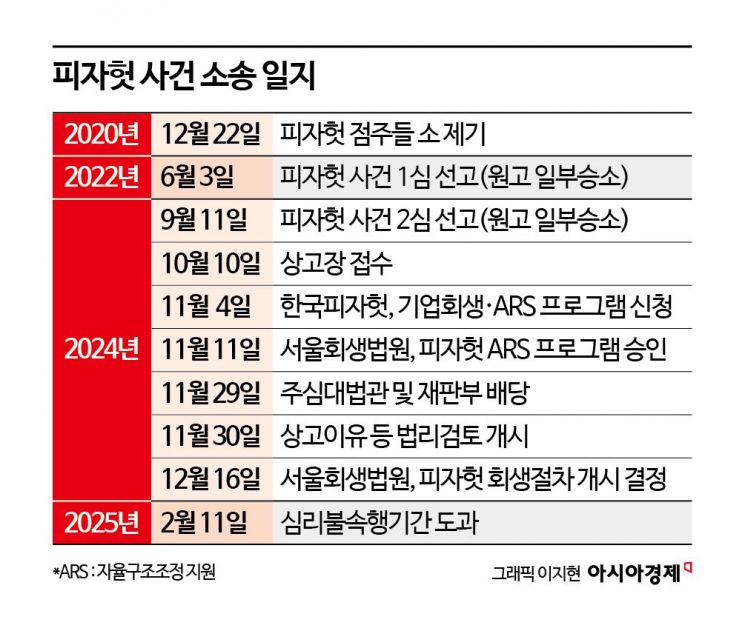
The crisis for Pizza Hut, which once held the top spot among pizza franchises, originated from conflicts with franchisees. The problem began when the company imposed a 'margin franchise fee'?a markup on ingredients supplied by headquarters?without prior consent. In 2020, franchisees filed a lawsuit demanding the return of unjust enrichment, and the courts ruled in favor of the franchisees in both the first and second trials. In September last year, the Seoul High Court ruled that the margin franchise fee imposed without consent was unfair and ordered headquarters to pay about 21 billion KRW to franchisees.
Afterward, Korea Pizza Hut appealed to the Supreme Court, but its operations were inevitably impacted as creditors seized its accounts. Ultimately, the company filed for rehabilitation proceedings in November last year, and after failing to reach an agreement with creditors through the Autonomous Restructuring Support (ARS) program, it entered court receivership. One month after applying for corporate rehabilitation at the Seoul Bankruptcy Court, Korea Pizza Hut received the court's approval to commence proceedings. Accordingly, the company must submit a rehabilitation plan to the court by the 21st of this month. Currently, it is pursuing a merger and acquisition (M&A) process in parallel with submitting the rehabilitation plan.
Korea Pizza Hut, established in June 1991, is a first-generation domestic pizza franchise. At a time when pizza itself was unfamiliar, the company developed menus tailored to Korean tastes, such as Bulgogi Pizza, and pursued a premiumization strategy to cement its position. Starting with the first store in Itaewon in 1985, it expanded to 52 locations and thrived as a premium pizza brand served in stores.
As a result, Pizza Hut surpassed 400 billion KRW in sales as of the end of 2008, securing an overwhelming lead in the pizza franchise market. However, when the U.S. headquarters took over direct management, Pizza Hut's sales fell to the 100 billion KRW range by 2014. Operating profit also turned negative starting in 2013.
An even greater issue is the imminent expiration of the master franchise agreement (MFA) with the global headquarters, Yum! Brands, raising the possibility that the brand itself could disappear from the domestic market. The largest shareholder of Korea Pizza Hut is Orchard One. In 2017, the U.S. headquarters, which owns Yum, sold 100% of its stake in Korea Pizza Hut to Orchard One. Industry insiders believe that, given the ongoing disputes with franchisees and declining profitability, it will be difficult for the company to find a new owner.
M&A During Difficult Times... Banolim Pizza Becomes No. 1
Meanwhile, as growth in the domestic pizza market slowed, Banolim Pizza played the M&A card to expand its scale and rose to the top spot among pizza franchises.
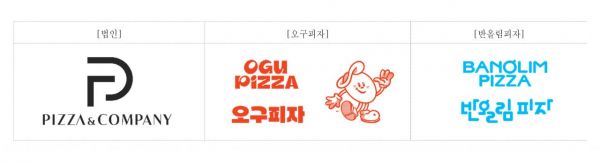
At the end of last year, Banolim Pizza acquired Ogu Bonga, which operates Ogu Ssal Pizza, for over 10 billion KRW, more than doubling its size. With a total of 730 stores, it achieved the top ranking among single-entity pizza franchise operators in Korea, becoming a mega-brand. Its sales are also expected to rise to the second-highest level in the industry.
Banolim Pizza, which began franchising in 2013, continued its growth after being acquired by private equity fund Orchestra Private Equity (Orchestra PE). According to audit reports, Banolim Pizza's sales grew from 18.9 billion KRW in 2021 to 33.3 billion KRW in 2022 and 53.7 billion KRW in 2023. The number of Banolim Pizza stores also increased from 265 in 2020 to 297 in June 2021, and then to 343 by the end of 2021.

Last year, sales reached 49 billion KRW and operating profit was 2.7 billion KRW, representing decreases of 8.9% and 46.8%, respectively, compared to the previous year. This was due to more than doubling of corporate tax expenses following the acquisition of Ogu Ssal Pizza, as well as a 51.6% surge in advertising and sales promotion expenses, which are included in marketing costs under selling and administrative expenses. Banolim Pizza expects that, following the acquisition of Ogu Ssal Pizza, it will be able to improve logistics services and actively hedge against fluctuations in the purchase prices of various food ingredients.
Industry insiders believe the divergent paths of the two companies are the result of structural changes in the food service market, which has shifted toward delivery. As consumers now have more choices, companies that do not respond quickly with new products tailored to increasingly segmented tastes or with marketing collaborations involving celebrities or popular characters are likely to be left behind.
For this reason, the prevailing view in the industry is that Pizza Hut's passive response led to its management crisis.
In addition, pizza is typically served in large portions and has maintained a price of around 30,000 KRW for a large size, which is also considered a misstep. With the increase in single-person households, low-priced pizza franchises emphasizing "value for money" have rapidly proliferated, further narrowing the market share of established brands. The surge in alternatives such as frozen pizza after COVID-19 has also had a negative impact.
An industry source said, "The number of low-priced pizza franchises has increased, and as ovens and air fryers have become more widespread, the appeal of restaurant pizza has diminished considerably," adding, "Pizza Hut's crisis is a clear example of the current state of the domestic pizza franchise market."
© The Asia Business Daily(www.asiae.co.kr). All rights reserved.



















