Gwangju's Cashless Bus System Marks One Month: 30% Adoption Rate
Cash Usage Drops to 0.5%, Half of Pre-Implementation Level
Phased Rollout Across Downtown, Traditional Markets, and Senior Towns
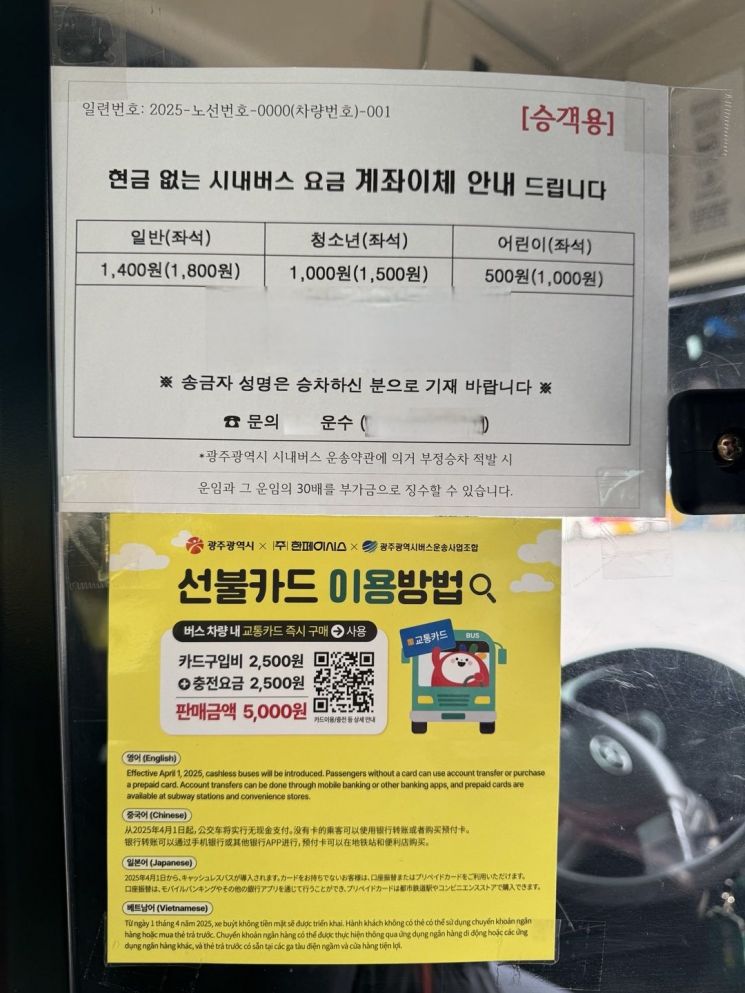
On May 2, Gwangju City announced that the adoption rate of the nation’s first “cashless bus” system, which has been in operation for one month, has reached 30%, and that the transition is proceeding smoothly without confusion or inconvenience.
As of this day, the city has removed cash boxes from 300 buses on 36 routes out of its target of 1,000 buses on 102 routes by July. The proportion of passengers paying with cash or bank transfers across all routes has dropped to 0.5%, continuing a steady decline from 1.9% last year, 1.6% in January this year, and 1.1% in March. Sales of prepaid transportation cards, which are being offered to assist seniors and passengers with low credit ratings, have totaled 135 transactions.
Despite being in the early stages of implementation, the significant decrease in cash and bank transfer payments has reduced the workload for bus drivers and improved conditions for safe operation. This is interpreted as a result of high public interest in the new system and citizens preparing transportation cards in advance.
The city attributes the successful rollout to thorough preparations, including broad collection of public opinion, close communication and cooperation with bus companies, consideration for digital minorities such as seniors, and intensive on-site promotion in connection with the Gwangju G-Pass program.
To ensure a stable transition, the city is strengthening ongoing monitoring through on-site inspections and is actively addressing any inconveniences experienced by citizens or difficulties faced by drivers as soon as they are identified.
Previously, to build public consensus and encourage participation, the city conducted a pilot program from December last year through March this year to promote the “cashless city bus system,” and gathered opinions from citizens through online surveys, the Gwangju City Council, experts, and other stakeholders.
Reflecting this feedback, the city held multiple task force meetings to develop a phased rollout by route?giving lower priority to routes serving traditional markets and senior towns?and introduced alternatives to cash such as bank transfers and prepaid transportation card sales.
For bank transfers, to prevent fare evasion and confirm fare deposits, passengers are required to provide personal information, and are given a notice that includes the bus company’s account number. For prepaid transportation cards, the city has worked with card companies to produce large-print guides for seniors and expanded dedicated call center lines to enhance the effectiveness of the program.
Above all, bus drivers are regularly trained to ensure that guidance on cash alternatives and card sales is provided only after the bus has come to a complete stop and safety is secured, with a focus on distributing detailed informational notices.
Going forward, the city plans to monitor trends in card usage rates, the frequency of bank transfers, and cases of citizen inconvenience, while considering ways to simplify the process of collecting personal information from bank transfer passengers and whether to continue selling prepaid transportation cards.
Bae Sangyoung, Director of Public Transportation, said, “We have increased the use of transportation cards through on-site campaigns linked to the Gwangju G-Pass program,” and added, “We will do our best to ensure that this leads to improvements in the quality of city bus services, such as safety and punctuality.”
© The Asia Business Daily(www.asiae.co.kr). All rights reserved.
![Clutching a Stolen Dior Bag, Saying "I Hate Being Poor but Real"... The Grotesque Con of a "Human Knockoff" [Slate]](https://cwcontent.asiae.co.kr/asiaresize/183/2026021902243444107_1771435474.jpg)















