Strengthening the Emergency Care Cooperation Network
"Healthcare Reform: Realistically Difficult to Announce New Policies"
The government will maintain its emergency medical care system during the May holiday period and strengthen cooperation for the treatment of major emergency conditions, including high-risk pregnant women and newborns, as well as cardiovascular and cerebrovascular diseases.
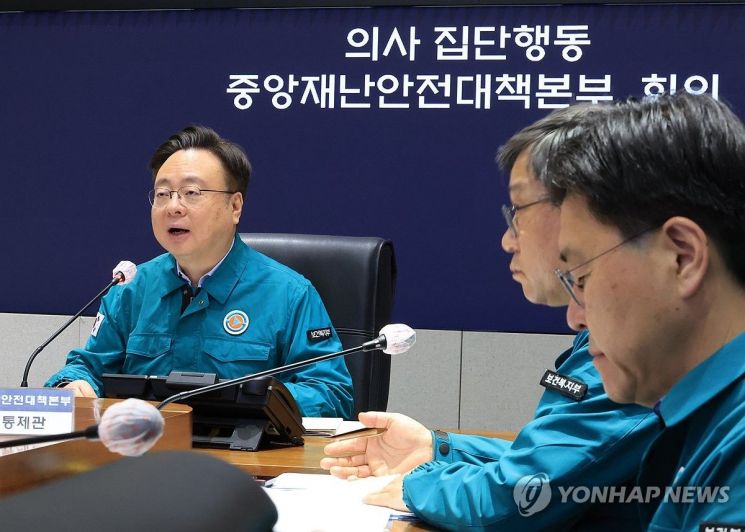
On May 1, Minister of Health and Welfare Cho Kyuhong stated at the Central Disaster and Safety Countermeasures Headquarters meeting on collective action by doctors, "We will continue to maintain key emergency medical support measures and provide ongoing support for fees related to severe and emergency care, such as additional payments for emergency room specialists' consultations and for severe and emergency surgeries. We will also strengthen the on-call system for major diseases during the holiday period."
The Ministry of Health and Welfare is currently operating a nationwide 365-day rotating on-call system for low-frequency, high-difficulty surgeries and procedures, such as aortic dissection and high-risk pregnancies. Starting today, pediatric urological emergencies will be added to this system, increasing the number of targeted specialties from six to seven.
The Ministry will also resume operation of the Central Emergency Situation Room's dedicated team for mothers and newborns, which was previously in place during the Lunar New Year holiday. If a patient arises, the ministry plans to ensure rapid transfer and referral through regional hotlines.
Minister Cho emphasized, "We will inspect the on-call systems and hotlines of all 17 regional trauma centers nationwide to ensure that all severe trauma patients receive treatment without exception. During this holiday, we will further strengthen the emergency care cooperation network for high-risk pregnant women and newborns, as well as for major emergency conditions such as cardiovascular and cerebrovascular diseases."
The government will also advance the start of the 'Maternal and Child Medical Care Cooperation Pilot Project,' which provides 24-hour response to emergencies involving mothers and newborns, and will begin operating it immediately from this week.
Minister Cho added, "Even during the holiday period, we will maintain emergency response systems among local governments, the Central Emergency Medical Center, disaster situation monitoring, and Disaster Medical Assistance Teams (DMAT) deployment. The government will communicate closely with local governments and medical institutions to ensure that the public can spend the holiday with peace of mind."
The government plans to continue healthcare reform by focusing on already confirmed tasks ahead of the presidential election.
Minister Cho stated, "It is true that there are still many issues that require social discussion and improvement for healthcare reform, but it is realistically difficult for the Special Committee on Healthcare Reform to announce new policies at this time. However, we will faithfully implement tasks that have been reflected in the budget and those confirmed through the Health Insurance Policy Deliberation Committee without delay."
He further emphasized, "For tasks that require more detail, we will supplement them by listening to voices from the field. In particular, for issues of interest to medical residents, such as improving training environments, it is necessary to clearly explain policy directions and provide opportunities to hear their opinions."
© The Asia Business Daily(www.asiae.co.kr). All rights reserved.
![Clutching a Stolen Dior Bag, Saying "I Hate Being Poor but Real"... The Grotesque Con of a "Human Knockoff" [Slate]](https://cwcontent.asiae.co.kr/asiaresize/183/2026021902243444107_1771435474.jpg)















