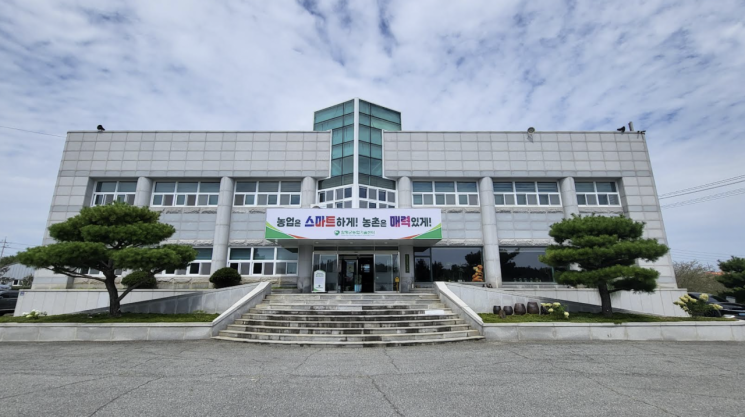
On May 1, Hampyeong County in South Jeolla Province announced that it will provide on-site technical support for rice seed disinfection to prevent rice diseases and pests as the main farming season begins.
Since certified rice seeds are supplied without prior disinfection, it is essential to disinfect the seeds to control diseases and pests such as bakanae disease, rice kernel smut, and rice leaf nematode.
Before disinfecting the seeds, a "saltwater selection" process should be carried out to select healthy seeds. For non-glutinous rice, soak the seeds in 20 liters of water with 4.2 kilograms of salt, and for glutinous rice, use 20 liters of water with 1.3 kilograms of salt. Soak the seeds for less than five minutes, and only use the seeds that sink after rinsing. However, if the seeds, such as government-supplied certified seeds, are already well sorted, this process may be omitted.
Rice seed disinfection is usually performed either by hot water treatment or by soaking in a chemical solution. For hot water treatment, place the seeds in a mesh bag and soak 10 kilograms of seeds in 100 liters of water at 60°C for 10 minutes, then rinse with cold water. It is important to note that if the seeds are left in the hot water for too long, they may be damaged.
For chemical soaking, soak 10 kilograms of seeds in 20 liters of disinfectant solution at 30°C for 24 to 48 hours for optimal results. After disinfection, the seeds should be soaked and sprouted before sowing.
The optimal period for setting up rice seedbeds in Hampyeong is in early May. To grow strong seedlings and prevent seedling diseases such as damping-off, it is important to maintain the temperature in the seedling nursery at around 25°C during the day and around 15°C at night throughout the seedling period.
An official from the Hampyeong Agricultural Technology Center stated, "Half of a year's rice production depends on seed disinfection and seedling management," and added, "We will strengthen on-site technical support from the rice seedling stage to help farmers achieve stable production."
© The Asia Business Daily(www.asiae.co.kr). All rights reserved.
![Clutching a Stolen Dior Bag, Saying "I Hate Being Poor but Real"... The Grotesque Con of a "Human Knockoff" [Slate]](https://cwcontent.asiae.co.kr/asiaresize/183/2026021902243444107_1771435474.jpg)















