Operating profit expected to reach 52.3 billion won in Q1, up 8% year-on-year
Soju leads performance with steady demand
Dominant market position enables solid results despite reduced marketing
Amid sluggish domestic demand and a general decline in profitability across the alcoholic beverage industry, HiteJinro appears likely to rely on its flagship soju to support its business. This is attributed to the brand's overwhelming market position, which has allowed it to maintain its performance even as marketing expenses such as advertising have been reduced.
According to financial information provider FnGuide on May 2, HiteJinro's operating profit for the first quarter of this year is projected to reach 52.3 billion won, an increase of 8.1% compared to the same period last year. Net profit is also expected to rise by 17.6% to 30.8 billion won. However, sales during the same period are anticipated to grow by only 0.7% to 625.5 billion won.
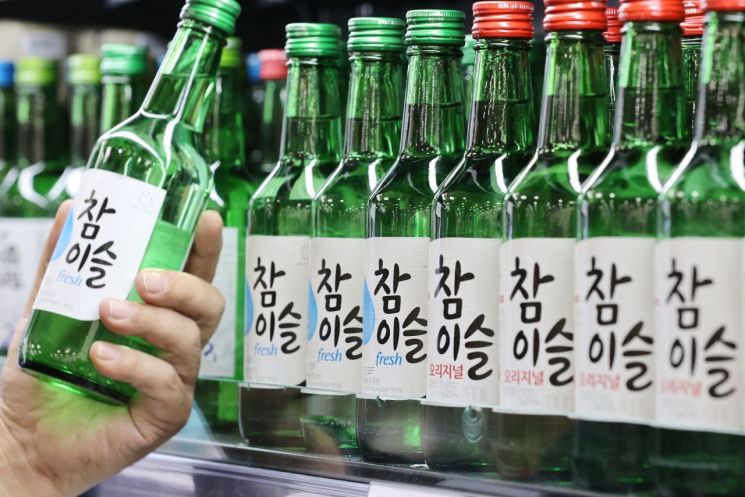
Despite assessments that the market's growth potential is limited, HiteJinro's first-quarter performance is expected to be underpinned by soju at its core. The soju business has steadily increased its market share, leveraging its overwhelming accessibility and position even amid the overall stagnation in the alcoholic beverage market. Additionally, fruit soju (other flavored liquors), which is mainly sold overseas, appears to have maintained a similar trend to last year, supported by stable demand. Last year, HiteJinro's exports of soju and other flavored liquors reached 153.4 billion won, representing growth of about 10% year-on-year, with their share expanding to 11%.
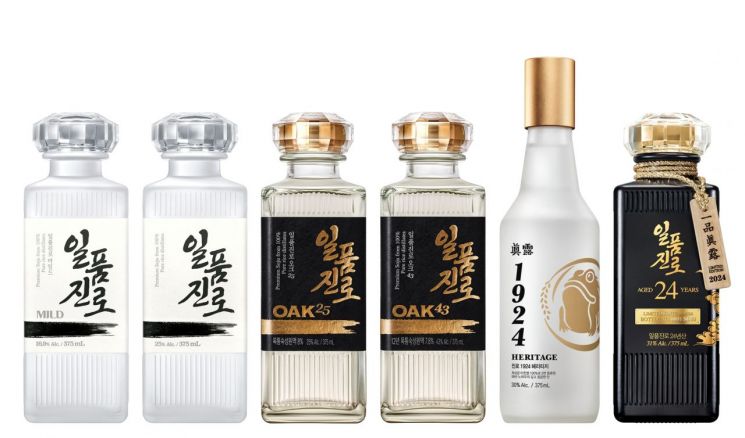
Although its overall share remains small, the distilled soju 'Ilpum Jinro' is also contributing. Last year, the Ilpum Jinro brand increased its sales volume by more than 25% compared to the previous year, and this year, the company is expanding its lineup by launching 'Ilpum Jinro Mild,' which has the lowest alcohol content (16.9%) in the brand's history. As demand for premium distilled soju continues to grow, the company is steadily increasing brand and product exposure, which is expected to further boost sales and contribution.
In contrast, the beer segment is expected to remain stagnant. With the food service market still sluggish, OB Beer announced a price increase in March, which likely led to a temporary surge in demand for its products and impacted HiteJinro's beer shipments. By brand, 'Terra' has shown a gradual recovery since the launch of the new 'Terra Light' in June last year, but 'Kelly' continues to decline. However, as the contract price for malt, a key raw material for beer, is falling this year, future cost pressures are expected to be limited.
Given that OB Beer announced a price increase in the first quarter, whether HiteJinro will also raise prices in the future is drawing attention. Previously, OB Beer raised the shipment price of domestic beer products?excluding the 'Cass' 500ml can?by an average of 2.9% from April. Considering the trend of price increases in the alcoholic beverage industry, there is a high possibility that HiteJinro may raise not only beer but also soju prices. However, some suggest that the company could instead refrain from raising prices and use this as an opportunity to expand its market share. A HiteJinro representative said, "There are currently no plans to raise prices for either beer or soju."

With the downturn in the alcoholic beverage industry lowering overall growth expectations, the reason HiteJinro is expected to maintain solid profitability lies in its ongoing cost reduction efforts throughout the year. Despite significantly reducing advertising and promotional expenses last year, the company did not experience a decline in market share, making it unlikely to excessively increase related spending this year. HiteJinro's advertising and promotional expenses last year were 192.2 billion won, a decrease of about 22% from 245.8 billion won the previous year.
Kang Eunji, a researcher at Korea Investment & Securities, said, "Since the food service market remains sluggish, the likelihood of intensified competition in the alcoholic beverage market in the short term is limited, so the company will boost operating profit through cost reductions. For soju, HiteJinro will defend shipment volumes by leveraging its market position, while for beer, it will maintain its strategy of securing market share using existing brands rather than engaging in cutthroat competition."
© The Asia Business Daily(www.asiae.co.kr). All rights reserved.



















