Operational Challenges and Implications for Korea's Monetary Policy Tools
Welcoming Address at the Bank of Korea-Korea Money and Finance Association Policy Symposium
"Given the medium- to long-term structural changes in the monetary policy environment surrounding our economy, it is time to begin fundamental discussions on how to further develop our monetary policy framework."
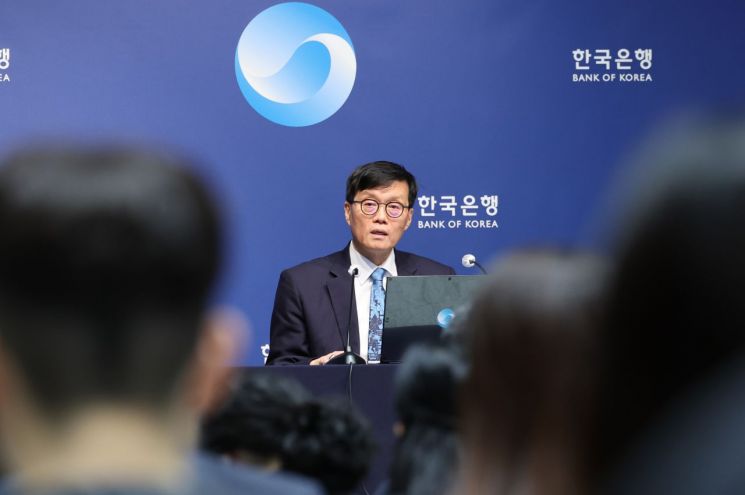
Lee Changyong, Governor of the Bank of Korea, made these remarks on April 30 during his welcoming address at a policy symposium co-hosted with the Korea Money and Finance Association at the Bank of Korea's annex in Jung-gu, Seoul. Governor Lee stated, "Since the 1997 foreign exchange crisis, the Bank of Korea has focused its open market operations on absorbing liquidity supplied to the market as it expanded foreign exchange reserves and mitigated excessive exchange rate volatility. However, since the mid-2010s, there have been significant changes in liquidity conditions, such as the growing likelihood of a structural decline in the current account surplus and an increase in residents' overseas securities investments."
He explained that, in light of these changes, it is now necessary to re-examine the role of Monetary Stabilization Bonds, which have been primarily used as a fundamental tool for absorbing liquidity in the monetary policy framework. He added, "We must also consider how to make more effective use of Monetary Stabilization Bonds from a debt management perspective, taking into account their role as benchmark bonds and highly liquid safe assets. In addition, the Bank of Korea's repurchase agreement (RP) transactions should be improved to better respond to changing liquidity trends."
Governor Lee emphasized, "Our economy is facing deepening low birth rates and population aging, as well as the risk of a structural decline in potential growth rates. As a result, if policy interest rates in Korea approach the zero lower bound, as they have in advanced economies, it is time to consider whether we should introduce balance sheet expansion policies such as quantitative easing (QE), as central banks in advanced economies have done, and whether doing so would be appropriate. If it is difficult to utilize such measures, we must also discuss what alternative policy tools could supplement them."
He stated, "The Bank of Korea's monetary policy framework and policy tools must be developed in line with changing policy conditions through close feedback with the market and academia," and expressed hope that the discussions at this symposium would serve as an opportunity for the Bank of Korea's monetary policy framework to take another step forward.
© The Asia Business Daily(www.asiae.co.kr). All rights reserved.
![Clutching a Stolen Dior Bag, Saying "I Hate Being Poor but Real"... The Grotesque Con of a "Human Knockoff" [Slate]](https://cwcontent.asiae.co.kr/asiaresize/183/2026021902243444107_1771435474.jpg)
















