Until October 19 at the Archives: Five Sections in Total
Nobel Prize-Winning "The Boy Is Coming" Sheds Light on Truth Through Narrative
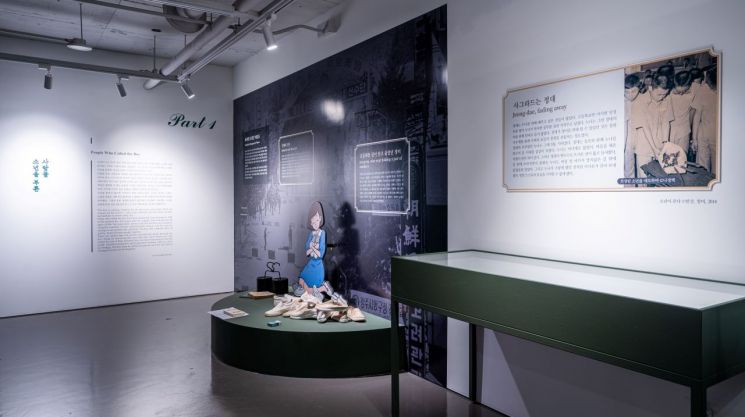 518 Democratic Movement 45th Anniversary Special Exhibition 'The Boy Is Coming'. Provided by Gwangju City
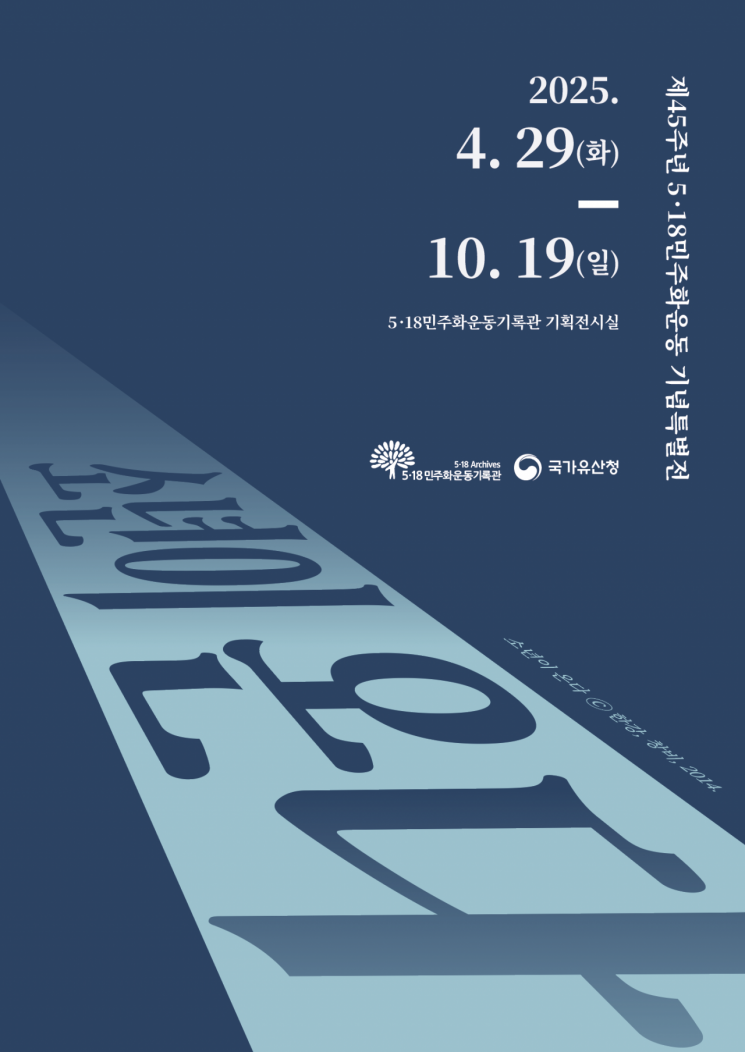
The May 18 Democratic Uprising Archives announced on April 30 that it will host a special exhibition titled "The Boy Is Coming" in commemoration of the 45th anniversary of the 5·18 Democratic Movement. The exhibition will run until October 19 in the third-floor special exhibition hall of the archives.
This exhibition centers on "The Boy Is Coming," a representative work by Nobel Prize-winning novelist Han Kang, and seeks to shed new light on the truth and spirit of Gwangju in May 1980 through literature and archival records.
At the intersection of literature and documentation, emotion and truth, the exhibition revisits the contemporary significance of the 5·18 Democratic Movement. It is designed to prompt visitors to seek answers to essential questions such as: Who is the boy? Why did he come? What did his journey mean? These questions are woven throughout the exhibition.
The exhibition consists of a prologue, three main sections, and an epilogue. Reflecting the structure of Han Kang's novel, the exhibition unfolds along a narrative of emotion. The prologue, featuring the video "A Mother Remembering Dongho," serves as a gateway to the novel's opening page, preparing visitors to begin their journey through the exhibition.
Part 1, "Those Who Called the Boy," focuses on ordinary people who existed in Gwangju in May but disappeared without a name during the 5·18 Democratic Movement (such as Jeongmi and Jeongdae), as well as those who did not seek survival from the start (such as Eunsuk, a returning student, Jinsu, and Seonju). The section highlights the existence of those who will vanish if not remembered.
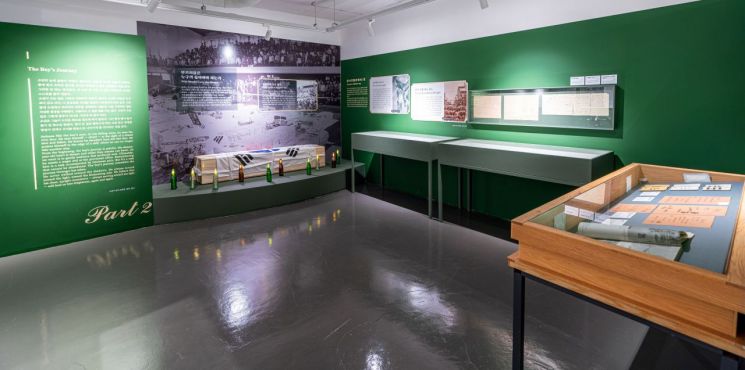 518 Democratic Movement 45th Anniversary Special Exhibition 'The Boy Is Coming'. Provided by Gwangju City
In particular, the video "To My You, To Our Boy" confronts visitors with the pain experienced by various individuals in May 1980, underscoring the importance of never forgetting them. The traces of violence are explored through the list of missing persons, police batons, and bulletproof helmets. Additionally, materials such as a citizen's petition to stop the fountain in front of the provincial government building (held by the National Archives), the diary of citizen Min Youngryang who documented the 5·18 truth, and the diary of the late martyr Kim Youngcheol, provide glimpses into their daily lives, suffering, and solidarity. These individuals are shown not simply as victims, but as the silent protagonists of history.
Part 2, "The Boy's Path," highlights the efforts of those striving to remember historical truth. This section focuses on the reasons the boy was left behind, feelings of guilt, shame, anger, and communal conscience. Dongho's decision to remain at the provincial government building was driven by the survivor's sense of responsibility, and the anger felt expands the emotional landscape of the exhibition.
Through related audiovisual materials, sashes worn by student volunteers, the diary of citizen Kim Songdeok who recorded the 5·18 truth, the reporting notes of Kim Youngtaek, a Dong-A Ilbo journalist at the time, and statements and records such as "Gwangju Citizens Are Weeping," visitors can experience the nuances of emotion in detail.
Part 3, "The Time the Boy Opens," highlights the value of the Gwangju spirit, where the past revives the present and the present, in turn, revives the past. This section explores how past emotions open up the present. The Gwangju spirit remains alive today, and memory serves as a force that heals the present and illuminates the future.
This section particularly emphasizes the inscription of Gwangju's records as a UNESCO Memory of the World and the universal value of the Gwangju spirit. Through the Nobel Prize-winning novel, its translations into various languages, footage from hearings, and citizens' records, the proper noun "Gwangju" becomes a common noun representing a universal concept.
Additionally, through Jin Kyungu's artwork "In Search of Peace" (created in 1987), which depicts Korea's journey toward democratization after liberation, visitors can understand that the relentless passage of May over the past 45 years ultimately connects to the present. The epilogue, "Today, The Boy Is Coming," is an interactive space where visitors can hand-copy sentences and encounter their own "boy."
Kim Hokyun, director of the May 18 Democratic Uprising Archives, stated, "The 5·18 Democratic Movement, as expanded through literature, shows that the past and present, you and I, and all of us are deeply connected," inviting the public to "come together to welcome Gwangju as it walks toward us today."
© The Asia Business Daily(www.asiae.co.kr). All rights reserved.
![Clutching a Stolen Dior Bag, Saying "I Hate Being Poor but Real"... The Grotesque Con of a "Human Knockoff" [Slate]](https://cwcontent.asiae.co.kr/asiaresize/183/2026021902243444107_1771435474.jpg)

















