A New Era in Healthcare:
Advancing Dermatology, Critical Care, and Infectious Disease Control
A wearable sensor capable of detecting the "breath" of the skin and precisely measuring gas flow on the skin's surface has been developed.
This innovation is expected to introduce a new trend of "completely non-invasive diagnosis and management" across a wide range of healthcare fields, including dermatology, critical care, infectious disease control, environmental safety, and trauma treatment.
On April 30, the National Research Foundation of Korea announced that a research team led by Jaeho Shin, Ph.D., at the Korea Institute of Science and Technology (KIST), has developed a wearable system that can precisely measure bidirectional gas molecular flow (Epidermal Gas Flux) entering and exiting through the skin.
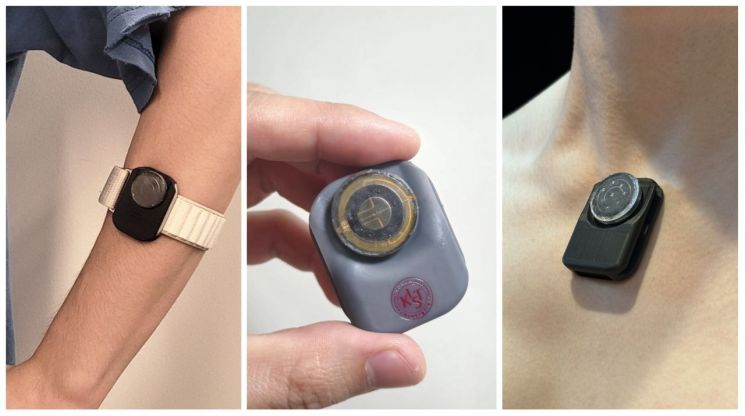
The skin, as the body's outermost boundary separating the internal and external environments, serves as a passageway for various gas molecules. It acts as a high-speed information highway, carrying crucial health-related information outward, and also serves as a route for harmful substances, such as volatile organic compounds present in the atmosphere, to be absorbed into our circulatory system.
Although devices capable of measuring the unidirectional flow of specific gases, such as water vapor, have been developed for use in medical institutions, no technology has been developed or reported that can precisely measure gas flow on the skin's surface.
The research team developed a fully autonomous wearable system that can independently operate without wired connections and continuously monitor various gas flows on the skin surface for several days, simply by attaching it to the skin.
The development was inspired by a simple principle: when a stream is blocked with the palm, the speed at which water accumulates against the palm reflects the original flow rate of the stream. The team applied this principle to a miniature gas sensor and an electromechanical valve system, reconfiguring it into a form that allows gas flow rates to be measured anywhere on the skin.
Through animal experiments and initial clinical trials, the team demonstrated that the system could be widely used for precise diagnosis of skin barrier function, monitoring homeostasis in vulnerable populations, assessing personal hygiene status, evaluating skin degradation caused by environmental hazards, and monitoring the entire process of wound healing, including inflammation and infection.
Jaeho Shin, Senior Researcher, stated, "Through commercialization research, this technology can be developed into various forms such as professional medical devices, skin care devices, and personal hygiene devices, thereby creating substantial market value."
The results of this research were published in the international scientific journal Nature on April 9. The paper is titled, "A non-contact wearable device for monitoring epidermal molecular flux."
Jaeho Shin is listed as the first author, Sungmin Jung, Ph.D., at KIST, is a co-author, and John Rogers, Professor at Northwestern University in the United States, is the corresponding author.
© The Asia Business Daily(www.asiae.co.kr). All rights reserved.
![Clutching a Stolen Dior Bag, Saying "I Hate Being Poor but Real"... The Grotesque Con of a "Human Knockoff" [Slate]](https://cwcontent.asiae.co.kr/asiaresize/183/2026021902243444107_1771435474.jpg)
















