The Legacy of COVID-19, Now Rendered Useless
VR Content Once Seen as 'Innovation' Now Has Zero Practical Use
'Digilog' Approach Gains Attention in the Post-Pandemic Era
"I'm not sure, but it might be a discontinued product." On the morning of April 28 at the Livart Total Mokdong Branch of Hyundai Livart, when a customer pointed to a piece of furniture in the virtual reality (VR) showroom accessed via mobile phone and inquired whether the item was on display in the store, the staff member tilted their head in uncertainty. After searching for the product on the company's internal network, the employee explained, "That product is not on display anywhere in the showroom right now," adding, "Only a few units are kept in storage at other branches."
According to industry sources on April 30, the 'VR showroom'?which furniture companies rushed to introduce during the COVID-19 pandemic as consumer interest surged?has been largely neglected. This is because consumers have returned to offline stores in the post-pandemic era. In the case of Hyundai Livart, the company revamped Livart Mall in 2020 with a focus on the latest IT technologies and introduced a VR showroom that recreated offline stores online.
However, there are currently significant differences between the product selection and layout in the actual stores and those displayed in the VR showroom. Some items recreated in VR could not be viewed even when clicked. The VR showroom for the Livart Office Gangseo Exhibition Hall has not been updated since 2021. A Hyundai Livart representative stated, "We are currently discussing internally how to utilize the VR showroom going forward."
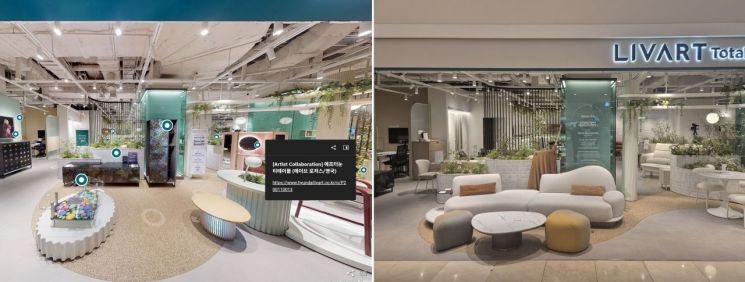
The situation is no different for Hanssem. Around 2020, Hanssem introduced the 'VR Model House' and '3D Digital Studio' to its online platform, Hanssem Mall, but both services have now been discontinued. Both companies initially aimed to enhance customer experience and stimulate online demand by expanding VR content, but these efforts have fizzled out.
The reason the furniture industry has distanced itself from VR content lies in the shift in consumer trends following the end of the pandemic. Because furniture is bulky and often expensive, it is a category where consumers place a high value on in-person experience. Although non-face-to-face consumption temporarily increased due to COVID-19, the need for contactless shopping in virtual spaces naturally declined as consumers were once again able to visit offline stores. In addition, the metaverse boom?which was closely linked to demand for VR devices?also cooled rapidly.
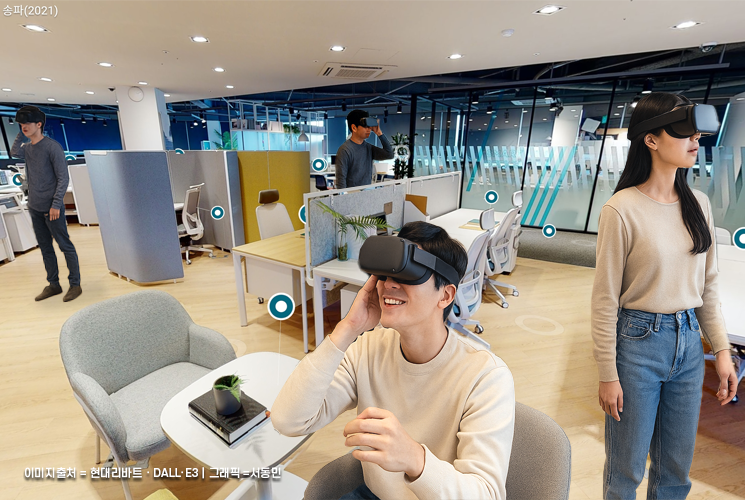
As a result, experts in the furniture industry now analyze that it is more important to provide consumers with an integrated online and offline experience by combining digital technology with offline experiences, rather than focusing on 3D or VR implementation. For example, after customers explore various furniture and interior solutions in-store, they are offered personalized simulation consultations using 3D design programs that measure their actual living spaces.
A Hanssem representative explained, "After the end of the pandemic, customers have shown a greater desire to experience and compare products in real spaces, leading Hanssem's digital strategy toward a 'digilog' (Digital + Analog) approach that combines technology and people, online and offline."
© The Asia Business Daily(www.asiae.co.kr). All rights reserved.
![Clutching a Stolen Dior Bag, Saying "I Hate Being Poor but Real"... The Grotesque Con of a "Human Knockoff" [Slate]](https://cwcontent.asiae.co.kr/asiaresize/183/2026021902243444107_1771435474.jpg)
















