Final Mediation Begins at 5 p.m. on the 29th
Industrial Action to Begin if No Agreement Is Reached by Midnight
Seoul City Prepares Emergency Transportation Measures
The final wage negotiations that will determine whether Seoul city buses go on strike are set to begin. As the Seoul City Bus Labor Union has announced plans for industrial action on the 30th, differences between labor and management over wages and bonuses continue to persist.
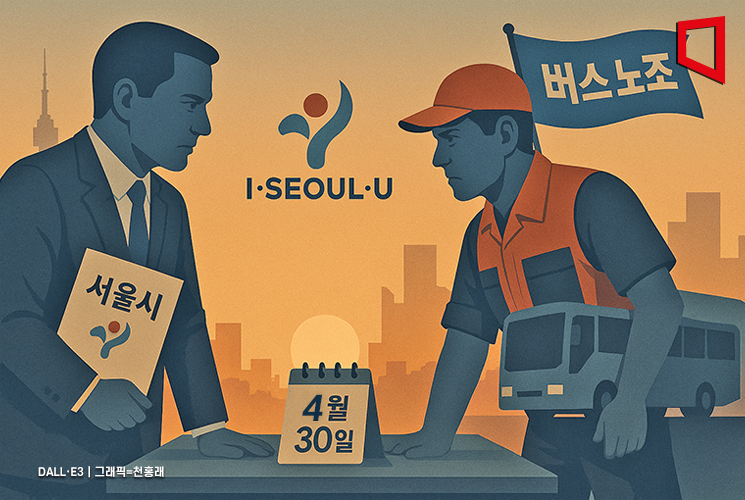
According to the Seoul Metropolitan Government and other sources on the 29th, the union and the management, represented by the Seoul City Bus Transportation Business Association, will hold a final mediation meeting at the Seoul Regional Labor Relations Commission at 5 p.m. on this day. The union has stated that if an agreement is not reached by midnight, it will begin industrial action starting with the first buses on the 30th. In a vote held the previous day, 84.9% of all union members voted in favor of collective action.
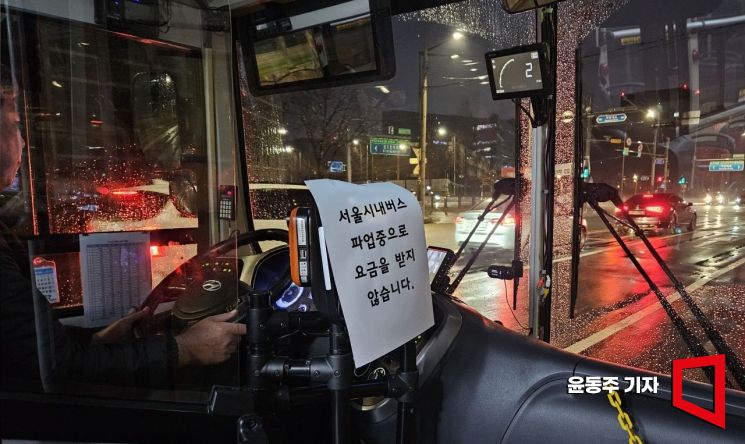 On the 28th, when the Seoul city bus union went on a general strike for the first time in 12 years, a notice stating "Seoul city buses are on strike, fares are not being collected" was attached to the fare tag on buses operating within Seoul.
The union's industrial action could take the form of a "work-to-rule" campaign or a full-scale general strike. In a work-to-rule action, drivers strictly follow all regulations, such as coming to a complete stop at crosswalks, which could result in delays and increased intervals between buses. If the union proceeds with a full general strike, bus operations will be suspended starting with the first buses at 4 a.m. A union representative stated, "Tonight at 8 p.m., the branch leaders will decide on the form of industrial action at a general meeting at the Seoul Regional Labor Relations Commission."
The main issue in the negotiations on this day is the overall wage system, including the wage increase rate. The union is demanding an 8.2% wage increase, while management insists on a wage freeze. The union is also calling for an extension of the retirement age from 63 to 65.
Labor and management are also in dispute over whether regular bonuses should be included in the base wage. The key issue is a Supreme Court en banc decision in December of last year, which ruled that regular bonuses must be included in the base wage. The union maintains that this issue cannot be addressed in the collective bargaining agreement. The union pointed out, "The Seoul Metropolitan Government and management's proposal to abolish the regular bonus provision or to revise it to a performance-based bonus instead of a base wage is an attempt to deprive workers of rights already secured, and constitutes a 'wage cut.'"
In contrast, management argues that the existing wage system was established on the premise that bonuses are not included in the base wage, and that if the Supreme Court's legal interpretation has changed, the wage system must be restructured. The Seoul Metropolitan Government estimates that if regular bonuses are included in the base wage and the union's demand for an 8.2% increase in base pay is accepted, the average annual wage for city bus drivers will rise from 62,730,000 won to 78,720,000 won. A city official stated, "As a result, the total annual personnel costs for drivers are expected to increase by about 300 billion won each year."
.
The Seoul Metropolitan Government, anticipating that the bus union may proceed with a full-scale strike, has prepared emergency transportation measures. Subway service will be increased by a total of 173 runs per day, and more trains will be deployed during peak commuting hours. To facilitate connections between subway and bus routes, 25 district offices will operate free shuttle buses. The city also plans to request that schools, public institutions, and private companies adjust their start times by one hour to help disperse morning commuting demand.
Last year, the Seoul city bus union went on strike for the first time in 12 years. Bus service was suspended for about 11 hours, from the first bus at 4 a.m. until labor and management reached an agreement at 3 p.m., causing inconvenience for commuters.
Yeo Jangkwon, head of the Seoul Metropolitan Government's Transportation Bureau, stated, "Given that transportation costs for city buses already exceed transportation revenue, resulting in annual operating deficits, a sharp increase in personnel costs for drivers would inevitably lead to a severe financial burden for the city. We urge both labor and management to make concessions and reach a reasonable agreement that the public can understand."
© The Asia Business Daily(www.asiae.co.kr). All rights reserved.
![Clutching a Stolen Dior Bag, Saying "I Hate Being Poor but Real"... The Grotesque Con of a "Human Knockoff" [Slate]](https://cwcontent.asiae.co.kr/asiaresize/183/2026021902243444107_1771435474.jpg)
















