Ministry of Gender Equality and Family Releases 2024 Survey on At-Risk Youth
33% Experienced Feelings of Depression
Sense of Being "Alone" and Social Isolation Significantly Higher Than Among General Youth
Family Is the Main Cause of Runaway and Suicide Attempts,
But 80.8% Still Feel Loved by Their Parents
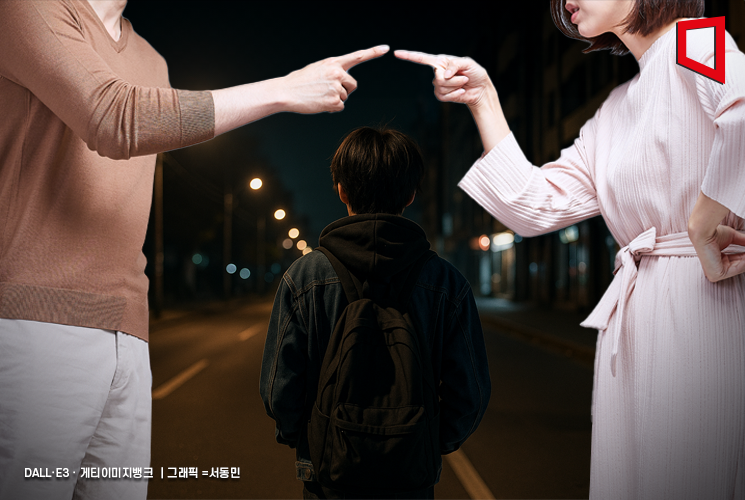
One in five at-risk youth reported having run away from home at least once in the past year. These adolescents are psychologically and emotionally vulnerable, with 33% experiencing feelings of depression. Their sense of social isolation, specifically the feeling of being "alone," was also significantly higher than that of the general youth population. While the primary cause of their psychological and emotional conflicts was family-related, 80% still responded that they felt loved by their parents, indicating a need for greater family attention and care.
On April 29, the Ministry of Gender Equality and Family announced the results of the "2024 Survey on the Living Conditions of Users of Support Institutions for At-Risk Youth." This survey, conducted every three years as a nationally approved statistic, targets youth aged 9 to 18 who have used youth counseling and welfare centers or youth shelters. For the second time since 2021, this survey examined 4,627 users of these institutions between June 20 and September 13 of the previous year, investigating their family relationships, psychological characteristics, and experiences of crisis.
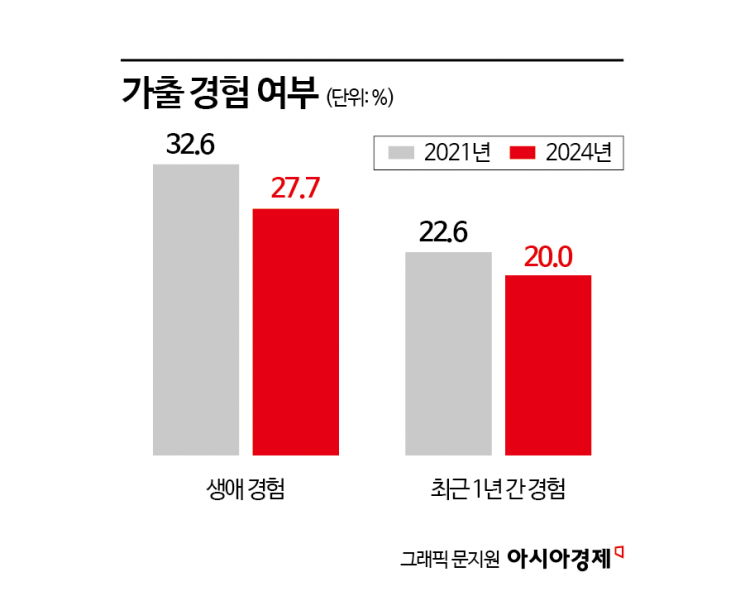
According to the results, 27.7% of respondents said they had run away from home at least once in their lives, and 20.0% said they had run away in the past year.
These figures represent decreases of 4.9 percentage points and 2.6 percentage points, respectively, compared to the previous survey. However, "family conflict" remained the most frequently cited reason for running away, unchanged from the previous survey.
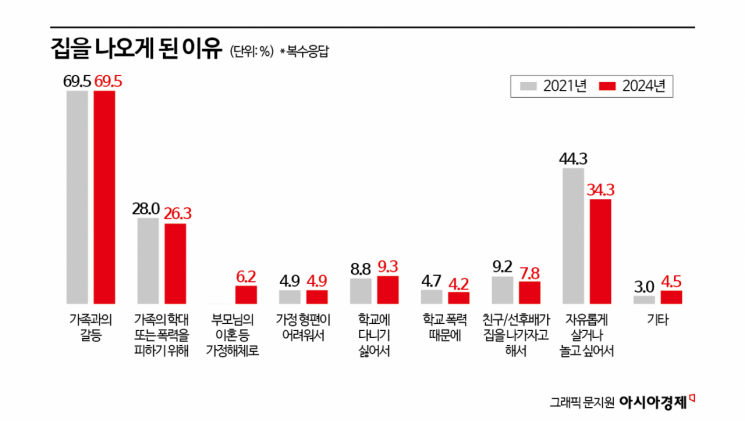
When asked why they left home, at-risk youth cited "conflict with family" (69.5%), "desire for a free lifestyle" (34.3%), and "domestic violence" (26.3%). While the proportion citing "desire for a free lifestyle" and "domestic violence" as reasons for running away decreased compared to the previous survey, the percentage identifying "conflict with family" as the cause remained the same (69.5%).
Although at-risk youth experience psychological and emotional crises such as running away due to family conflict, 7 to 8 out of 10 reported feeling loved by their parents at home. They said they received "love and care from parents" (80.8%), "attention and concern" (79.1%), and "encouragement and courage" (69.8%).
Additionally, when asked whether they had someone to turn to for help in difficult times, 90.4% answered "yes," with "parents or guardians" (73.0%) being the most frequently cited source of support. This figure increased by 8.9 percentage points compared to the previous survey (64.1%). "Friends or peers" followed at 70.8%.
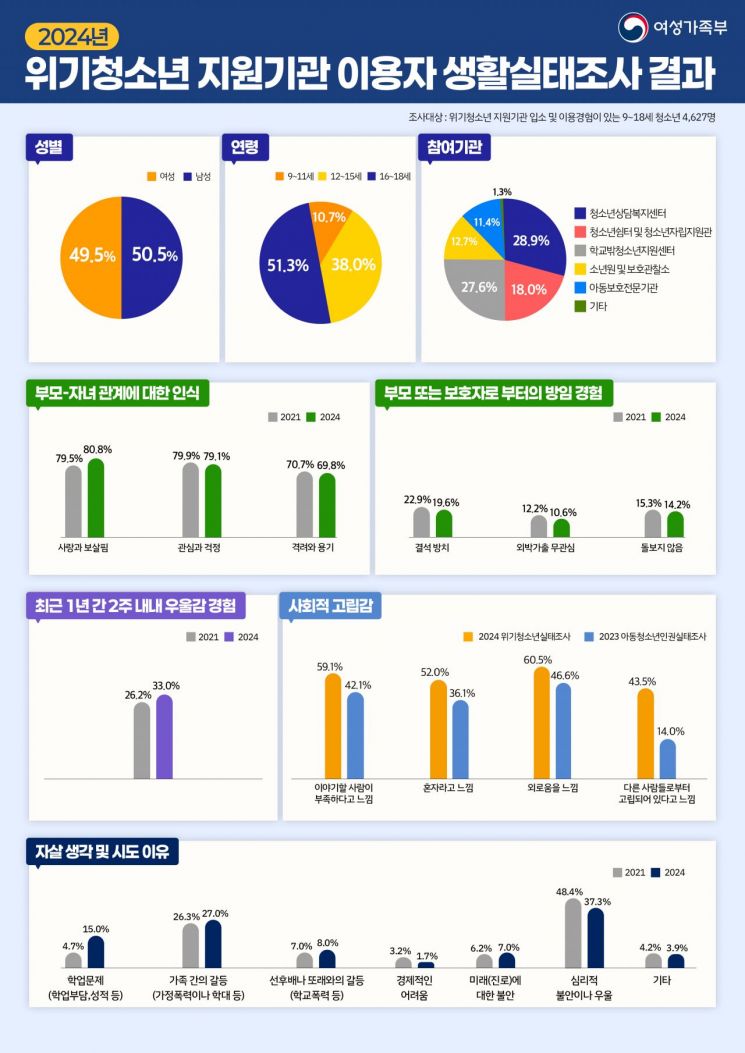
Meanwhile, one in three at-risk youth (33.0%) reported experiencing feelings of sadness or despair for two consecutive weeks in the past year to the extent that it was difficult to carry out daily activities, indicating symptoms of depression. This represents an increase of 6.8 percentage points compared to the previous survey (26.2%).
The percentage who reported having attempted suicide in the past year was 8.2%, a decrease of 1.7 percentage points from the previous survey (9.9%). However, the rate of self-harm attempts increased by 2.8 percentage points during the same period, reaching 21.5%.
The main reason for suicide attempts was "psychological anxiety" (37.3%), followed by "family conflict" (27.0%) and "academic problems" (15.0%). Compared to the previous survey, psychological anxiety decreased by 11.1 percentage points, but the proportion citing family conflict and academic problems as reasons for suicide increased by 0.7 and 10.3 percentage points, respectively.
Among at-risk youth who had thoughts of or had attempted suicide or self-harm, about half said they disclosed their thoughts or experiences to others: 55.1% for suicide and 50.5% for self-harm. The most common recipients of such disclosures were "friends or peers," followed by "youth institutions or facilities" (such as youth counseling and welfare centers or Youth Counseling 1388).
The proportion of at-risk youth who felt isolated from others reached 43.5%, a significantly higher level than the 14.0% reported among general youth in the "Survey on the Human Rights of Children and Adolescents."
Based on these survey results, the Ministry of Gender Equality and Family plans to further strengthen youth welfare and protection policies to ensure the safe growth of at-risk youth. Through Youth Counseling 1388 (available 24 hours a day, 365 days a year) and 240 youth counseling and welfare centers, the ministry will provide integrated, tailored services for youth facing crises such as suicide, self-harm, and school violence. The ministry also plans to expand the identification of at-risk youth by linking with related organizations through the at-risk youth safety net system.
In addition, the ministry will support the stabilization of living conditions for out-of-home youth leaving facilities. Starting in May, a service will be introduced to open seizure-protected accounts (Haengbokjikimi Account) to prevent the seizure of self-reliance support allowances. Even if out-of-home youth do not apply for the self-reliance support allowance immediately upon leaving a facility, they will be eligible to receive the allowance for up to five years if they apply within five years after leaving.
Hwang Yoonjung, Director General of Youth and Family Policy at the Ministry of Gender Equality and Family, stated, "We will identify youth in need of help at an early stage and further expand customized support, including professional counseling, as well as housing and employment assistance."
© The Asia Business Daily(www.asiae.co.kr). All rights reserved.
![Clutching a Stolen Dior Bag, Saying "I Hate Being Poor but Real"... The Grotesque Con of a "Human Knockoff" [Slate]](https://cwcontent.asiae.co.kr/asiaresize/183/2026021902243444107_1771435474.jpg)

















