Cargo Demand Drops, Airlines Worry About Introducing New Planes
Berlin-New York Round-Trip Now Less Than 300 Euros
The aviation industry is taking a heavy hit as demand for cargo transportation declines due to President Donald Trump's protectionist and anti-immigration policies.
German broadcaster rbb reported on the 25th (local time) that airlines have suddenly begun selling tickets at discounted prices as demand for flights to the United States has decreased.
According to the outlet, round-trip tickets between Berlin, Germany, and New York, United States, are currently being sold for less than 300 euros (490,000 won).
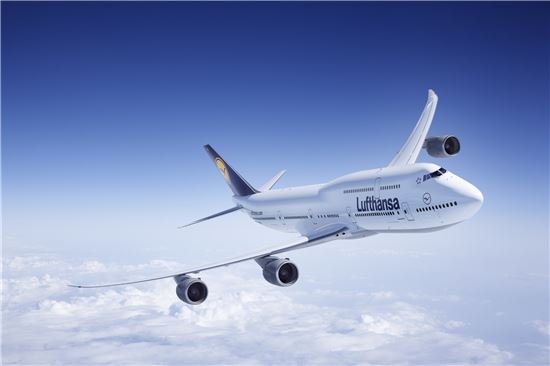 Lufthansa aircraft.
According to the International Trade Administration (ITA) under the U.S. Department of Commerce, the number of foreigners entering the United States by air last month dropped by 9.7% compared to March of last year. The number of European nationals entering the United States during the same period plummeted by 14.3%.
In Europe, the number of people canceling planned trips to the United States is increasing. This is due to voluntary "boycotts of the United States" stemming from tariff disputes, as well as a flood of accounts from travelers who say they were subjected to excessive body searches or even deported during the entry process.
Airlines and the transportation industry have begun preparing countermeasures, anticipating that demand for cargo transportation will also decline as the United States implements tariffs in earnest.
The U.S. government has decided to impose tariffs on parcels from China valued at less than $800 (1.15 million won) starting from the 2nd of next month. In response, Hong Kong-based airline Cathay Pacific announced it would adjust its cargo routes to the United States. This airline has generated revenue by transporting goods from Chinese e-commerce companies to the United States. DHL, a courier company that operates its own cargo aircraft, recently suspended deliveries of certain items to the United States as customs inspections have become more stringent.
Airlines are concerned that if the United States and the European Union impose mutual tariffs on aircraft, which cost hundreds of billions of won each, it will become difficult to introduce new planes. The global aircraft market is dominated by Boeing of the United States and Airbus of Europe, making it highly likely that aircraft will be used as leverage in the trade war. China has already retaliated against U.S. tariffs by refusing to take delivery of Boeing aircraft.
Delta Air Lines of the United States, which has ordered 150 aircraft from Airbus, stated that it would not accept delivery if tariffs are imposed. According to the daily Sueddeutsche Zeitung (SZ), German airline Lufthansa is seeking ways to circumvent tariffs, such as registering 15 Boeing aircraft it ordered in Switzerland, where it has a subsidiary.
© The Asia Business Daily(www.asiae.co.kr). All rights reserved.
![Clutching a Stolen Dior Bag, Saying "I Hate Being Poor but Real"... The Grotesque Con of a "Human Knockoff" [Slate]](https://cwcontent.asiae.co.kr/asiaresize/183/2026021902243444107_1771435474.jpg)














