Symptoms include high fever, nausea, vomiting, diarrhea, and muscle pain
Wanju County in North Jeolla Province has urged residents to be vigilant against tick-borne infectious diseases as outdoor activities such as farm work and gathering wild produce increase during the spring season.
According to the county on April 25, tick-borne infectious diseases include severe fever with thrombocytopenia syndrome (SFTS), scrub typhus, and Lyme disease. Symptoms may include high fever, nausea, vomiting, diarrhea, and muscle pain. In particular, SFTS requires special caution because there is no specific treatment and the fatality rate is high.
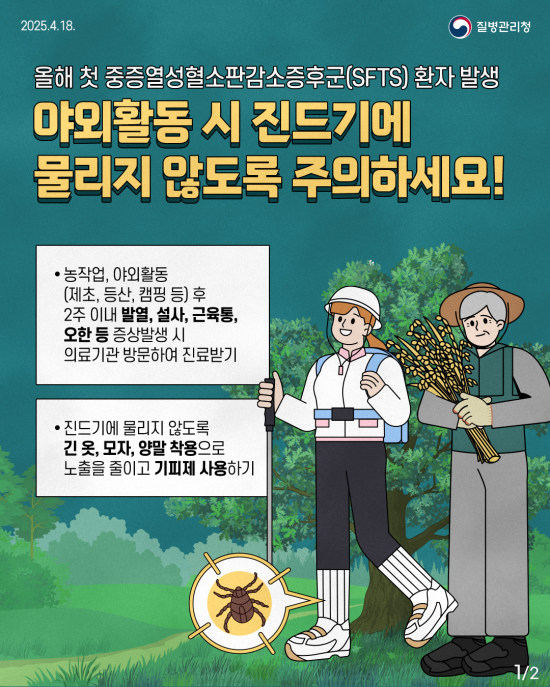
To prevent tick-borne infectious diseases, it is recommended to: ▲wear clothing that minimizes skin exposure, such as light-colored long-sleeved shirts, long pants, hats, socks, and shoes before outdoor activities ▲avoid tick habitats (such as grassy areas, dense vegetation, and the edges of trails) ▲shake out and wash clothes after outdoor activities ▲visit a medical facility immediately if symptoms develop. For more information, contact the Wanju County Public Health Center or visit the Korea Disease Control and Prevention Agency website.
Lee Jaeyeon, head of the public health center, said, "SFTS can be transmitted between people, so extra caution is needed," and added, "We hope everyone will strictly follow preventive guidelines before and after outdoor activities to enjoy a healthy spring season."
© The Asia Business Daily(www.asiae.co.kr). All rights reserved.
![Clutching a Stolen Dior Bag, Saying "I Hate Being Poor but Real"... The Grotesque Con of a "Human Knockoff" [Slate]](https://cwcontent.asiae.co.kr/asiaresize/183/2026021902243444107_1771435474.jpg)















