Production for China to Halt if Deliveries Are Refused
Malaysia and India Express Interest in Purchasing Jets
On April 23, Kelly Ortberg, CEO of Boeing, stated that the company would halt aircraft production for China if Chinese airlines do not take delivery of Boeing jets. He also pressured China by saying that Boeing could sell the jets, which China refuses to accept, to other customers. He emphasized that Boeing’s business recovery remains on track despite the US-China trade war and said he would minimize the impact of trade conflicts on company operations.
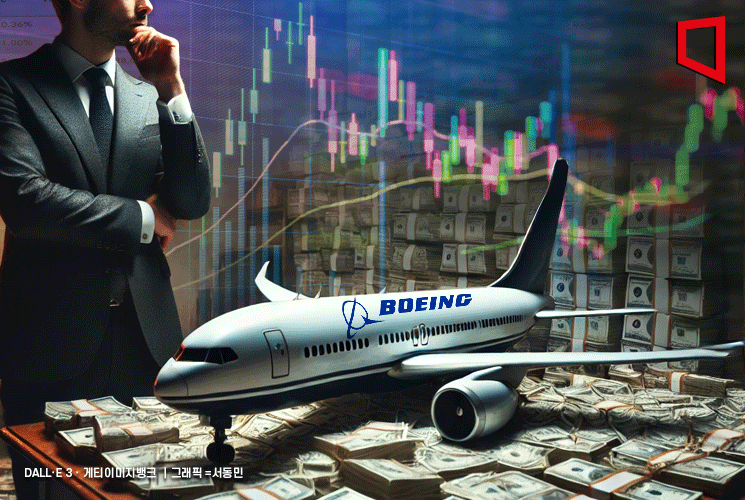
In an interview with CNBC and during a conference call with analysts on the same day, CEO Ortberg explained that Chinese airlines returned aircraft due to high tariffs, and said, "We will do everything we can to ensure that the China issue does not affect our recovery."
He stated that if Chinese airlines do not take delivery of Boeing jets, Boeing will stop producing aircraft for China, and those planes could be sold to other customers. In fact, Malaysia and India have expressed their willingness to purchase Boeing passenger jets returned by China amid the ongoing US-China trade war. According to the Times of India on April 22 (local time), Indian airline Air India is pursuing the acquisition of Boeing passenger jets that China has stopped taking delivery of.
Previously, after Xiamen Airlines in China refused to take delivery of a Boeing passenger jet, one of the jets scheduled for delivery to China arrived at Seattle Airport, where Boeing’s US headquarters is located, on April 21. Reuters also reported that a second passenger jet, which Boeing was supposed to deliver to a Chinese airline, is now returning to the United States. Boeing aircraft appear to be caught in the crossfire of the US-China tariff dispute.
CEO Ortberg stated that Boeing is improving safety and quality, and although the company has faced several crises?including last year’s Alaska Airlines fuselage panel explosion, significant losses in a Department of Defense program, a large-scale strike, and an incident in which two astronauts were left stranded in space?Boeing is focusing on stabilizing its operations.
He highlighted that Boeing recently secured a contract to develop the next-generation fighter jet for the US Department of Defense and expressed optimism that the company will soon be able to increase production of MAX jets.
However, the impact on revenue due to reciprocal tariff measures between the US and China appears unavoidable. The Wall Street Journal (WSJ) analyzed that "China’s return of aircraft could weaken revenue, which negatively affects the company’s efforts to reduce cash burn."
Meanwhile, despite a series of incidents that have led to a management crisis, Boeing’s revenue reached $19.5 billion, an 18% increase compared to the same period a year ago. This figure is close to the projected $19.45 billion. Net loss was $31 million, a significant improvement from the $355 million loss in the same period last year. Based on improved cash flow, Boeing plans to increase monthly production of the 737 MAX to 38 units.
© The Asia Business Daily(www.asiae.co.kr). All rights reserved.
![Clutching a Stolen Dior Bag, Saying "I Hate Being Poor but Real"... The Grotesque Con of a "Human Knockoff" [Slate]](https://cwcontent.asiae.co.kr/asiaresize/183/2026021902243444107_1771435474.jpg)















