The Pope is Elected with More Than Two-Thirds of the Votes
Chemicals Used to Color Smoke from Burned Ballots
Pope's Election Announced by the Color of Smoke from the Chapel Chimney
The Vatican will soon enter a conclave to select the successor to Pope Francis, who passed away on the 21st (local time). Typically, the conclave begins 15 days after the pope's death, during which the cardinals vote to elect the next pope. The term "conclave" is derived from the Latin words cum (together) and clavis (key), forming "cum clavis," which means "a room locked with a key." The conclave is held by locking the doors of the Sistine Chapel. If a new pope is elected during the conclave, white smoke is released from the Sistine Chapel chimney to announce the result. If voting takes place but no pope is elected, black smoke is emitted.
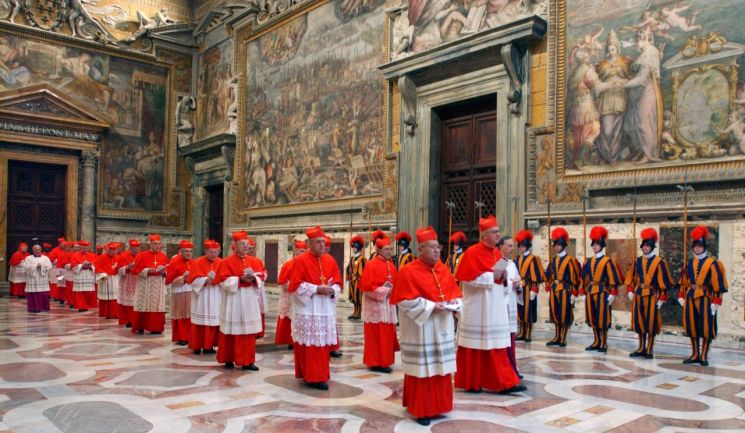 The Vatican will soon enter a conclave to select the successor of Pope Francis, who passed away on the 21st (local time). Typically, the conclave begins 15 days after the pope's death, during which cardinals vote to elect the next pope. The term "conclave" originates from the Latin words cum (together) and clavis (key), meaning "a room locked with a key." AP·Yonhap News
The right to vote is granted to cardinals who are under the age of 80 as of the day before the Apostolic See?the office of the pope?becomes vacant. For this conclave, 135 cardinals from around the world will participate. These cardinals will stay at the Vatican's Casa Santa Marta (residence) and travel by bus to the Sistine Chapel each time to cast their votes. In the past, cardinals would remain in the Sistine Chapel until a new pope was elected, but in recent times, they return to their residence.
During this process, the cardinals are not allowed to communicate with the outside world until a pope has been elected. All others involved in the election?such as priests, secretaries, cooks, and doctors?must also take a vow of secrecy. A preliminary thorough search is conducted at the Sistine Chapel to check for the installation of eavesdropping and recording devices. On the morning of the first day of the conclave, a special mass is held at St. Peter's Basilica. In the afternoon, the cardinals go to the Sistine Chapel to take a secret oath.
Once all the cardinals have taken their oath, the master of papal liturgical ceremonies commands in Latin, "Extra omnes" (meaning "everyone out"). At this time, everyone except the electors must leave the Sistine Chapel, and the formal proceedings of the conclave begin. On the first day of the conclave, voting takes place once in the afternoon. From the following day, voting is held twice daily, in the morning and afternoon, until a candidate is elected. The pope is elected by receiving at least two-thirds of the votes.
Voting results are announced twice a day with smoke... The pope is elected with more than two-thirds of the votes
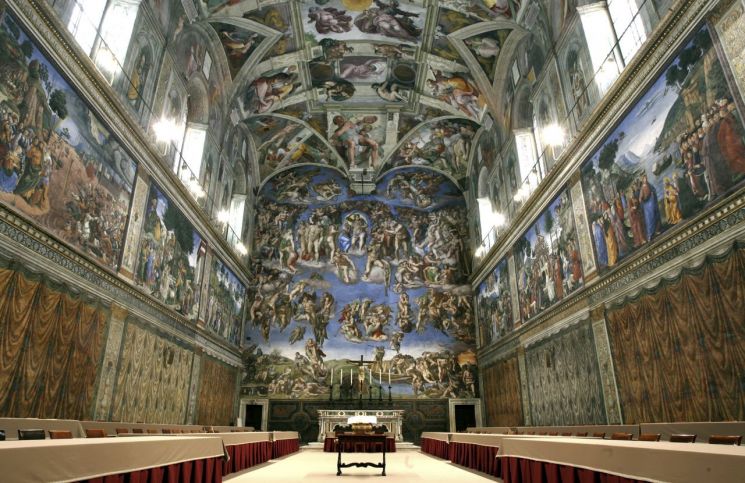 A preliminary thorough search will also be conducted at the Sistine Chapel to check for the installation of eavesdropping and recording devices. On the morning of the first day of the conclave, a special mass will be held at St. Peter's Basilica. In the afternoon, the cardinals will go to the Sistine Chapel to take a secret oath. AP·Yonhap News
The conclave is also famous for its unique way of announcing voting results. Twice a day, ballots are burned in a chimney to produce smoke that signals the outcome. If a pope has not been elected, black smoke is released; if a pope has been elected, white smoke is released. This method, which began at the 1903 conclave, has evolved over time. Any "mistake" that results in gray smoke, which is between black and white, is not tolerated.
Beginning with the 1958 conclave, the Vatican started using chemicals to make the color of the smoke more distinct. However, when confusion arose again during the election of John Paul II in 1978, the Vatican supplemented the process by ringing bells at the same time as releasing white smoke when a pope is elected. Two stoves are used to produce the smoke: one for burning the ballots and another for creating the color of the smoke.
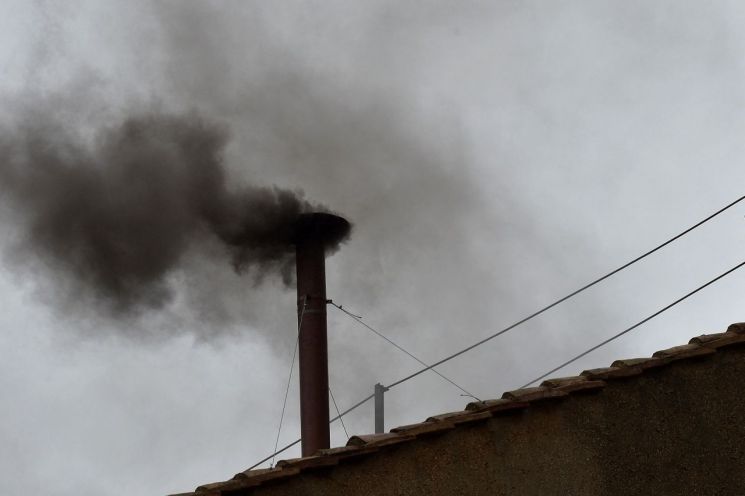 The conclave is also famous for its unique way of announcing voting results. Twice a day, ballots are burned in a chimney to produce smoke that signals the outcome. If a pope has not been elected, black smoke is released; if a pope has been elected, white smoke is released. AFP·Yonhap News
The smoke from the two stoves is combined in a single pipe and released through the chapel chimney. When a candidate is elected, the Dean of the College of Cardinals asks the elected cardinal whether he accepts and what name he will use as pope. After these procedures, the newly elected pope dons a white cassock and greets the cardinals before appearing for the first time on the balcony of St. Peter's Basilica. At this moment, a senior cardinal proclaims in Latin, "Habemus Papam" (meaning "We have a pope"), officially announcing the birth of the new pope.
© The Asia Business Daily(www.asiae.co.kr). All rights reserved.
![Clutching a Stolen Dior Bag, Saying "I Hate Being Poor but Real"... The Grotesque Con of a "Human Knockoff" [Slate]](https://cwcontent.asiae.co.kr/asiaresize/183/2026021902243444107_1771435474.jpg)

















