Impact of 'Uncertain Tariffs' on SMEs Becomes a Reality
High Competition for Export Vouchers Leaves Support Insufficient
Shin, who runs a distance measuring device manufacturing company in Mapo-gu, Seoul, switched his export shipments to the United States from container shipping to individual deliveries on April 3, following the Donald Trump administration's announcement of reciprocal tariffs. Although container shipping is much cheaper in terms of transportation costs, he chose the alternative to avoid high tariffs. However, on April 9, when the Trump administration announced a 'tariff deferral,' the situation changed dramatically. Shin incurred significant losses while repacking the shipments, which had been prepared for individual delivery, back into containers. He lamented, "It cost tens of millions of won just to unpack all the containers, prepare for individual shipping, and then repack them," adding, "The most frustrating part is that I have no choice but to wait indefinitely, not knowing how long this uncertainty will continue."
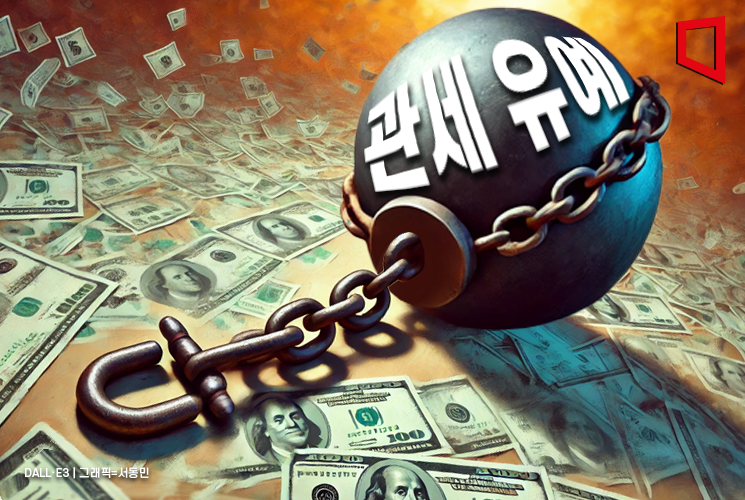
As the Trump administration continues to alternate between announcing and deferring reciprocal tariffs, a so-called 'foggy tariff' situation is unfolding, and the damages to Korean small and medium-sized enterprises (SMEs) are becoming more visible. Although the government has injected emergency support funds for export-affected companies, there are voices on the ground saying the effectiveness is limited.
According to the Ministry of SMEs and Startups on April 24, since February 18, more than 530 cases of export difficulties have been reported to the 'Tariff Grievance Reporting Center,' which was set up at 15 export support centers nationwide to assist exporting SMEs. Most of these cases involved companies that were unable to secure overseas orders or suffered losses due to indefinite delays in delivery deadlines. Recently, as the Trump administration's repeated 'push and pull' and growing uncertainty have continued, more companies are finding it difficult to decide how to respond going forward.
As tensions between the United States and China escalate, Korean companies exporting to the U.S. directly or indirectly via China are facing increasing concerns. For companies that use Chinese intermediate goods to sell to the U.S., or that commission products at Chinese OEM (Original Equipment Manufacturer) factories for export to the U.S., packaging and shipping methods now depend on the outcome of negotiations between the two countries. Han, who operates a meter manufacturing business in Chungnam, said, "Even if a product is made in China, if it is brought into Korea and shipped individually to consumers, it can receive a tax exemption below a certain price threshold, but since the two countries are still negotiating, we cannot decide on a shipping method and are stuck in indefinite limbo. The value of goods currently tied up in warehouses because we cannot deliver them is already in the billions of won."
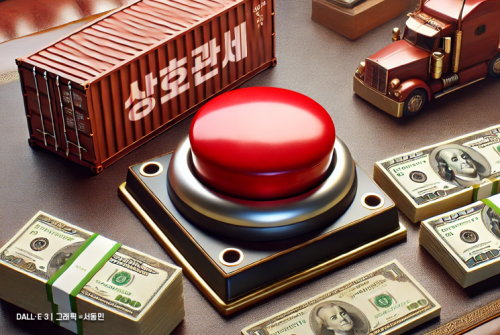
There are also voices saying that the scale of government support measures such as 'export vouchers' is too small and competition for selection is too fierce, making it difficult for companies to expect benefits in practice. The Ministry of SMEs and Startups has allocated 29 billion won to the 'Export Baro Program' to support companies affected by tariffs. The Export Baro Program is a kind of fast-track system that expedites the existing export voucher project?which provides various services such as translation, consulting, and shipping costs to export companies in voucher form?so that support is delivered within one month. Once applications are received, companies are evaluated based on criteria such as production infrastructure, technological differentiation, export growth rate, and efforts to diversify exports, and about 700 companies are ultimately selected. Last year, the competition rate for the second round of the export voucher project was 6.8 to 1.
Yoo, who runs an auto parts company in Suwon, Gyeonggi Province, said, "While I welcome the government's support policies themselves, considering that I have been rejected from the export voucher program more than four times so far, I do not have high expectations of receiving benefits this year either. It is disappointing that we do not know the exact evaluation criteria and scoring, so we cannot guess why we were rejected, and that 'efforts to diversify exports' are given preference in the evaluation criteria even though some industries, by nature, find it difficult to diversify exports." This is why there is growing demand for the government to temporarily readjust or expand the budgets for each support item, such as through supplementary budgets, to more actively absorb the shock.
© The Asia Business Daily(www.asiae.co.kr). All rights reserved.
![Clutching a Stolen Dior Bag, Saying "I Hate Being Poor but Real"... The Grotesque Con of a "Human Knockoff" [Slate]](https://cwcontent.asiae.co.kr/asiaresize/183/2026021902243444107_1771435474.jpg)

















