Visit to Yeongdong-daero Underground Complex Construction Site
Plan to Invest 400 Billion Won Annually in Sewage Pipe Upgrades Starting Next Year
Active Disclosure of Safety-Related Information
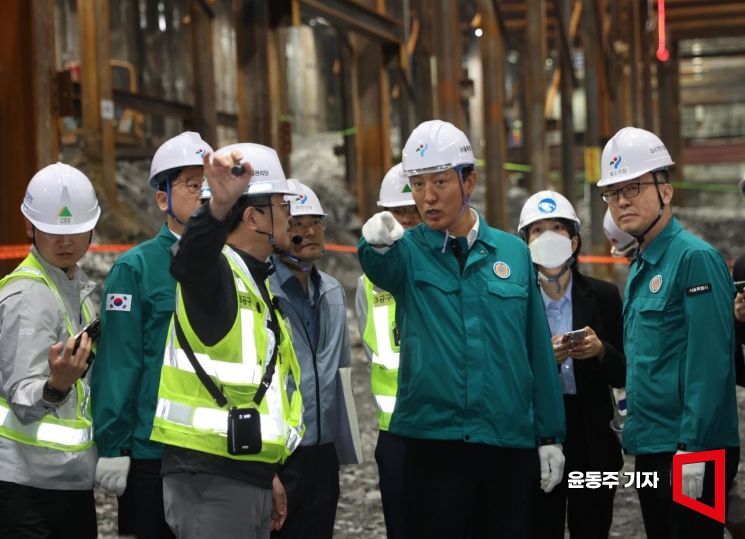 Seoul Mayor Oh Sehoon visited the underground complex development construction site on Yeongdong-daero in Gangnam-gu, Seoul on the 23rd and inspected the underground rock excavation site in Section 3.
Seoul Mayor Oh Sehoon announced on the 23rd that the city will supplement its Ground Penetrating Radar (GPR) survey equipment to prevent ground subsidence (sinkhole) accidents.
Mayor Oh made this statement during his visit to the underground space complex development construction site on Yeongdong-daero earlier that morning. He said, "GPR equipment has been patrolling roads throughout Seoul to detect and fill areas at risk of ground subsidence in advance. We plan to increase the number of vehicles so that road conditions can be checked more frequently and thoroughly."
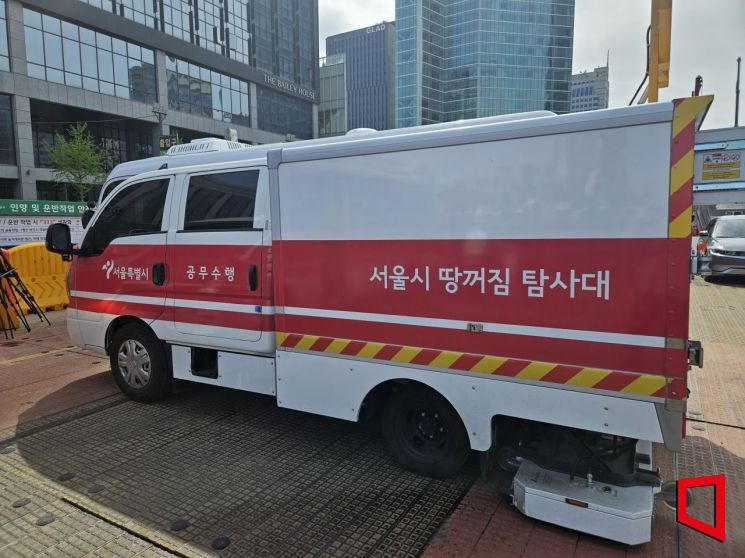
The city will invest 1.5 billion won to introduce three additional vehicle-mounted GPR units. Currently, four units are in operation. With this, the city will expand the survey coverage of city-managed roads from the current 30% to 60% and will also conduct swift inspections of priority areas designated by district offices.
The Yeongdong-daero underground space complex development project aims to build a large-scale multi-modal transfer center with a facility area of 210,000 square meters in the approximately 1-kilometer underground section between COEX Intersection and Samseong Station Intersection. The construction period is set until December 2029. The five-story underground facility will include Subway Lines 2 and 9, the GTX A and C lines, the Wirye-Sinsa Light Rail, and the integrated transfer center.
Mayor Oh stated, "From now on, we will conduct GPR surveys once a month at large-scale excavation sites and significantly increase the safety management budget, reflecting this in construction costs. While aging water and sewage pipe leaks have been analyzed as the main cause of sinkholes, recent major accidents have occurred near large-scale excavation sites. Therefore, both issues need to be addressed," he said.
He added, "Sewage pipes are more problematic than water pipes. Until now, we have spent 200 billion won annually to improve 100 kilometers, but starting next year, we will double that to 400 billion won per year and increase the improvement scale to 200 kilometers, accelerating the maintenance process."
The city will also install and operate a new technology called the 'ground subsidence monitoring network,' which can overcome the limitation of GPR that could only detect risk factors within about 2 meters from the surface. This technology uses sensors installed underground to monitor strata changes up to about 20 meters below ground. Starting next month, the city will install this system at the site of the ground subsidence accident in Myeongil-dong, Gangdong-gu, as well as at the adjacent Phase 4, Section 1 construction site of Subway Line 9.
Mayor Oh also announced plans to make the priority maintenance area map (safety map) available to the public. He said, "There is a misconception that we are not disclosing the safety map despite having accurate data, due to concerns about its impact on real estate prices. In reality, a perfect map reflecting factors such as groundwater flow has never been properly created." However, he explained, "To alleviate public anxiety, if a GPR survey that can see up to 2 meters underground is conducted, we will immediately disclose it on the city website."
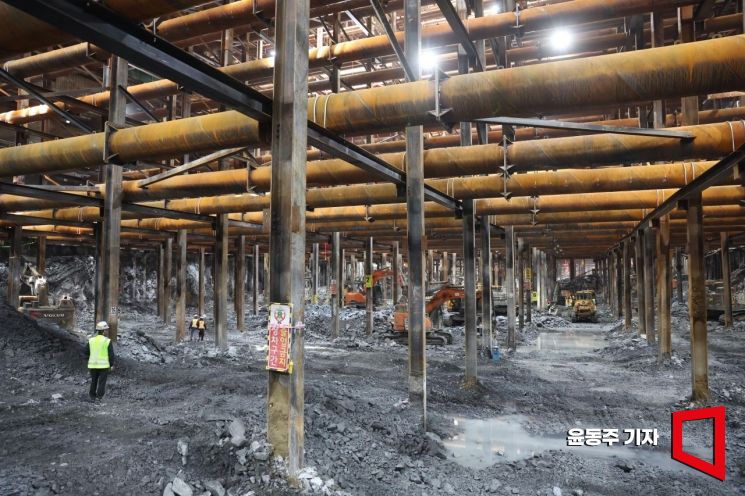
The city will first release the results of special GPR inspections at five railway construction sites (49.3 kilometers) and 50 locations (45 kilometers) selected by district offices. The city also plans to regularly inform the public about citizen reports of ground subsidence and the corresponding response actions. In addition, a 'ground characteristics map' focusing on large-scale excavation sites, which is an enhanced version of the priority maintenance area map, will be produced.
Furthermore, the city will establish a new Underground Safety Division within the Disaster and Safety Office. The current organization, which consists of two teams (nine people), will be expanded to about 30 members. The city also plans to significantly increase the recruitment of private sector experts to strengthen joint investigation and analysis capabilities. As a result, the city will reduce the regular inspection cycle for joint investigations from five years to one year, and the special inspection cycle for excavations and tunnel construction sites deeper than 10 meters will be shortened from once a year to once a month.
© The Asia Business Daily(www.asiae.co.kr). All rights reserved.
![Clutching a Stolen Dior Bag, Saying "I Hate Being Poor but Real"... The Grotesque Con of a "Human Knockoff" [Slate]](https://cwcontent.asiae.co.kr/asiaresize/183/2026021902243444107_1771435474.jpg)

















