"Arts and Culture Education" Boosts Life Satisfaction
Government and Companies Expand Support for Arts Clubs
The Wellbeing Research Centre at the University of Oxford in the United Kingdom released the "2025 World Happiness Report" on March 20, which is recognized as the International Day of Happiness. According to the report, South Korea ranked 58th out of 147 countries surveyed, dropping six places from last year’s 52nd position.
The World Happiness Report calculates life satisfaction by combining six indicators: per capita Gross Domestic Product (GDP), life expectancy, social support, freedom, generosity, and perceptions of corruption. South Korea ranked high in per capita GDP at 21st place, but received relatively low evaluations in social support (84th) and freedom (104th). This demonstrates that despite economic prosperity, South Koreans feel a relatively low sense of happiness.
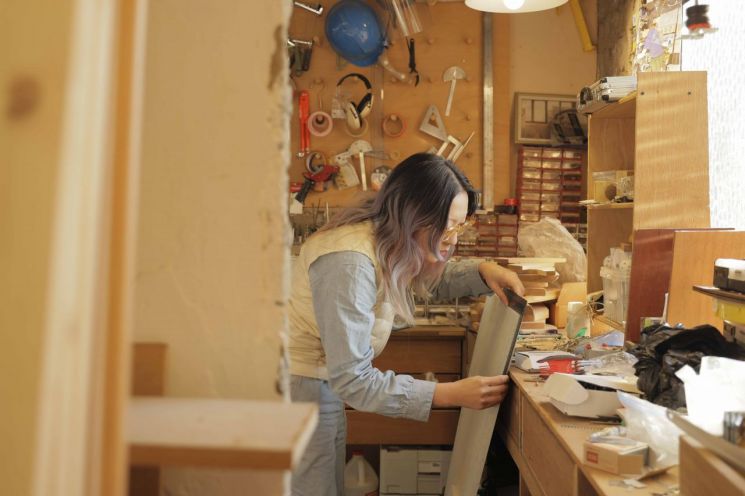
As the perception that economic wealth does not directly translate to happiness spreads, interest in cultural and artistic activities is growing. More people are willing to pay to learn musical instruments or dance in pursuit of a richer life. Research findings also continue to show that simply receiving education in arts and culture significantly increases happiness and life satisfaction.
'Arts and Culture Education' Increases Life Satisfaction
According to "A Study on the Development and Analysis of Performance Indicators for Arts and Culture Education," published in 2023 by Kim Seokho, a professor in the Department of Sociology at Seoul National University, participants in arts and culture education were found to perceive the value of life more positively and rate their autonomy higher than non-participants. The impact on the community was also positive. Those who participated in arts and culture education experienced less isolation, had a larger number of people they could converse with, and showed a significantly higher rate of social participation. Additionally, they were more generous toward affirmative action for the socially disadvantaged and showed a more inclusive attitude toward minority groups.
However, awareness of the effects of arts and culture education remains limited. According to the "2024 National Survey on Arts and Culture Education," conducted by the Ministry of Culture, Sports and Tourism with 10,000 respondents across 17 cities and provinces, only 13.3% reported having participated in arts and culture education during 2023.
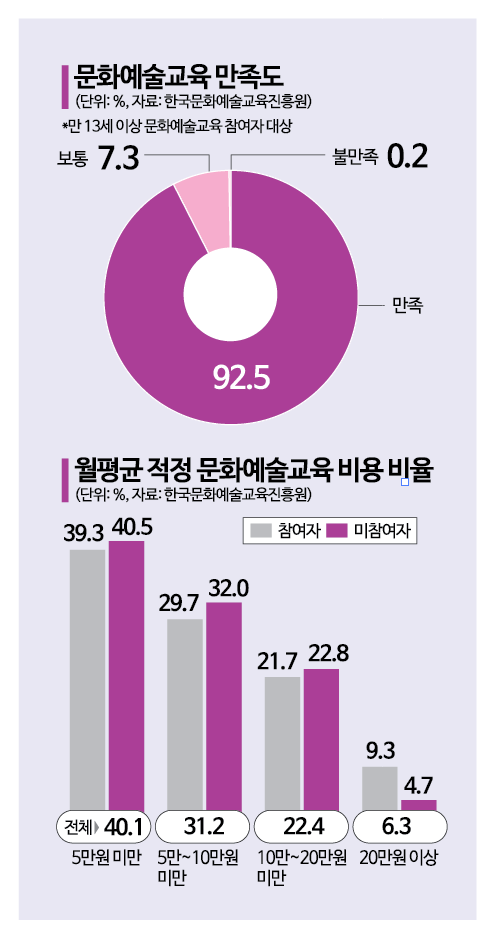
Although the participation rate was low, satisfaction with the education was very high. Among participants, 92.5% expressed satisfaction with the content of the education, while only 0.2% reported dissatisfaction. The remaining 7.3% responded that it was "average."
Among participants, 88.6% expressed continued interest in arts and culture education, whereas only 26.6% of non-participants did so, indicating that experience with participation significantly affects interest. Furthermore, reflecting the high satisfaction rate, 82.4% said they were willing to pay for arts and culture education, with the average monthly amount they were willing to pay calculated at approximately 67,000 won.
Government and Companies Support Arts Club Activities
Recognizing these positive effects, the government now regards arts and culture education as a necessary process throughout all stages of life, and is focusing on expanding education from the previous focus on schools and vulnerable groups to the general public. This year, the Korea Arts and Culture Education Service (KACES) will launch new projects as well.
KACES, a quasi-governmental organization under the Ministry of Culture, Sports and Tourism, supports all citizens in accessing high-quality arts and culture education throughout their lives. This year, KACES is newly launching a pilot project to revitalize amateur arts clubs and a community-based arts and culture education support project called "Gagahoho." The pilot project for amateur arts clubs aims to support arts education activities within companies, with the goal of revitalizing workplace culture and improving organizational culture. In the fields of music, dance, crafts, and humanities such as literature and film, 200 to 300 corporate arts clubs will be selected and provided with subsidies covering at least 30% of total educational costs (minimum 1.05 million won).
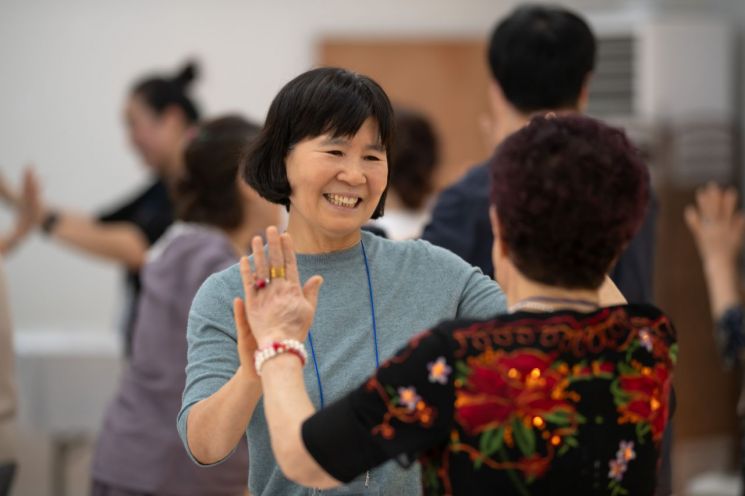
Gagahoho is an arts and culture education program designed to facilitate family communication. It aims to bridge cultural gaps between families, communities, and generations in response to social changes such as low birth rates, an aging population, and the rise of nuclear families. The government plans to allocate a budget of 3 billion won this year to operate programs at approximately 200 institutions in 60 cities, counties, and districts nationwide. Priority support will be given to vulnerable families, including multicultural, single-parent, and grandparent-headed households.
In addition, KACES will continue to strengthen existing projects such as Urban Forest Arts Healing and Kkumdarak Culture and Arts School to further promote the normalization of arts in everyday life. Urban Forest Arts Healing is a program that helps people gain vitality in their lives by experiencing art in nature. Last year, 5,306 people participated in arts healing programs at five arboretums and botanical gardens: National Sejong Arboretum (Sejong), Seoul National University Arboretum (Gyeonggi), Chollipo Arboretum (Chungnam), Korea Expressway Corporation Jeonju Arboretum (Jeonbuk), and Ulsan Theme Plant Arboretum (Ulsan). Additionally, 4,382 people experienced the Arts Forest Healing Program at three parks: Ilsan Lake Park (Gyeonggi), Taehwagang National Garden (Ulsan), and Noksan Hope Park (Busan). Kkumdarak Culture and Arts School is a community-based educational program open to all, from children to office workers and middle-aged adults, throughout all stages of life.
Park Eunsil, President of the Korea Arts and Culture Education Service, emphasized, "Over the past 20 years, arts and culture education has grown around schools, but now it must become a universal value that everyone enjoys in daily life. Considering its effects on emotional stability, social integration, and, in the long run, reducing social costs, arts and culture education should become a core pillar of policy for all citizens."
Jointly planned by: Ministry of Culture, Sports and Tourism, Korea Arts and Culture Education Service, Asia Economy Newspaper
© The Asia Business Daily(www.asiae.co.kr). All rights reserved.



















