Meanwhile, Net Export Contribution Ranked First Among Major Countries at 1.9%p
Last Year's Growth Driven by Exports Offsetting Weak Domestic Demand
This Year: Delayed Domestic Demand Recovery and Tariff Shock Expected to Hit Exports
Growth Rate Forecasts Continue to Be Lowered...IMF Cuts to 1.0%
Last year, the contribution of domestic demand to South Korea's economic growth ranked at the lowest level among major countries worldwide. With the recovery of domestic demand delayed and export sluggishness expected due to tariff shocks originating from the United States, forecasts suggest that an economic growth setback this year is inevitable.
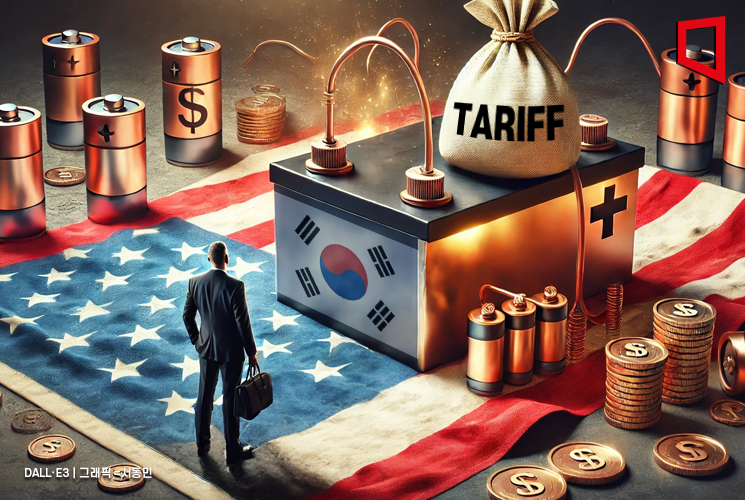
Last Year, Korea's Domestic Demand Growth Contribution Ranked Lowest Among 10 Countries...Exports Made Up the Difference
According to data submitted by Democratic Party lawmaker Lim Gwanghyun, a member of the National Assembly's Planning and Finance Committee, based on figures from the Bank of Korea, the growth contribution of domestic demand last year was just 0.1 percentage points. The provisional real GDP growth rate for last year was 2.0%, with domestic demand contributing only 0.1 percentage points to this growth. The contribution of domestic demand was 0.5 percentage points in the first quarter of last year but dropped to -0.1 percentage points in the second quarter. It rebounded to 0.8 percentage points in the third quarter, but then plummeted to -0.2 percentage points in the fourth quarter as economic sentiment froze due to the declaration of martial law.
This figure is also the lowest compared to major countries overseas. According to the Organisation for Economic Co-operation and Development (OECD), among the top 20 economies, the average domestic demand contribution in the 10 countries for which annual growth rates and sectoral expenditure contributions were disclosed last year was 1.6 percentage points. Indonesia recorded the highest at 5.5 percentage points, followed by Spain (2.8 percentage points), the United Kingdom (2.4 percentage points), Switzerland (1.7 percentage points), and Canada (1.5 percentage points), all exceeding 1 percentage point. The Netherlands (0.8 percentage points), Italy (0.4 percentage points), Germany (0.3 percentage points), and France (0.3 percentage points) followed. Korea ranked last among the 10 countries, with just 0.1 percentage points.
In contrast, the growth contribution of Korea's net exports (exports minus imports) last year was the highest at 1.9 percentage points. Exports contributed 2.9 percentage points, while imports subtracted 1.0 percentage points. This figure is more than double that of France, which ranked second among the 10 major countries with 0.9 percentage points. The gap was even wider compared to Italy (0.4 percentage points), Spain (0.3 percentage points), the Netherlands (0.1 percentage points), and Canada (0.0 percentage points). Indonesia (-0.1 percentage points), Switzerland (-0.4 percentage points), Germany (-0.6 percentage points), and the United Kingdom (-1.3 percentage points) all recorded negative contributions. In summary, last year, net exports offset weak domestic demand and drove Korea's economic growth.
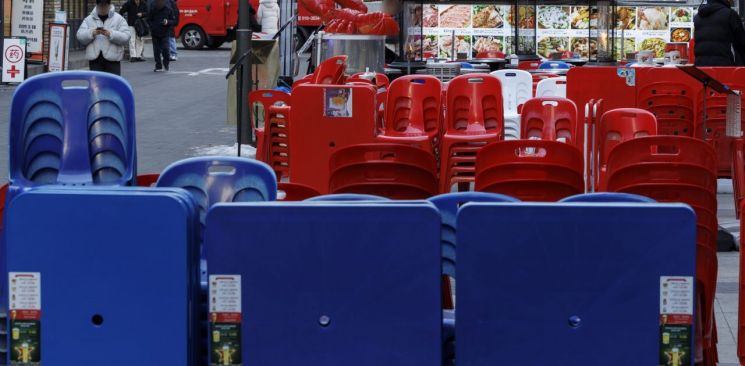
This Year: Delayed Domestic Demand Recovery and Tariff Shock Expected to Hit Exports, the Main Pillar
This year, with domestic demand still showing no signs of recovery, the prevailing expectation is that exports will also struggle to perform as before due to the tariff shock triggered by U.S. President Donald Trump. Even if there is progress in trade negotiations, many predict that both direct and indirect impacts will be unavoidable. Kim Jinwook, Citi economist, stated in the report 'The Economic Impact of Korea-U.S. Trade Negotiations' that the current tariff war, in which the U.S. and China are imposing tariffs exceeding 100% on each other, could lower Korea's growth rate by about 0.5 percentage points this year.
The Bank of Korea projected a 1.5% growth rate for this year in its February economic outlook, but has already signaled that a downward revision is inevitable in the next forecast in May. Bank of Korea Governor Rhee Changyong pointed out at a press conference after the Monetary Policy Board meeting on the 17th that "Given the U.S. tariff policy, the scenario assumed in the February forecast was overly optimistic." The International Monetary Fund (IMF) also sharply lowered its forecast for Korea's growth rate this year to 1.0%, down from the previous 2.0%, in its World Economic Outlook released the previous day. More investment banks (IBs) are now predicting growth in the 0% range.
Lawmaker Lim pointed out, "The rapid deterioration of domestic demand due to unlawful martial law is at a globally serious level," and added, "Even the temporarily recovered exports are at risk due to U.S. reciprocal tariffs." He emphasized, "We must focus on economic stimulus by expanding fiscal spending sufficiently to restore wildfire damage and revive the domestic market."
© The Asia Business Daily(www.asiae.co.kr). All rights reserved.


















