Twenty-eight Ancient Tumuli Constructed in the 5th and 6th Centuries
The Yeongam Sijong Tumuli Cluster, which demonstrates the socio-cultural changes of the Mahan regional society, is set to be designated as a National Heritage Site. The National Heritage Administration announced on April 23 that it will collect opinions from various sectors for a month and finalize the designation after a review by the Cultural Heritage Committee.
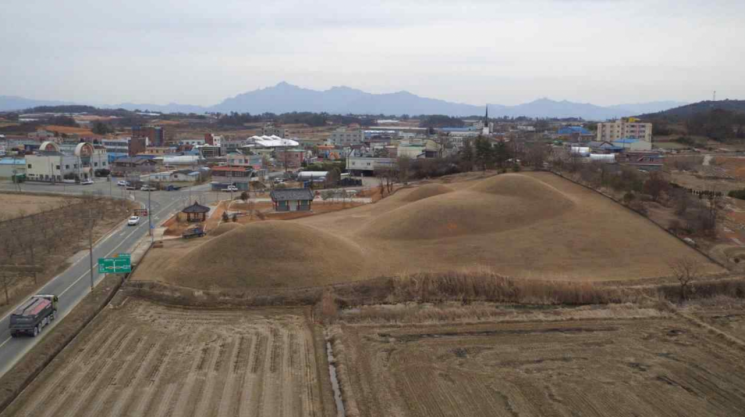
Sijong-myeon is an area that offers views of the main stream of the Yeongsan River, the Sampogang River, and southern tributaries. As a strategic location at the gateway between the West Sea and the inland, it served as a key maritime transportation hub for receiving advanced cultures and as a gateway for their spread inland. Thanks to this geographical advantage, the Mahan forces in this region created a complex and unique culture, influenced by Baekje, Gaya, and China.
The most representative example is the Yeongam Sijong Tumuli Cluster. Consisting of twenty-eight ancient tombs built in the 5th and 6th centuries, these tumuli demonstrate the social and cultural changes of the Mahan society in the Yeongsan River basin through their construction techniques. Notably, the tomb styles evolved over time from Mahan's traditional jar coffins to large, square-shaped stone chamber tombs. The tombs were constructed in a planned manner by dividing the area into radial or concentric shapes using clay and filling the separated sections with earth.
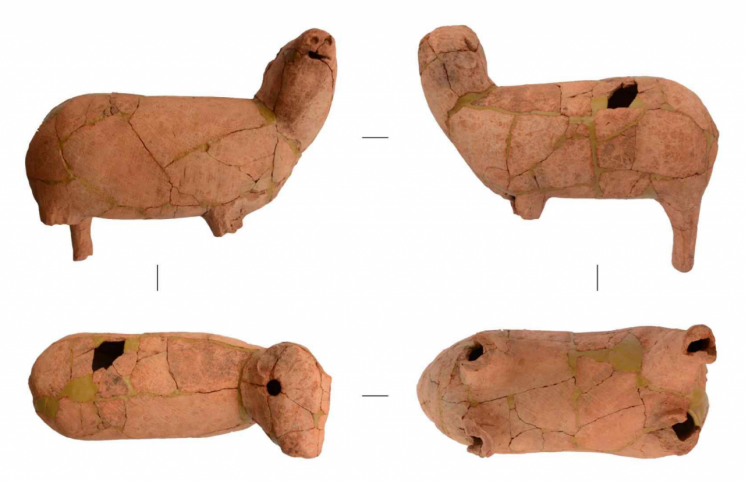
Artifacts excavated from the site include pottery in styles popular at the time, gilt-bronze crown ornaments associated with Baekje, Chinese celadon cups, and Southeast Asian glass beads. Cylindrical pottery and animal-shaped pottery, used as mound decorations, were also discovered. These foreign artifacts are believed to have been localized, and are regarded as evidence that the indigenous powers of the time maintained their independence and cultural identity while interacting with various neighboring countries.
The National Heritage Administration stated, "The Yeongam Sijong Tumuli Cluster is the result of localizing Baekje, Gaya, Chinese, and Wa cultures based on traditional Mahan elements," adding, "It holds significant historical and academic value."
© The Asia Business Daily(www.asiae.co.kr). All rights reserved.


















