CT exposes you to 100 times more radiation than X-rays
Similar cancer risk as alcohol consumption or being overweight/obese
A study has found that CT (computed tomography) scans increase the risk of developing cancer. CT is an examination that uses X-rays to capture images inside the body, making it possible to diagnose cancer or assess trauma.
On April 14 (local time), the journal 'JAMA Internal Medicine' published the results of a study estimating how much CT scans increase the risk of cancer. A research team at the University of California analyzed 93 million cases of CT scans performed on approximately 61.5 million patients over the course of 2023. The results showed that about 103,000 CT scans led to cancer. Due to radiation exposure, cases of lung cancer, colorectal cancer, leukemia, bladder cancer, breast cancer, and thyroid cancer were observed.
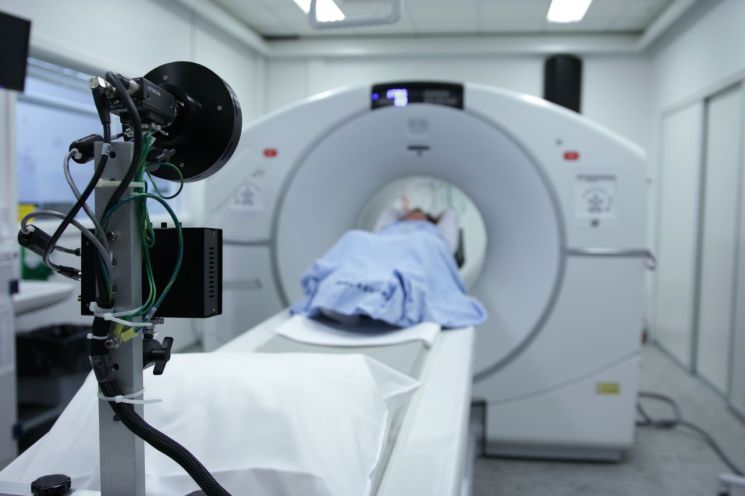 A study has found that CT (computed tomography) scans increase the risk of cancer. CT is an examination that uses X-rays to capture images inside the body, enabling cancer diagnosis and trauma assessment. Pixabay
During a CT scan, the patient lies down while an X-ray tube rotates around them, and a computer reconstructs a series of images into a three-dimensional picture of the internal structures. The increased risk of cancer from CT scans is due to radiation exposure. High doses of radiation can damage DNA, and if cells die or mutate as a result, this can lead to cancer. Children are particularly sensitive to radiation exposure compared to adults, so the amount of radiation should be adjusted according to their smaller body size.
According to the American Cancer Society (ASC), a single standard X-ray exposes a person to 0.1 mSv of radiation, while one CT scan exposes them to about 10 mSv, which is 100 times more. On average, an American is exposed to about 3 mSv of natural background radiation per year. The study found that exposure to around 100 mSv of radiation at once increases the risk of developing cancer by about 0.5% over the next 20 to 30 years. Radiation does not accumulate in the body, so being exposed to 50 mSv twice does not increase the cancer risk by another 0.5% as if it were a single 100 mSv exposure.
For adults, CT scans of the abdomen or pelvis increased the risk of cancer, while for children, head CT scans increased the risk. In particular, infants who underwent CT scans before the age of one were found to be at greatest risk, with their cancer risk increasing up to tenfold compared to adults. The research team analyzed that the increase in cancer risk from CT scans is similar to the risk associated with alcohol consumption or being overweight or obese.
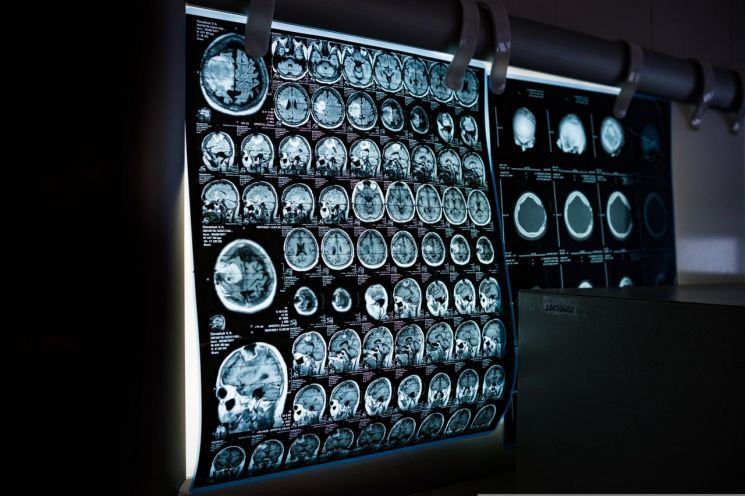 However, some reactions warn that focusing solely on the risks of CT scans based on this study's results is dangerous. Dr. Linda Johnson, a radiologist in diagnostic imaging and radiology at the British Radiological Society, said, "Most CT scans offer significant benefits in early disease diagnosis, treatment, and long-term health management." She added, "It is not advisable to avoid CT scans unconditionally." Pixabay
However, some caution that focusing solely on the risks of CT scans based on this study's findings is dangerous. Dr. Linda Johnson, a radiologist in diagnostic imaging and radiology at the British Radiological Society, stated, "Most CT scans offer significant benefits in early disease diagnosis, treatment, and long-term health management." She added, "It is not advisable to avoid CT scans unconditionally."
Dr. Doreen Lau, an expert in aging and cancer biology at Brunel University in the UK, said, "It is wise to follow the recommendations of medical professionals when they advise a CT scan." She continued, "What this study emphasizes is that CT scans should be performed only when necessary and that radiation exposure should be minimized as much as possible." She added that considering alternative imaging tests such as ultrasound or MRI, which do not use radiation, is also an option.
© The Asia Business Daily(www.asiae.co.kr). All rights reserved.
![Clutching a Stolen Dior Bag, Saying "I Hate Being Poor but Real"... The Grotesque Con of a "Human Knockoff" [Slate]](https://cwcontent.asiae.co.kr/asiaresize/183/2026021902243444107_1771435474.jpg)
















