The Importance of Vaccination Against RSV, for Which No Treatment Exists
Vaccine Effectiveness Decreases in the Elderly Due to Immune Aging
As the World Health Organization (WHO) marks the last week of April each year as "World Immunization Week," recommendations have emerged suggesting that the elderly should consider vaccination against respiratory syncytial virus (RSV) and receive high-dose influenza vaccines.
According to the Korea Disease Control and Prevention Agency (KDCA) on April 21, Immunization Week runs from this day through April 25. The KDCA recommends that adults receive vaccinations for influenza, tetanus, pertussis, diphtheria, pneumococcal disease, hepatitis A, hepatitis B, meningococcal disease, Haemophilus influenzae type B, varicella, measles, mumps, rubella, human papillomavirus infection, and herpes zoster, following the "standard immunization schedule."
Experts emphasize that, in addition to these vaccinations, individuals aged 60 and older should also receive RSV and high-dose influenza vaccines.
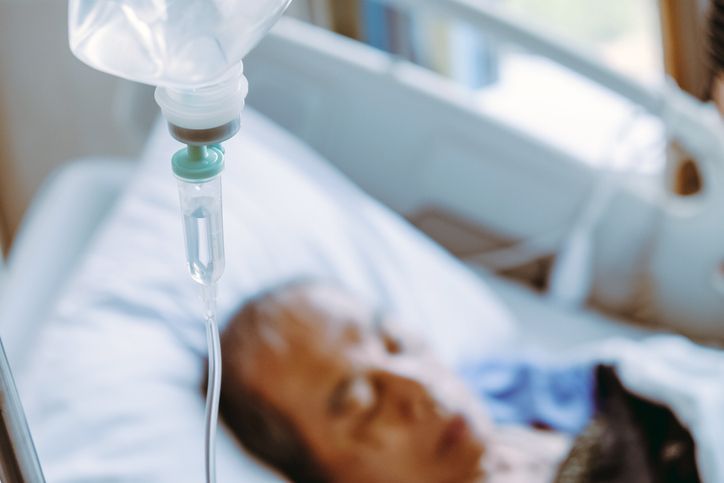 Elderly individuals aged 60 and above are one of the main high-risk groups for RSV infection. According to domestic research, about 65% of RSV infection patients were aged 65 or older, and among them, 25% were admitted to the intensive care unit. Getty Images
RSV infection is an acute respiratory illness caused by the respiratory syncytial virus, which belongs to the Pneumoviridae family. Along with influenza and COVID-19, it is classified as a category 4 notifiable infectious disease. RSV infection is as contagious as influenza and, in particular, can lead to complications such as pneumonia in high-risk groups.
Individuals aged 60 and above are among the main high-risk groups for RSV infection. According to domestic research, about 65% of RSV infection patients were aged 65 or older, and among them, 25% were admitted to the intensive care unit. Additionally, 56.8% of patients were confirmed to have pneumonia, and 10.6% died in the hospital. Among patients aged 60 and above, 47.9% experienced at least one complication within an average of one month after RSV diagnosis. The most common complications were pneumonia (24%), chronic respiratory diseases (23.6%), and hypoxemia or difficulty breathing (22%).
Since, like the common cold, there is no specific treatment for RSV, the importance of vaccination is even greater. In December of last year, the Ministry of Food and Drug Safety approved GSK's Arexvy, the world's first RSV vaccine, for the prevention of lower respiratory tract disease (LRTD) caused by RSV in adults aged 60 and above.
According to clinical research, Arexvy demonstrated an 82.6% efficacy in preventing RSV infection, and a 94.6% efficacy in preventing severe RSV-LRTD (lower respiratory tract disease caused by RSV) in patients with at least one underlying medical condition.
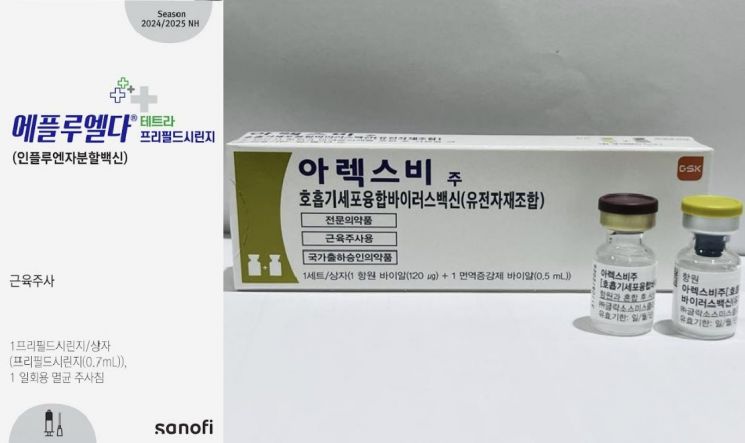 Sanofi's high-dose influenza vaccine for the elderly, Efluelda (left), and GSK's respiratory syncytial virus (RSV) vaccine, Arexvy. Sanofi, GSK
Park Wanbeom, professor of infectious diseases at Seoul National University Hospital, stated, "Given the risks of RSV infection in the elderly and those with underlying health conditions, the importance of preemptive prevention is increasing." He added, "Recent studies have confirmed the effectiveness of RSV vaccination in preventing infection among high-risk groups. International guidelines also recommend RSV vaccination for high-risk groups aged 60 and above."
For influenza vaccination, it is also recommended that individuals aged 65 and older receive high-dose influenza vaccines instead of standard ones. This is because, when the elderly contract influenza, they are at higher risk of developing severe complications such as pneumonia and cardiovascular disease, and face increased risks of hospitalization and death.
As immunity declines with age, the elderly have reduced defense against external pathogens, and even when vaccinated, they tend to produce fewer antibodies or maintain them for a shorter period. In fact, while the preventive effect of the influenza vaccine in young adults is 70-90%, it drops to 17-53% in those aged 65 and older.
Sanofi's Efluelda is a representative high-dose influenza vaccine for the elderly. This vaccine, specifically designed for those aged 65 and above, contains four times the antigen content compared to standard-dose inactivated vaccines. Vaccination has also been shown to reduce rates of hospitalization due to influenza, as well as the risks of severe complications such as pneumonia and cardiovascular disease.
Jung Heejin, professor of infectious diseases at Korea University Guro Hospital, explained, "The elderly generally require an enhanced immune response, and because their immune system is less responsive, any vaccine tends to be less effective than in younger people." She added, "High-dose influenza vaccines are clearly effective in reducing complications that can lead to hospitalization or death after infection."
© The Asia Business Daily(www.asiae.co.kr). All rights reserved.


















