If the Paid Allocation Ratio Is Raised from the Current 10% to 50%, Corporate Burden Will Be Substantial
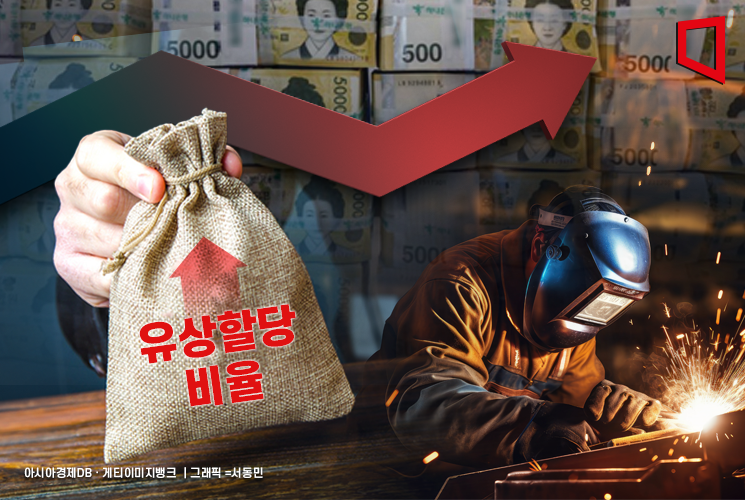
An analysis has found that if the government raises the proportion of "paid allocation" from the current 10% to 50%, electricity costs for the manufacturing sector will increase by approximately 5 trillion won per year. The paid allocation ratio refers to the proportion of emission allowances allocated to power generators by the government that are sold for a fee through auctions.
The Korea Economic Association announced on the 21st that this conclusion was reached in a report titled "The Impact of the Emissions Trading Scheme on Electricity Price Increases," commissioned to Donghyun Shin, a research fellow at the Korea Energy Economics Institute. In December of last year, the government announced through the 4th Basic Plan for the Emissions Trading Scheme that it would significantly increase the paid allocation ratio for the power generation sector. Thepaid allocation ratio to be applied from next year will be presented in the allocation plan for the 4th phase of the Emissions Trading Scheme, which will be released in the first half of this year.
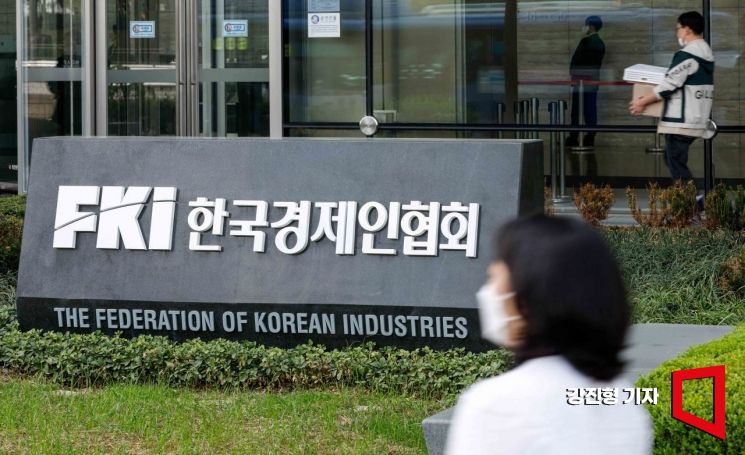 Employees of tenant companies are moving at the Korea Economic Association in Yeouido, Seoul. Photo by Jinhyung Kang
Since 2022, with the introduction of the environmental dispatch system, the cost of emission allowance trading for power generators has been reflected in the power generation cost. The report used the "M-Core model," which incorporates environmental dispatch, to estimate changes in wholesale and retail electricity prices according to various scenarios for emission allowance prices and the paid allocation ratio in the power generation sector. The "M-Core model" estimates changes in wholesale electricity prices by factoring emission allowance trading costs into the generation costs of each power plant.
The report analyzed that if the paid allocation ratio in the power generation sector is raised from the current 10% to between 25% and 50%, energy-intensive industries such as steel, automotive, and petrochemicals will face additional cost burdens ranging from at least 100 billion won to as much as 500 billion won. For example, assuming a 50% paid allocation for the power generation sector and an emission allowance price of 30,000 won, electricity costs for the manufacturing sector would rise by about 5 trillion won per year. Estimated increases by industry are as follows: electronics and telecommunications, 549.2 billion won; chemicals, 416 billion won; primary metals, 309.4 billion won; and automotive, 178.6 billion won.
The report presented policy tasks for carbon neutrality and a sustainable economy ahead of the announcement of the allocation plan for the 4th phase of the Emissions Trading Scheme in the first half of this year. It suggested that the government should consider ▲gradually increasing the paid allocation ratio in the power generation sector, ▲relief measures such as easing or exempting the Electric Power Industry Infrastructure Fund to reduce the burden of electricity price hikes, and ▲encouraging companies to voluntarily participate in the emissions trading scheme and transition to incentive-based reduction targets.
Looking at overseas cases, in Japan, companies can voluntarily participate in or withdraw from the system and are required to set their own greenhouse gas reduction targets and report their performance annually. The European Union (EU), a leader in climate response, recently announced policy packages such as the Omnibus Package to alleviate the burden on companies caused by environmental regulations.
Lee Sangho, head of the Economic and Industrial Division at the Korea Economic Association, said, "Recently, the United States has been expanding efforts to internalize the manufacturing supply chains of major countries through tariff measures, which threatens the global competitiveness of domestic companies. We need to establish a flexible climate policy that can achieve carbon neutrality and a sustainable economy."
© The Asia Business Daily(www.asiae.co.kr). All rights reserved.
![Clutching a Stolen Dior Bag, Saying "I Hate Being Poor but Real"... The Grotesque Con of a "Human Knockoff" [Slate]](https://cwcontent.asiae.co.kr/asiaresize/183/2026021902243444107_1771435474.jpg)
















