Court Rules "No Illegality Found in Prosecution's Investigation"
The family of the late artist Chun Kyungja lost again in the appeal trial of the damages lawsuit filed against the state over the forgery controversy surrounding the painting "Beauty." On April 18, Yonhap News reported that the Civil Appeals Division 1-3 of the Seoul Central District Court (Chief Judge Choi Seongsu) ruled against the plaintiff, Kim Jeonghee, Chun's daughter and a professor at Montgomery University in the United States, in the appeal trial of the damages lawsuit, just as in the first trial.
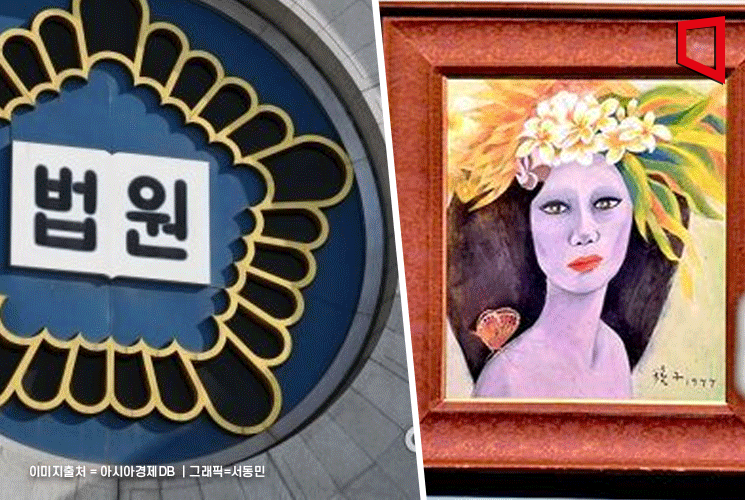 The family of the late artist Chun Kyungja lost again in the appeal trial of the damages lawsuit filed against the state over the forgery controversy of the painting "Beauty." On the 18th, Yonhap News reported that the Civil Appeals Division 1-3 of the Seoul Central District Court (Chief Judge Choi Seongsu) ruled against the plaintiff, Kim Jeonghee, Chun's daughter and a professor at Montgomery University in the United States, in the appeal trial of the damages lawsuit, just as in the first trial. Asia Economy
Professor Kim has argued that although "Beauty," a work in the collection of the National Museum of Modern and Contemporary Art, is a forgery, it was announced as authentic, and that the prosecution's conclusion that it was genuine damaged Chun Kyungja's reputation. The controversy began in 1991. At that time, Chun herself insisted, "Beauty is not my painting," but the National Museum of Modern and Contemporary Art maintained its position that the work was authentic, and the controversy persisted for a long time.
Forgery Controversy Over Chun Kyungja's "Beauty"... The Biggest Scandal in the Korean Art World
The forgery controversy surrounding "Beauty," which began in 1991, is considered the biggest forgery scandal in the Korean art world. At the time, Chun Kyungja, who was 67 years old, was so shocked by the incident that she announced she would stop painting, which further intensified the controversy. The "Beauty" forgery controversy started in April 1991 when the artist herself raised suspicions of forgery regarding her work held by the National Museum of Modern and Contemporary Art. At the time, "Beauty," a portrait of a woman with a butterfly on her shoulder, was included in the National Museum of Modern and Contemporary Art's "Moving Museum" exhibition. After hearing from an acquaintance who had seen an art poster (a reproduction) of the work that "the reproduction looks strange," Chun Kyungja compared the reproduction with the piece held by the National Museum of Modern and Contemporary Art and insisted that it was not her painting.
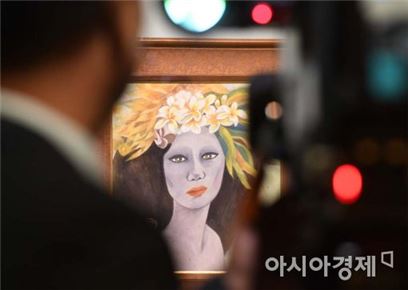 The family of the late painter Cheon Kyungja lost the appeal in the damages lawsuit filed against the state over the forgery controversy surrounding the painting "Beauty." Asia Economy
This claim was reported to the public through the media at the time. As the controversy spread, the National Museum of Modern and Contemporary Art traced the year of creation and the circumstances of acquisition, concluding that the work was undoubtedly authentic. However, in 1999, Kwon, a forger who was arrested for forging and fraudulently selling old books and paintings, reignited the controversy during a prosecution investigation by stating, "At the request of a friend who ran an art gallery, I received a small sum and combined several calendar images to create 'Beauty'." In response, the National Museum of Modern and Contemporary Art stated, "'Beauty' (29 x 26 cm) is genuine and is currently in the museum's collection," and questioned, "Which do you believe, the Korean painting forger or the National Museum of Modern and Contemporary Art?" Chun Kyungja was reported to have said, "What parent would not recognize their own child?"
As a follow-up measure, the National Museum of Modern and Contemporary Art requested appraisals from the National Forensic Service and the Korea Advanced Institute of Science and Technology, and the Korea Gallery Association concluded that the work was authentic. At the time, Chun Kyungja stated that in an art world where the testimony of the creator is ignored and forgeries are passed off as authentic, the act of creation itself is meaningless, and she announced she would put down her brush and resign from her membership in the National Academy of Arts of the Republic of Korea. During this process, Chun Kyungja was dishonored as "an artist who cannot recognize her own work" and suffered tremendous psychological distress.
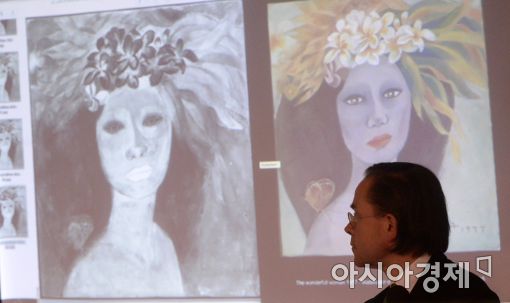 After the death of Painter Cheon in 2015, Professor Kim's side requested an appraisal from the Lumi?re Optical Research Institute in France and claimed that the result showed the probability of "Beauty" being authentic was only 0.00002%. In the following year, 2016, Professor Kim filed a lawsuit against six officials from the National Museum of Modern and Contemporary Art for defamation of the deceased, forgery and use of false official documents, and copyright infringement. Asia Economy
After Chun Kyungja's passing in 2015, Professor Kim's side requested an appraisal from the Lumi?re Optical Research Institute in France and claimed that the result showed the probability of "Beauty" being authentic was only 0.00002%. In the following year, 2016, Professor Kim filed a lawsuit against six officials from the National Museum of Modern and Contemporary Art for defamation of the deceased, forgery and use of false official documents, and copyright infringement.
However, after scientific verification using X-rays, infrared, transmitted light, 3D imaging, and expert appraisals, the prosecution concluded in December of the same year that "Beauty" was authentic. The appraisal committee explained that the characteristics of the pigments, brush strokes, and line depiction used in the work were identical to those found in other authentic works by Chun Kyungja. Additionally, an analysis of the work's provenance revealed that "Beauty" was sold by Chun Kyungja in 1977 to a senior official of the Korean Central Intelligence Agency, then passed through former KCIA Director Kim Jaegyu, and was donated to the government in 1980. Based on this, the prosecution cleared five museum officials of any wrongdoing and indicted only one official for defamation of the deceased for giving a media interview before the facts were confirmed. Professor Kim appealed to the Seoul High Prosecutors' Office, but her appeal was dismissed, and her request for a judicial review was ultimately rejected by the Supreme Court.
In 2019, Professor Kim filed another damages lawsuit. She claimed that there was illegality in the prosecution's investigation, that there had been attempts to influence experts who had expressed the opinion that the work was a forgery during the appraisal process, and that the appraisal results were distorted with false information. However, the first trial court rejected her claims, stating, "The relevant statements of the appraisal committee members are ambiguous, and there is no evidence to overturn the prosecution's conclusion." This appeal trial also upheld the original judgment and dismissed Professor Kim's claim.
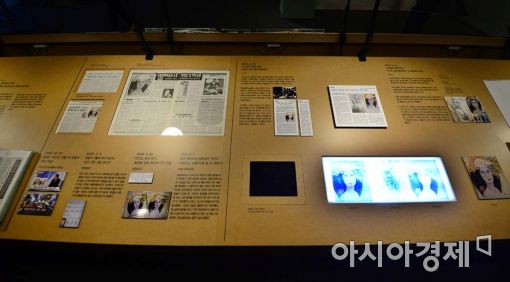 The forgery controversy surrounding "Beauty" that began in 1991 is considered the biggest forgery scandal in the Korean art world. At the time, artist Chun Kyungja, who was 67 years old, was so shocked by the incident that she announced she would stop painting, which further intensified the controversy. The "Beauty" forgery controversy started in April 1991 when the artist herself raised suspicions of forgery regarding her work held by the National Museum of Modern and Contemporary Art. Asia Economy
Lee Hoyoung, an attorney representing the family (from the law firm Jium), announced plans to appeal after the verdict, emphasizing, "Today's ruling did not determine whether 'Beauty' is authentic or a forgery." He also pointed out, "Unlike the first trial, the appellate court acknowledged that the prosecutor asked the appraiser, 'How about just considering Beauty as authentic?' but determined that such a question could be asked in the ordinary course of an investigation," and added, "Ultimately, whether the prosecution's investigation violated the rules of experience and logic is an issue that must be decided by the Supreme Court."
© The Asia Business Daily(www.asiae.co.kr). All rights reserved.
![Clutching a Stolen Dior Bag, Saying "I Hate Being Poor but Real"... The Grotesque Con of a "Human Knockoff" [Slate]](https://cwcontent.asiae.co.kr/asiaresize/183/2026021902243444107_1771435474.jpg)















