Difficulties in Legal Interpretation Hinder Closed School Utilization
Guidelines Clarify Legal Interpretation and Procedures
Until now, closed school sites, which have been used only for certain purposes such as educational facilities due to complex legal interpretations, can now be more easily utilized as facilities for local government residents.
On the 17th, the Ministry of Education and the Ministry of the Interior and Safety announced that they have prepared the "Guidelines for Utilizing Closed School Properties." The guidelines clearly explain the overall administrative procedures and applicable laws from the announcement of school closures to sales, enabling local governments to efficiently utilize closed schools.
Due to the decline in the school-age population, the number of closed schools is increasing nationwide. As of 2024, the cumulative number of closed schools is 3,955, of which 2,609 sites have been sold, 979 are in use, and 367 remain unused.
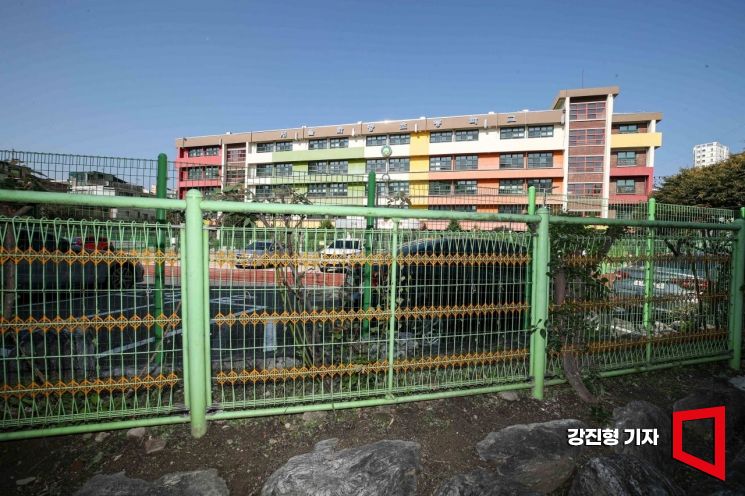 Hwayang Elementary School in Gwangjin-gu, Seoul, the fourth school to be closed in Seoul. The school is located an 8-minute walk from Konkuk University Station, a transfer station between Seoul Subway Line 2 and Line 7. Photo by Kang Jin-hyung
However, in the field, difficulties in interpreting related laws such as the "Shared Property Act" and the "Closed School Utilization Act" have caused challenges in utilizing closed schools. Applying the "Shared Property Act" to closed schools allows local governments to use them for public interest projects through private lease, sale, or free lease, but due to difficulties in interpreting related laws, the "Closed School Utilization Act" has mainly been applied in practice. Under this act, local governments can only provide free leases if the school has been unused for more than five years and the education office has announced lease or sale three or more times without any lessee or buyer. Additionally, when applying the "Closed School Utilization Act," the sites are primarily used for six types of educational facilities stipulated by law, limiting their broader use for local government projects.
The guidelines focus on the roles of local governments and education offices within the current law, clarifying the relationship between the application of the Shared Property Act and the Closed School Utilization Act, as well as the procedures for utilizing closed schools.
First, special provisions such as private sale, private lease, and free lease stipulated in the Closed School Utilization Act are to be applied first, and matters not specified as special provisions are to follow the Shared Property Act. Matters such as inter-account property transfers, grants, and exchanges not covered by the Closed School Utilization Act will be handled according to the Shared Property Act. It also details that if a contract does not fall under the private contract category of the Closed School Utilization Act, private lease or sale can be conducted under the Shared Property Act.
The guidelines also provide information on the administrative procedures the superintendent of education must follow to utilize closed schools and ways to shorten the required time. In particular, it allows for collecting local opinions on utilization plans and requesting changes to city or county management plans from the head of the local government simultaneously with the announcement of school closure, thereby reducing the time needed for utilization.
Local governments will be able to purchase or lease closed schools in consultation with the education office to promote their own projects. Utilization methods include direct use by the education office, inter-account property transfers, leases, and disposals. Once inter-account property transfers or ownership changes from the education office to the local government occur, only the Shared Property Act applies.
The Ministry of the Interior and Safety plans to hold the "Local Government Shared Property System Improvement Workshop" on the 21st to share the guidelines. At the end of the year, a competition for excellent shared property cases will be held to discover outstanding cases of closed school utilization. After distributing the guidelines, the utilization status of closed schools will be monitored and improvements reviewed.
So Eun-ju, Deputy Director in charge of the Education Policy Office at the Ministry of Education, stated, "If the utilization of closed school properties improves through these guidelines, it will substantially contribute to the development of local communities."
Han Soon-gi, Director of the Local Finance and Economy Office at the Ministry of the Interior and Safety, said, "With these guidelines, we will actively support local governments and education offices to cooperate so that shared properties can be effectively used for the benefit of the region and residents."
© The Asia Business Daily(www.asiae.co.kr). All rights reserved.
![Clutching a Stolen Dior Bag, Saying "I Hate Being Poor but Real"... The Grotesque Con of a "Human Knockoff" [Slate]](https://cwcontent.asiae.co.kr/asiaresize/183/2026021902243444107_1771435474.jpg)
















